

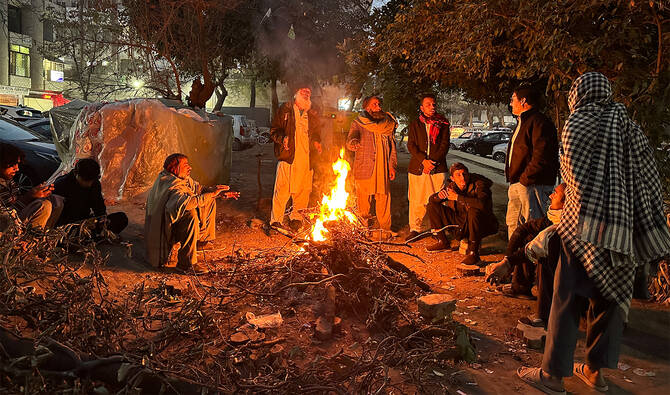

ISLAMABAD: When 19-year-old Mubeen Khan finishes his shift as a daily-wage laborer in Pakistan’s capital, his workday does not end at home but outdoors, where he searches for a place to sleep for the night.
One evening this week, Khan spread his thin bedding on a roadside green belt near Islamabad’s Peshawar Mor, a major transport junction and bus terminal in the capital’s G-9 sector. Despite a biting winter chill that has settled over the city, he has been sleeping in the open for months.
Khan spends his days working and returns at night to nearby state-run shelters, but by the time he arrives, they are already full.
“When I come back, there isn’t any space,” he told Arab News after laying his bedding along the roadside.
“This Panagah fills up with beds by the time,” he said, pointing toward the nearby shelter. “I sleep here. It’s intensely cold, making it hard to survive, but still, we manage.”
Khan said more than 500 people try to sleep at the shelter each night, even though it has space for far less.
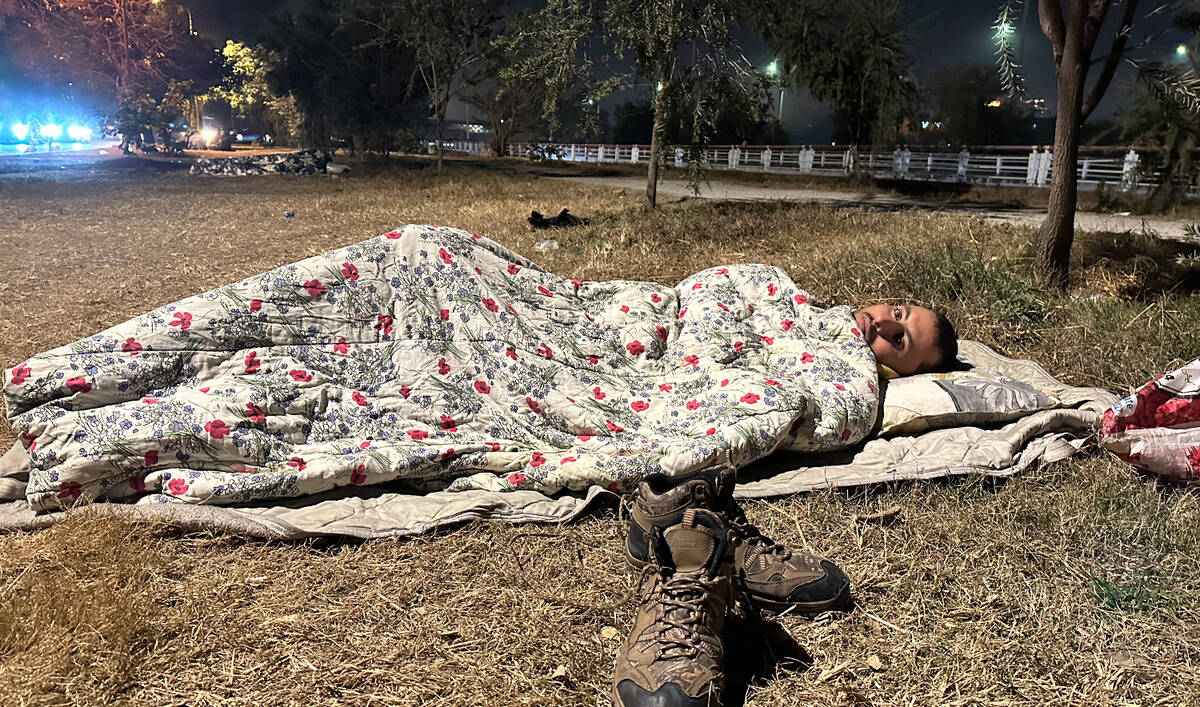
A daily wage worker is sleeping along a roadside in Islamabad on January 23, 2026. (AN Photo)
The plight of workers like him highlights a growing humanitarian strain in Pakistan’s capital, a city that houses senior government officials and some of the country’s wealthiest residents. As economic pressures persist, an influx of internal migrants from smaller towns is stretching Islamabad’s already limited social safety nets.
During the tenure of former prime minister Imran Khan, the Panagah initiative was expanded to provide shelter, food and beds to the destitute. However, residents and daily-wage workers say the program has lost momentum. At least one shelter in the G-6 sector has shut down, while others are so overcrowded that they are inaccessible to many laborers who need them most.
“Pakistan Baitul Mal is operating four shelters in Islamabad ..., with bedding facilities for a total of 450 people,” Qasim Zafar, Director Projects at the state-run welfare organization that provides financial assistance, shelter and food to vulnerable populations, said.
He added that each shelter provides dinner to around 400 people, while one of the facilities also serves lunch.
Zafar said Pakistan Baitul Mal also runs shelters in Karachi, Lahore and several smaller cities across all four provinces, as well as in Gilgit-Baltistan and Azad Kashmir, adding that the organization provides bedding and meals at these facilities.
For 58-year-old Abdul Qayum, however, the arrangements remain insufficient. Each night, he says, becomes a gamble between finding space on a shared veranda near his workplace or spending the night without rest.
“Sometimes there is space on the veranda, sometimes there isn’t. When it rains, a lot of people gather there,” he told Arab News, describing how people crowd into whatever covered spaces are available once the weather turns bad.
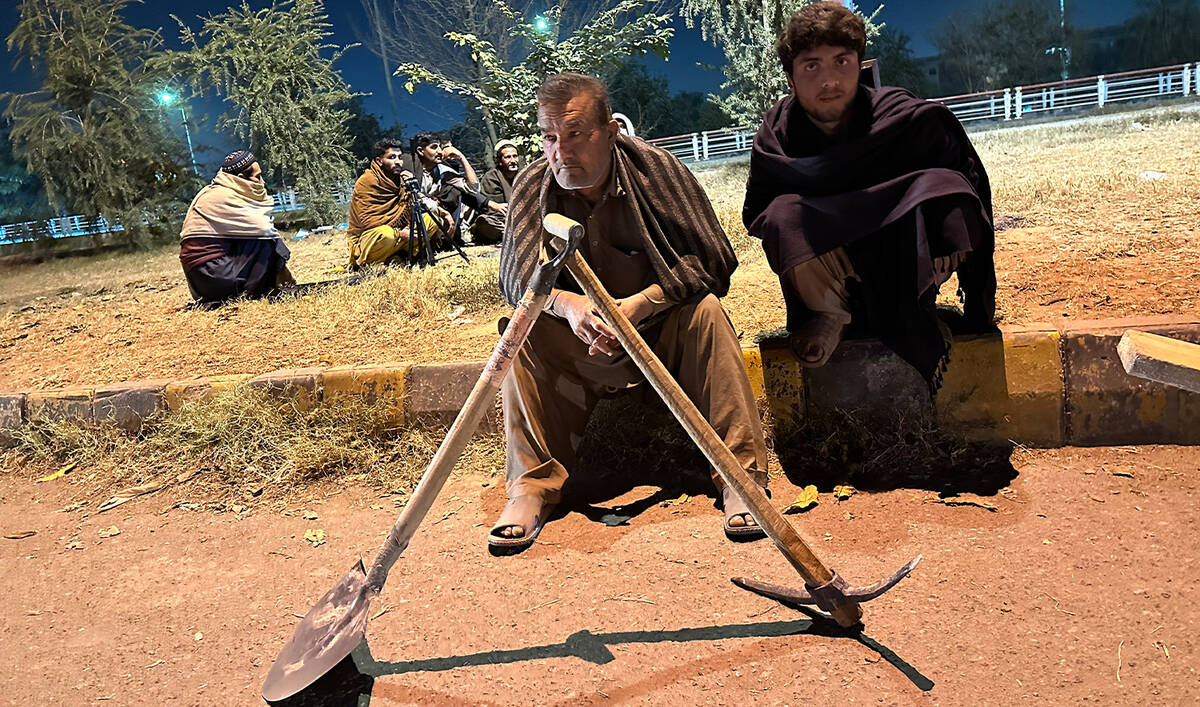
Daily wage workers sit along a roadside awaiting work in Islamabad on January 23, 2026. (AN Photo)
Qayum, who sends his meagre earnings back to his village to support his daughter’s education, said he cannot justify spending Rs 1,500 ($5.38) — his entire daily wage — on a bed.
“When it rains or a storm comes, everyone rushes toward the veranda,” he said. “Sometimes, if it’s not raining, I sleep under a tree. The veranda floor is also cold. The bedding we have is very thin ... It makes a person feel the cold.”
“Our life is just full of hardship,” he added.
Medical experts warn that prolonged exposure to winter cold poses serious health risks.
“When the temperature drops, they can suffer from hypothermia, and many deaths occur this way, though such deaths are generally not officially reported,” said Dr. Fazal Rabbi, a health expert, adding that no official data exists on deaths linked to winter exposure among people without shelter.
Beyond the immediate risk of freezing, he said, indirect illnesses such as pneumonia are increasingly affecting older people and those with underlying conditions like asthma.
“The body temperature should be kept above 36 degrees Celsius,” he said. “Otherwise, all these risks can arise.”
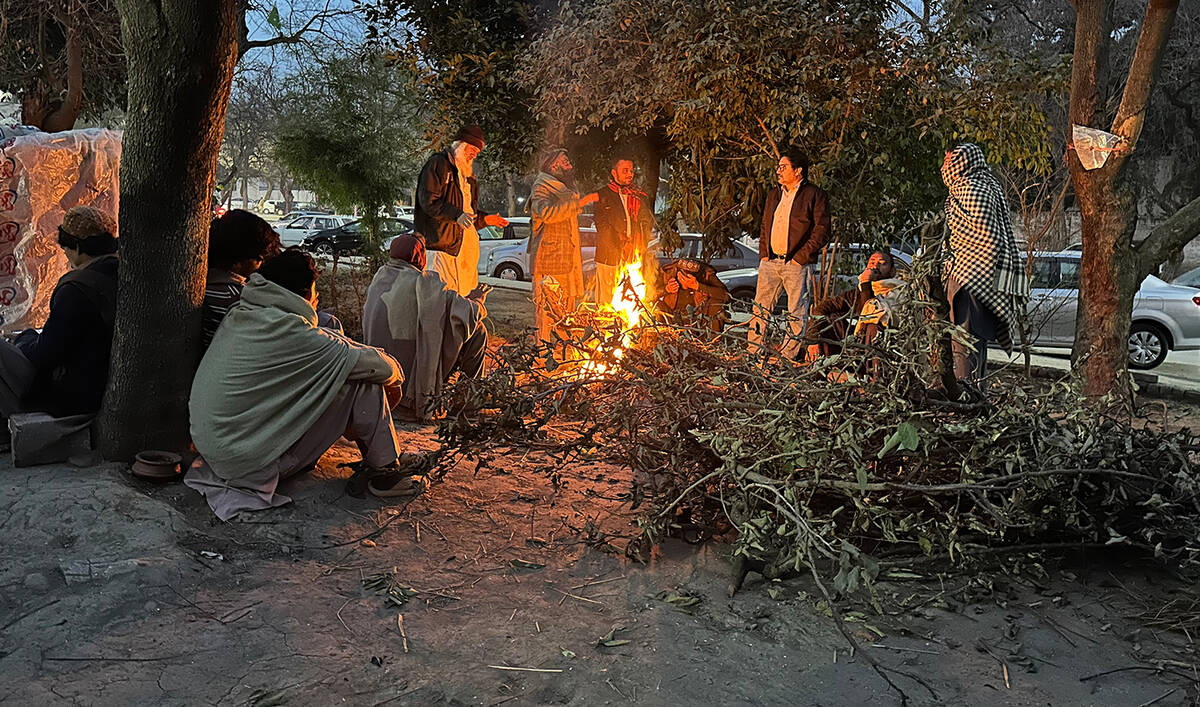
Daily wage workers sit around a fire along a roadside in Islamabad on January 23, 2026. (AN Photo)
Pakistan has no consolidated official data on homelessness, making it difficult to assess the scale of the crisis. Welfare organizations estimate that thousands of people across the twin cities of Islamabad and Rawalpindi face homelessness or unstable shelter each night, particularly during winter.
Some charities provide temporary accommodation, meals and blankets, but aid workers say demand far exceeds capacity.
Muhammad Javed Iqbal, a zonal in-charge at the Edhi Foundation, said his organization faces limits in accommodating temporary shelter seekers, particularly migrants arriving from smaller towns in search of daily labor. Maintaining records and coordinating with police, he said, makes it difficult to take in everyone seeking a bed.
“We cannot take responsibility for those who need temporary shelters,” said Iqbal, whose organization houses hundreds of permanently homeless people from the twin cities.
This leaves men like Qayum reliant on informal arrangements, sleeping outside closed shops once shutters come down at night, or remaining awake until daylight when no covered space is available.
“I myself have spent two or three nights like this,” he said. “There was no space in the verandas. It rained for two or three days, there were storms, and I just sat like that. Sitting there, I ended up falling asleep.”


