

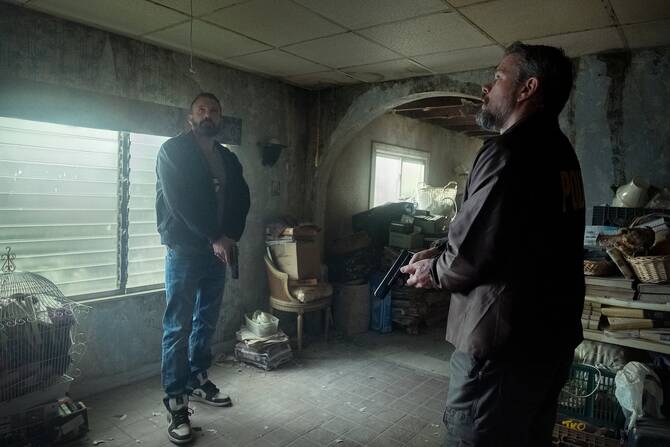

DUBAI: Hollywood’s greatest bromance (no, Pitt and Clooney’s Noughties’ partnership doesn’t come close) is in the spotlight again in Netflix action thriller “The Rip,” in which Matt Damon and Ben Affleck star as — what else — best friends, Dane Dumars and JD Byrne.
They are cops. Specifically, officers in the Tactical Narcotics Unit of the Miami police force, so not your run-of-the-mill street cops. These guys are mavericks, as are their crew, Numa Baptiste (Teyana Taylor), Lolo Salazar (Catalina Sandino Moreno) and Mike Ro (Steven Yeun). We know they’re mavericks because they do things like put their feet on tables, drink beer, and have nose rings and tattoos.
TNT captain Jackie Velez has just been murdered, and rumors abound of dirty cops robbing large amounts of money from drug houses. Suspicion for both these crimes falls on TNT — now headed by Dane.
When Dane receives a tip about a house where a stash of drug money might be, the team head there and discover $20 million of drug cartel cash in the attic. They know that they have to count the money on site (as per regulations) but also know they’re likely to be attacked by the cartel at any minute. Rather than calling the haul in, as protocol dictates, Dane demands his team hand over their phones. Is this because he knows they’re in a high-risk situation and doesn’t want them to attract attention from the rumored dirty cops? Or does he have something more nefarious in mind? His team aren’t sure (not even JD). And director and co-writer Joe Carnahan cleverly keeps the audience guessing for a good while. As the clock ticks, trust between the TNT members starts to fray.
Carnahan adeptly ratchets up the tension and maintains the tricky balance between revealing too much and removing the stakes entirely, and revealing too little and frustrating viewers. The chemistry between Affleck and Damon is — as you’d expect from a pair who’ve been friends since they were 10 — entirely convincing and central to the film’s believability. The rest of the cast hold their own, credibly portraying the camaraderie between colleagues constantly required to have each other’s back.
The plot twists (and there are many) work well —surprising without being too far-fetched — and Carnahan’s slick direction, and the Affleck-Damon special sauce, make “The Rip” an enjoyable distraction.


