

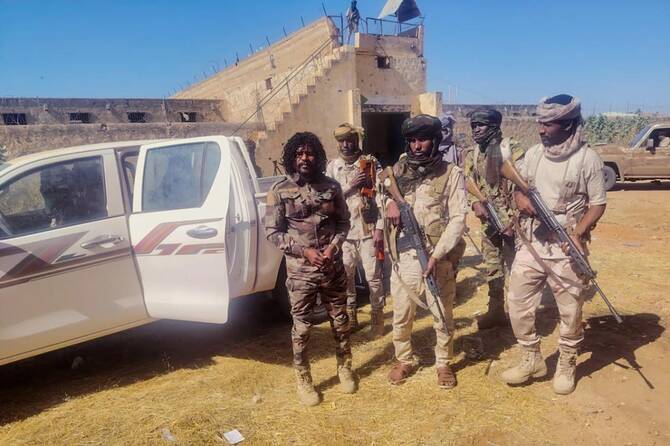

PORT SUDAN: Sudan’s paramilitary Rapid Support Forces launched drones at an army base in the southeastern city of Sinja on Monday, killing 27 people, military and health sources told AFP.
Sinja, the capital of Sennar state, lies around 300 kilometers (180 miles) southeast of Khartoum, along a strategic road connecting the national capital to the army-controlled east.
The strike came a day after the army-aligned government announced its return to Khartoum after close to three years operating from its wartime base in the eastern city of Port Sudan.
Sinja had largely been spared the fighting since the army recaptured the area in late 2024 as part of a wider offensive that saw it later retake Khartoum.
The military source, speaking anonymously because they were not authorized to brief the media, said RSF drones “targeted the headquarters of the army’s 17th Infantry Division” in Sinja.
Ibrahim Al-Awad, the Sennar state health minister, said that the attack also wounded 73 people.
A security source told AFP on condition of anonymity that the strike targeted the army headquarters “during a meeting attended by military, security and government officials” from several eastern and central states.
The governor of White Nile state narrowly “escaped death,” according the state’s communications office, which said his bodyguard and head of protocol were among the victims.
One resident of Sinja told AFP that they “heard explosions and anti-aircraft fire.”
The Sennar region had last been targeted by drones in October.
Fragile return
Since April 2023, the war between the army and the RSF has killed tens of thousands of people, displaced 11 million internally and across borders, and created the world’s largest displacement and hunger crises.
In the year following Sennar’s recapture, more than 200,000 people returned to the state, according to the United Nations’ migration agency.
But the agency has warned many such returns across the country remain “fragile,” often taking place in areas with damaged infrastructure and ongoing insecurity.
Along with the government, millions of civilians had fled Khartoum early in the war when RSF fighters quickly overran it.
Since the army regained control last year, around 1.2 million have gradually returned, according to the latest UN figures.
Reconstruction efforts are underway, but the RSF, which with its allies now rules around a third of the country, sporadically launches long-range drones deep into army-controlled territory, particularly targeting infrastructure.
The army and its government control Sudan’s north, east and center.
The RSF now dominates the vast western region of Darfur and has pushed through the southern region of Kordofan, aiming to capture cities that would bring it closer to Khartoum.
With multiple cities under paramilitary siege, hundreds of thousands face mass starvation in Kordofan.
The UN has called the conflict a “war of atrocities,” with both sides accused of targeting civilians.


