


RIYADH: As 2025 has ended, a year marked by rising geopolitical tensions, trade fragmentation, and ongoing conflicts, Saudi Arabia’s development arm maintained its commitment to stability.
The Saudi Fund for Development continued to provide concessional financing to vulnerable economies, reinforcing its reputation as a reliable partner in uncertain times.
Since its establishment in 1974 and the start of operations a year later, the SFD has financed over 800 projects across more than 100 countries, with commitments exceeding $22 billion. Its initiatives cover critical sectors such as health, education, transport, water, and energy, improving living standards for millions. In the latter half of 2025, the fund further expanded its global footprint across Europe, Asia, Africa, and the Caribbean.
Bosnia ties endure
In July, the SFD signed two development loan agreements with Bosnia and Herzegovina, extending a partnership that has lasted nearly three decades. The first loan, valued at $19 million, supports the construction of a Science and Technology Park aimed at boosting innovation, health care, higher education, and economic development.
Covering approximately 200,000 sq. meters, the park is designed to serve as a multidisciplinary hub. A second loan of $13 million will finance an additional student housing unit at the Borisa Starovic Student Center in Foca, improving accommodation capacity and encouraging higher enrollment.
Overall, the SFD has financed 27 projects in Bosnia and Herzegovina through loans exceeding $163 million, alongside grants totaling more than $53 million.
HIGHLIGHTS
SFD has financed over 800 projects in 100+ countries, committing more than $22 billion to development.
Nearly 30 years of support in Bosnia include science parks and student housing projects.
Major projects boost connectivity, including a $217 million expansion of Velana International Airport in the Maldives.
Health, education, and urban renewal projects improve living standards in Barbados, Sri Lanka, Indonesia, and Kyrgyzstan.
Maldives airport
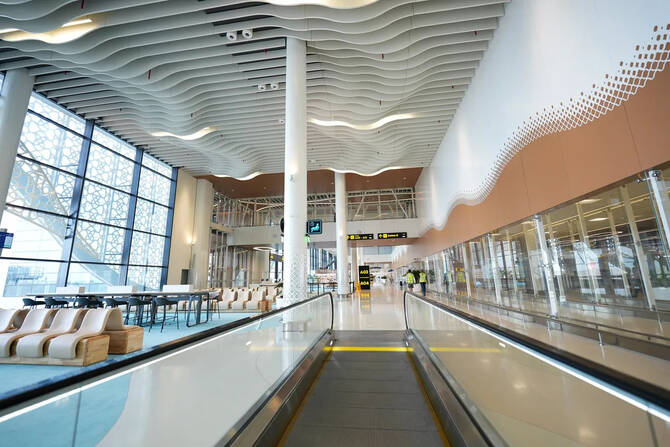
Also in July, SFD CEO Sultan Al-Marshad attended the inauguration of the expanded Velana International Airport in Male. The project is financed through three concessional SFD loans totaling $217 million, in partnership with other international development institutions.
The expansion includes new international and domestic terminals, as well as a fully integrated seaplane terminal. Once completed, the airport is expected to handle up to 7 million passengers annually, with the potential to scale to 15 million. Since 1978, the SFD has provided the Maldives with 17 loans worth more than $488 million, supporting 14 major projects.

SFD’s work spans critical sectors such as health, education, transport, water, and energy. Supplied
Barbados renewal drive
In the Caribbean, the SFD signed loan agreements worth approximately $92.7 million with the government of Barbados to support projects in health care, housing, water, and infrastructure.
A $58.5 million loan will fund the upgrade of the country’s primary health care system, including polyclinics. A second loan of $34.2 million will finance Phase I of an urban renewal project focused on water, housing, and infrastructure, aimed at improving living conditions and strengthening resilience.
Sri Lanka education push
Education featured prominently in Sri Lanka, where Al-Marshad participated in the inauguration of the Wayamba University Township Project. The initiative is funded by an SFD contribution of $28 million.
The project includes seven modern educational facilities designed to expand access to quality higher education and foster a supportive learning environment. More than 5,000 students and staff are expected to benefit, contributing to skills development and inclusive growth.
Indonesia health gains
In August, the SFD marked the inauguration of the Bengkulu University Hospital Development Project in Indonesia, financed through a $22 million concessional loan.
The hospital enhances health care services in the Bengkulu region and reflects nearly 49 years of cooperation between Saudi Arabia and Indonesia. Since 1976, the SFD has extended more than $396 million in development loans to Indonesia, supporting projects in health care, education, and infrastructure.
Schools for Kyrgyzstan
In October, the SFD signed a $50 million agreement with the Kyrgyz Republic to launch Phase II of the Construction of Public Schools Project.
The phase will deliver 14 new schools in rural and urban areas, each accommodating between 150 and 1,000 students. Beyond improving access to education, the initiative is expected to create employment opportunities for teachers and education staff, strengthening local communities.
Sport meets development
In November, the SFD signed a memorandum of understanding with FIFA to allocate up to $1 billion in concessional loans for the construction and rehabilitation of sports stadiums and related infrastructure in developing countries.
The partnership aims to promote social inclusion, youth empowerment, and economic opportunity through sport, while attracting co-financing from development institutions and private sector partners.
Water and power in Mauritania
The year concluded with a focus on essential services in Mauritania. In December, the SFD marked the groundbreaking of the Kiffa Potable Water Supply Project, allocating $100 million to improve access to safe drinking water for five towns, including Kiffa.
The project is expected to reduce waterborne illnesses and ease shortages, particularly during summer months. In parallel, the SFD signed a $60 million loan to support the Mauritania-Mali Power Interconnection and Solar Power Development Project, expanding electricity networks and enabling cross-border power exchange.
A steady global role
Together, these initiatives underscore the Saudi Fund for Development’s steady approach during a turbulent global period. By focusing on long-term impact in core sectors, the SFD continues to position itself as a reliable source of hope and partnership for developing economies worldwide.


