

Oman’s central bank approves Shariah-compliant framework for finance, leasing firms

In September, Fitch Ratings forecast that the country’s Islamic finance industry would surpass $40 billion between the second half of 2025 and 2026, supported by regulatory reforms.
Short Url
Updated 30 December 2025
Follow

Oman’s central bank approves Shariah-compliant framework for finance, leasing firms

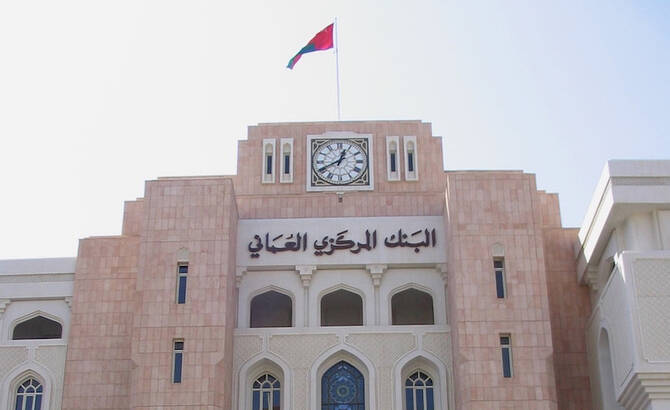
JEDDAH: The Central Bank of Oman has approved a new Shariah-compliant regulatory framework for finance and financial leasing companies, reinforcing the country’ efforts to expand Islamic banking and attract fresh investment.

The approval was granted during the CBO’s sixth board meeting of the year, held on Dec. 29 at its headquarters in Muscat’s Commercial District, according to an official statement.

The move comes as Oman’s Islamic finance sector continues to gain momentum. In September, Fitch Ratings forecast that the country’s Islamic finance industry would surpass $40 billion between the second half of 2025 and 2026, supported by regulatory reforms and growing demand for Shariah-compliant financial products.

Fitch identified the newly approved framework as a key growth driver, noting that clearer regulations and stronger oversight are expected to enhance investor confidence and attract additional capital to the sector.

The broader Gulf region is also witnessing robust growth in Islamic finance. In the UAE, the industry’s assets exceeded $285 billion by the end of the first quarter of 2025, fueled by strong demand and an expanding sukuk market, Fitch said.

“During the meeting, the board approved the regulatory framework for finance and financial leasing companies that are compliant with the provisions of Islamic Sharia,” the CBO said in its statement.

The board also approved the CBO’s 2026 annual budget, along with those of the Banking Deposits Protection Scheme and the Oman Credit and Financial Information Center, known as Mala’a. In addition, several agenda items and reports were reviewed and corresponding decisions were taken.

Oman’s banking system comprises both conventional and Islamic institutions. Islamic banking services are offered through standalone banks as well as Islamic windows within conventional local and foreign banks licensed in the country.

The foundations for Islamic banking were laid in May 2011, when the CBO issued preliminary licensing guidelines allowing Islamic banks and windows to operate alongside conventional institutions. This initiative was formalized in December 2012 through a royal decree amending the Banking Law, mandating the establishment of Shariah supervisory boards and authorizing the CBO to create a central High Shariah Supervisory Authority.

That same year, the CBO introduced the Islamic Banking Regulatory Framework, alongside regulations governing Hawala settlements and safeguard accounts.

Although Oman remains the smallest Islamic finance market in the Gulf Cooperation Council, it continues to record double-digit growth in Islamic banking assets and sukuk issuance. Fitch estimated the sector’s size at $36 billion as of the end of August 2025, with Islamic banking assets accounting for nearly two-thirds of the total.


Saudi Arabia’s FMF concludes with over $26.6bn in agreements  

Updated 18 January 2026
Follow

Saudi Arabia’s FMF concludes with over $26.6bn in agreements  

RIYADH: Saudi Arabia said it secured more than SR100 billion ($26.6 billion) in agreements and memorandums of understanding at the fifth edition of the Future Minerals Forum, underscoring the Kingdom’s push to position mining as a key pillar of its economic diversification strategy. 

The forum, held in Riyadh under the patronage of King Salman bin Abdulaziz Al Saud, drew representatives from around 100 countries and attracted about 21,500 participants, according to the Ministry of Industry and Mineral Resources.  

The government has identified mining as a priority sector as it seeks to reduce reliance on oil and strengthen global supply chains for critical minerals. 

The agreements signed during the forum span the full mining value chain, including exploration, extraction, and mineral processing, as well as manufacturing, research and development, innovation, and sustainability.  

The ministry said the breadth of the deals highlights efforts to accelerate sector development while attracting long-term domestic and foreign investment.   

Participants included ministers, senior government officials, executives from major global mining companies, and investors, as well as academics and technical experts. More than 450 speakers took part in ministerial roundtables, panel discussions and technical sessions.  

An international exhibition formed a key part of the event, featuring 274 exhibitors from 13 countries, including Australia, the US, and the UK, as well as France, Germany, and several emerging mining markets.   

The exhibition was organized across four main zones covering exploration and mining, processing and manufacturing, advanced technologies and innovation, and investment and partnerships.  

Forum discussions focused on strengthening cross-border cooperation across mineral supply chains, accelerating exploration activity, and improving access to financing, as well as promoting sustainable and responsible mining practices.   

Sessions also examined the growing role of digital tools, automation and artificial intelligence in enhancing operational efficiency and decision-making in the sector.  

The ministry said the scale of agreements announced at the forum provides a foundation for sustained growth and supports the Kingdom’s long-term objective of becoming a global hub for mining and mineral processing, at a time of rising international demand for critical and strategic minerals.  

The ministry also highlighted the rapid evolution of the Future Minerals Forum over its five editions, describing it as a platform that has transitioned from a regional gathering into a global convening point for policymakers and industry leaders.