

Oman’s central bank approves Shariah-compliant framework for finance, leasing firms

In September, Fitch Ratings forecast that the country’s Islamic finance industry would surpass $40 billion between the second half of 2025 and 2026, supported by regulatory reforms.
Short Url
Updated 30 December 2025
Follow

Oman’s central bank approves Shariah-compliant framework for finance, leasing firms

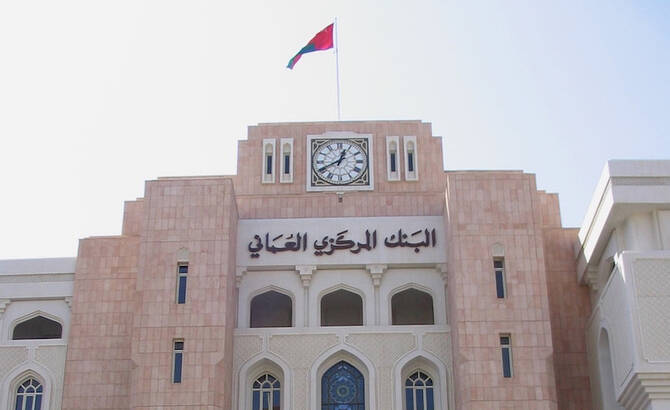
JEDDAH: The Central Bank of Oman has approved a new Shariah-compliant regulatory framework for finance and financial leasing companies, reinforcing the country’ efforts to expand Islamic banking and attract fresh investment.

The approval was granted during the CBO’s sixth board meeting of the year, held on Dec. 29 at its headquarters in Muscat’s Commercial District, according to an official statement.

The move comes as Oman’s Islamic finance sector continues to gain momentum. In September, Fitch Ratings forecast that the country’s Islamic finance industry would surpass $40 billion between the second half of 2025 and 2026, supported by regulatory reforms and growing demand for Shariah-compliant financial products.

Fitch identified the newly approved framework as a key growth driver, noting that clearer regulations and stronger oversight are expected to enhance investor confidence and attract additional capital to the sector.

The broader Gulf region is also witnessing robust growth in Islamic finance. In the UAE, the industry’s assets exceeded $285 billion by the end of the first quarter of 2025, fueled by strong demand and an expanding sukuk market, Fitch said.

“During the meeting, the board approved the regulatory framework for finance and financial leasing companies that are compliant with the provisions of Islamic Sharia,” the CBO said in its statement.

The board also approved the CBO’s 2026 annual budget, along with those of the Banking Deposits Protection Scheme and the Oman Credit and Financial Information Center, known as Mala’a. In addition, several agenda items and reports were reviewed and corresponding decisions were taken.

Oman’s banking system comprises both conventional and Islamic institutions. Islamic banking services are offered through standalone banks as well as Islamic windows within conventional local and foreign banks licensed in the country.

The foundations for Islamic banking were laid in May 2011, when the CBO issued preliminary licensing guidelines allowing Islamic banks and windows to operate alongside conventional institutions. This initiative was formalized in December 2012 through a royal decree amending the Banking Law, mandating the establishment of Shariah supervisory boards and authorizing the CBO to create a central High Shariah Supervisory Authority.

That same year, the CBO introduced the Islamic Banking Regulatory Framework, alongside regulations governing Hawala settlements and safeguard accounts.

Although Oman remains the smallest Islamic finance market in the Gulf Cooperation Council, it continues to record double-digit growth in Islamic banking assets and sukuk issuance. Fitch estimated the sector’s size at $36 billion as of the end of August 2025, with Islamic banking assets accounting for nearly two-thirds of the total.

First EU–Saudi roundtable on critical raw materials reflects shared policy commitment

Updated 16 January 2026
Follow

First EU–Saudi roundtable on critical raw materials reflects shared policy commitment

RIYADH: The EU–Saudi Arabia Business and Investment Dialogue on Advancing Critical Raw Materials Value Chains, held in Riyadh as part of the Future Minerals Forum, brought together senior policymakers, industry leaders, and investors to advance strategic cooperation across critical raw materials value chains.

Organized under a Team Europe approach by the EU–GCC Cooperation on Green Transition Project, in coordination with the EU Delegation to Saudi Arabia, the European Chamber of Commerce in the Kingdom and in close cooperation with FMF, the dialogue provided a high-level platform to explore European actions under the EU Critical Raw Materials Act and ResourceEU alongside the Kingdom’s aspirations for minerals, industrial, and investment priorities.

This is in line with Saudi Vision 2030 and broader regional ambitions across the GCC, MENA, and Africa.

ResourceEU is the EU’s new strategic action plan, launched in late 2025, to secure a reliable supply of critical raw materials like lithium, rare earths, and cobalt, reducing dependency on single suppliers, such as China, by boosting domestic extraction, processing, recycling, stockpiling, and strategic partnerships with resource-rich nations.

The first ever EU–Saudi roundtable on critical raw materials was opened by the bloc’s Ambassador to the Kingdom, Christophe Farnaud, together with Saudi Deputy Minister for Mining Development Turki Al-Babtain, turning policy alignment into concrete cooperation.

Farnaud underlined the central role of international cooperation in the implementation of the EU’s critical raw materials policy framework.

“As the European Union advances the implementation of its Critical Raw Materials policy, international cooperation is indispensable to building secure, diversified, and sustainable value chains. Saudi Arabia is a key partner in this effort. This dialogue reflects our shared commitment to translate policy alignment into concrete business and investment cooperation that supports the green and digital transitions,” said the ambassador.

Discussions focused on strengthening resilient, diversified, and responsible CRM supply chains that are essential to the green and digital transitions.

Participants explored concrete opportunities for EU–Saudi cooperation across the full value chain, including exploration, mining, and processing and refining, as well as recycling, downstream manufacturing, and the mobilization of private investment and sustainable finance, underpinned by high environmental, social, and governance standards.

From the Saudi side, the dialogue was framed as a key contribution to the Kingdom’s industrial transformation and long-term economic diversification agenda under Vision 2030, with a strong focus on responsible resource development and global market integration.

“Developing globally competitive mineral hubs and sustainable value chains is a central pillar of Saudi Vision 2030 and the Kingdom’s industrial transformation. Our engagement with the European Union through this dialogue to strengthen upstream and downstream integration, attract high-quality investment, and advance responsible mining and processing. Enhanced cooperation with the EU, capitalizing on the demand dynamics of the EU Critical Raw Materials Act, will be key to delivering long-term value for both sides,” said Al-Babtain.

Valere Moutarlier, deputy director-general for European industry decarbonization, and directorate-general for the internal market, industry, entrepreneurship and SMEs at European Commission, said the EU Critical Raw Materials Act and ResourceEU provided a clear framework to strengthen Europe’s resilience while deepening its cooperation with international partners.

“Cooperation with Saudi Arabia is essential to advancing secure, sustainable, and diversified critical raw materials value chains. Dialogues such as this play a key role in translating policy ambitions into concrete industrial and investment cooperation,” she added.