Saudi Arabia among top states in tech security with 99% score, says official  

The CEO of Saudi Arabia’s Quality of Life Program said the Kingdom ranks among the top countries globally in security technology, with a 99 percent rating. AL-EQTISADIAH
Short Url
Updated 21 December 2025
Follow

Saudi Arabia among top states in tech security with 99% score, says official  

RIYADH: Programs and security initiatives launched by the Ministry of Interior have contributed significantly to improving quality of life in Saudi Arabia by generating high-quality data that supports planning and enables faster responses, placing the Kingdom in the global spotlight, Khalid Al-Bakr, CEO of the Quality of Life Program, told Al-Eqtisadiah. 

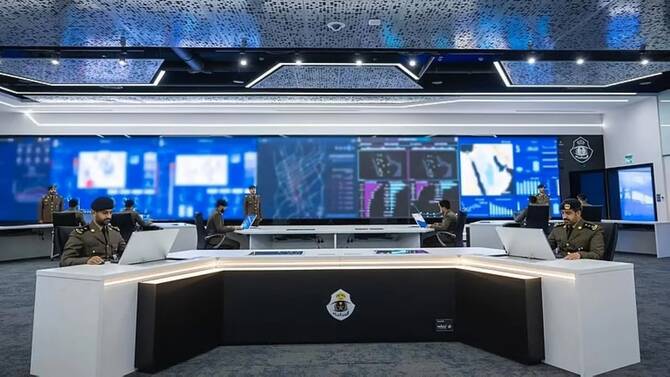
He noted that the Unified Security Operations Centers 911 in Riyadh, the Eastern Province, Madinah, and Makkah are among the Quality of Life Program’s initiatives implemented in partnership with the Ministry of Interior, producing data that helps develop plans and ensure swift responses to incidents. 

Al-Bakr added that technology has been integrated into security capabilities, including the use of body cameras for security personnel, which has helped maintain high levels of public safety. 

He highlighted that reporting violations or crimes via 911 has an average response time of just two seconds, describing it as a technological leap that serves residents and visitors alike and enhances trust in security services. 

The CEO of Saudi Arabia’s Quality of Life Program said the Kingdom ranks among the top countries globally in security technology, with a 99 percent rating, emphasizing that Saudi Arabia is a leader in leveraging advanced security technologies to serve residents and visitors, making it an attractive place to live and visit. 

Al-Bakr explained that the major transformation in the use of technology — particularly in services provided by the Ministry of Interior — has had a significant impact on quality of life, noting that accessing services such as passport or national ID renewal has become faster and more convenient, often available at the click of a button. 


Apparel Group expands Saudi presence with 25 new brands 

Updated 7 sec ago
Follow

Apparel Group expands Saudi presence with 25 new brands 

RIYADH: Apparel Group is seeking to strengthen its presence in the Saudi market through digital commerce expansion, adding 25 new brands to its portfolio, and plans to grow its store network by 200 outlets this year to reach a total of 1,000, CEO Neeraj Teckchandani told Al-Eqtisadiah.

He noted that Saudi Arabia has been one of the group’s key markets since entering in 2007, currently operating more than 800 stores across the Kingdom. He added that the group’s current expansion plans include opening over 200 new stores this year, following 150 openings last year, with expectations that Saudi Arabia will become the group’s largest market in terms of footprint and revenue share in the coming period. 

Teckchandani added that the group continues to invest in e-commerce through its digital platform, SixFeet, launched in 2016, which contributed 10 percent of total group sales, noting that plans are underway to gradually increase this share in 2026 through technology investments and enhanced digital shopping experiences. 

The group is also preparing to launch a unified SuperApp this year, integrating its loyalty program, the SixFeet platform, and all digital assets into a single application to accelerate e-commerce growth, improve customer experience, and increase operational efficiency. 

New fashion and restaurant brands 

The CEO said the new brands added to the group’s portfolio cover fashion, footwear, restaurants, and entertainment, including Footasylum, FitFlop, and Clarins, as well as Bobbi Brown, Wagamama, Ivy Asia, and Punjab Grill. 

He noted that some brands have already opened in Saudi Arabia, with further expansion planned this year and next. 

85 brands under the group 

Apparel Group manages 85 global brands and over 2,500 stores across Saudi Arabia, the UAE, Bahrain, Qatar, and Oman. 

The company has also expanded strategically into India, South Africa, Singapore, and Indonesia, as well as Thailand, Malaysia, and Egypt. 

Its portfolio includes internationally renowned fashion, footwear, and lifestyle brands such as Tommy Hilfiger, Charles & Keith, Skechers, Aldo, Crocs, Calvin Klein and Aéropostale. The group also operates food and lifestyle brands including Tim Hortons, Jamie’s Italian, and Cold Stone Creamery, alongside beauty labels such as Inglot and Rituals. R&B, its in-house label, is currently the fastest-growing brand in the region. 

Securing locations in new centers 

Teckchandani pointed out that the Saudi market is witnessing rapid expansion in the shopping mall sector, with 30 new centers expected to open by 2030, affirming that the group has secured strategic locations in several of these projects and aims to expand its store network in parallel with real estate growth in the retail sector. 

He added that the group has also invested in operational infrastructure within Saudi Arabia, establishing a main distribution center in Riyadh to support supply chains, relocating to its new regional headquarters in Majdoul Tower, and expanding its logistics arm, “Connect Logistics,” as well as “Shopfit Interior,” a company specializing in store fit-outs. 

He added that the parent company is prioritizing investment in advanced technology and AI, along with launching the unified SuperApp in the second quarter of 2026, and has appointed a group-level chief digital officer to support this phase, with results expected in the short to medium term. 

Saudi expansion drives growth 

Teckchandani emphasized that Saudi Arabia represents the group’s main growth engine in the coming years, supported by strong consumer demand, rapid development of shopping centers, and increasing contribution from digital commerce. 

Apparel Group’s expansion comes amid a broader retail sector boom in Saudi Arabia, driven by rising consumer spending and accelerated development of malls under Vision 2030. 

The retail sector is one of the largest non-oil contributors to GDP, with increasing growth in digital sales channels as companies integrate e-commerce with traditional stores to enhance operational efficiency and expand market share. 

Major retailers are seeking to capitalize on population growth and rising purchasing power, alongside the expansion of hospitality and entertainment projects, boosting demand for global brands. Investments in logistics infrastructure and digital transformation have also become critical competitive factors, especially as e-commerce accounts for a growing share of total retail sales.