

Saudi cybersecurity firms plan Tadawul listings within 2 years 

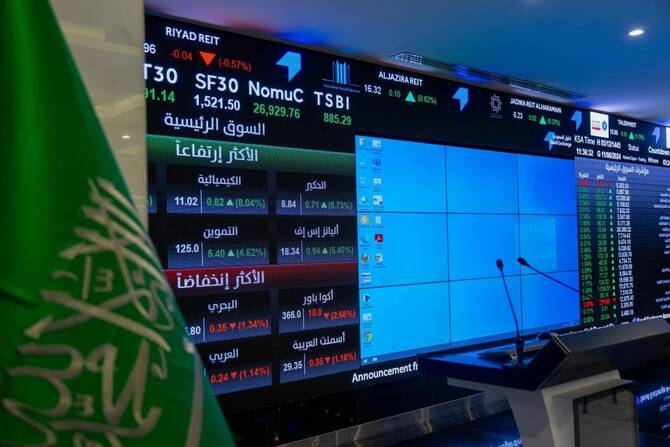
Two Saudi cybersecurity companies, Cyber and Infratech, plan to list a portion of their shares on the Saudi Stock Exchange, or Tadawul, between 2026 and 2027. File
Short Url
Updated 15 December 2025
Follow

Saudi cybersecurity firms plan Tadawul listings within 2 years 

RIYADH: Two Saudi cybersecurity companies, Cyber and Infratech, plan to list a portion of their shares on the Saudi Stock Exchange, or Tadawul, between 2026 and 2027, according to the companies’ chairmen, who spoke to Al-Eqtisadiah. 

Abdulrahman Al-Kenani, founder and CEO of Cyber, said: “The company is currently planning to acquire certain entities, which will be disclosed in the coming period, in addition to preparing for a public offering through the Tumooh program on the stock market within the next two years at the latest.” 

Al-Kenani explained that the financial, healthcare and services sectors are witnessing continuous cyberattacks as Saudi Arabia expands its digital transformation, accompanied by a rise in the frequency of such incidents. He added that this phenomenon is not limited to the Kingdom but is a global issue. 

The CEO added: “The company is working with several Saudi airports and vital sectors, in addition to collaborating with major international companies to provide cutting-edge cybersecurity solutions.” 

Infratech plans 4 R&D centers abroad 

Ayman Al-Suhaim, CEO of Infratech, stated: “The size of the information technology and cybersecurity market in Saudi Arabia has reached approximately SR87 billion ($23.2 billion), of which SR15.7 billion are allocated to the cybersecurity sector. This includes consulting, managed services, governance, risk management, and cybersecurity within the industrial sector.” 

He said the company has a strategic plan covering the period from 2026 to 2028, which includes establishing a firm in the first quarter of next year to finance cybersecurity and artificial intelligence products, as well as launching four research and development centers in the US, Russia, China and Eastern Europe. 

The plan also includes investment in cloud storage, overseas ventures, and the expansion of operations and investments in data centers. 

Al-Suhaim said the company intends to go public in 2027, noting that it operates across multiple cybersecurity domains serving sectors including energy, defense, aviation and government services. 

The Tumooh program for small and medium-sized enterprises in Saudi Arabia is one of the support initiatives offered by the General Authority for Small and Medium Enterprises, or Monsha’at. It aims to drive SME growth by strengthening capabilities, improving performance and accelerating expansion. 

The initiative seeks to help fast-growing SMEs prepare for initial public offerings in the financial markets. To date, the program has facilitated the listing of 24 companies on the Nomu Parallel Market out of more than 2,500 firms registered under the scheme. 


European gas prices ease as market seeks clarity on Qatari LNG supply

Updated 4 sec ago
Follow

European gas prices ease as market seeks clarity on Qatari LNG supply

OSLO: Dutch and British gas prices were ‌slightly lower on Wednesday morning, after soaring earlier this week, but could remain volatile as the market tries to gauge how long Qatari supply of liquefied natural ​gas (LNG) will remain disrupted.

The benchmark Dutch front-month contract at the TTF hub was down €1.02 at €53.27 per megawatt hour  by 10:18 a.m. GMT, data from the Intercontinental Exchange showed.

It hit an intraday day high of €65.79/MWh, its highest level since January 2023 on Tuesday but fell by €10 again by the end of the day.

The British April contract was down 3.92 pence at 137.07 pence ‌per therm, ICE ‌data showed.

The gas market has been ​jolted ‌by ⁠the US-Israeli ​war ⁠on Iran and retaliatory attacks across the Middle East, halting Qatari LNG production and shipping through the Strait of Hormuz. The US Navy could begin escorting tankers through the Strait of Hormuz if necessary, President Donald Trump said on Tuesday, but analysts questioned whether this really could revive energy transports that have ground to a halt.

“As long as Iran is able ⁠to launch missiles and drones over the water, we doubt ‌that this will materially improve ‌the situation,” said Arne Lohmann Rasmussen, chief analyst ​at Global Risk Management.

Outbound LNG volumes through ‌the Strait of Hormuz are expected to account for around 17 percent ‌of global supply in 2026, or roughly 337 million cubic meters per day, said Ross Wyeno, head of LNG short-term analysis at S&P Global Energy.

“Of those volumes, we estimate that around 170 mcm/day will be delivered to buyers that ‌will need to immediately source replacement cargoes from the global spot markets or existing long-term contracts,” he added.

This ⁠is around ⁠30 percent of expected European imports in 2026, Wyeno added for comparison.

The EU has told its member countries it does not see any immediate effect from the conflict in Iran on the security of natural gas supply, and is not currently planning response measures at national or EU level.

Meanwhile, the Russian-flagged liquefied natural gas tanker Arctic Metagaz, sanctioned by the US and Britain, caught on fire in the Mediterranean, with Russian on Wednesday blaming the incident on a Ukrainian attack.

EU gas storage sites were last 29.9 percent full, with depletion having slowed as ​milder weather limited demand, Gas Infrastructure ​Europe data showed.

In the European carbon market, the benchmark contract was down €1.13 at €72.20 a tonne.