

KSrelief builds 300 schools in Pakistan, expands disaster response abroad

1 / 5
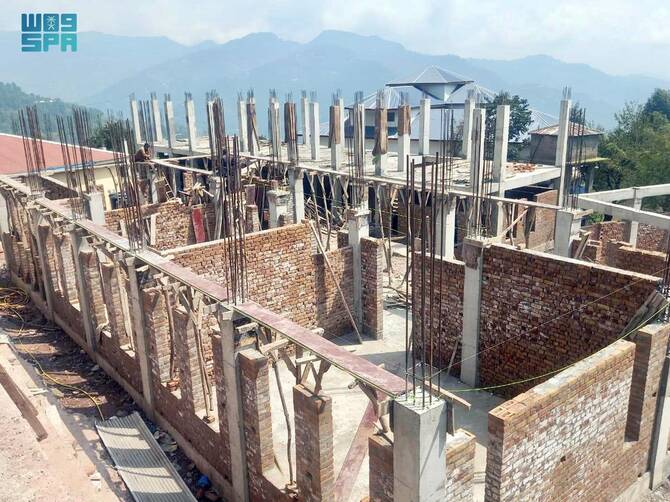
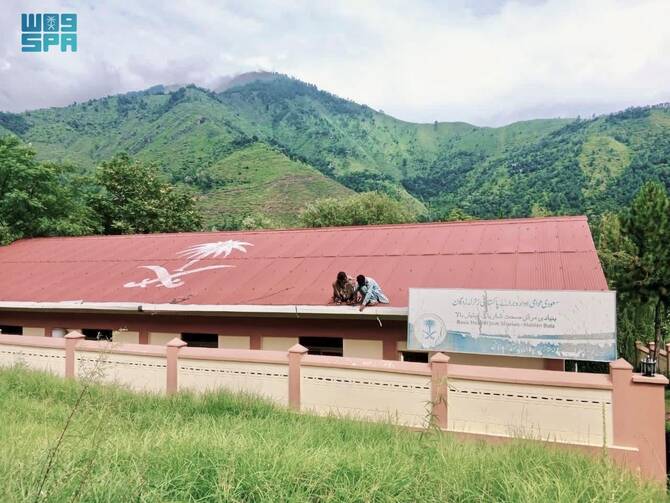
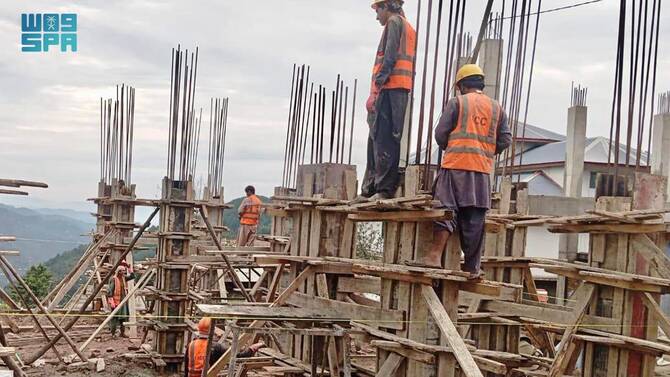
The initiative aims to support communities lacking access to government education and provide a comprehensive learning environment for children in the most vulnerable areas. (SPA)
2 / 5
The initiative aims to support communities lacking access to government education and provide a comprehensive learning environment for children in the most vulnerable areas. (SPA)
3 / 5
The initiative aims to support communities lacking access to government education and provide a comprehensive learning environment for children in the most vulnerable areas. (SPA)
4 / 5
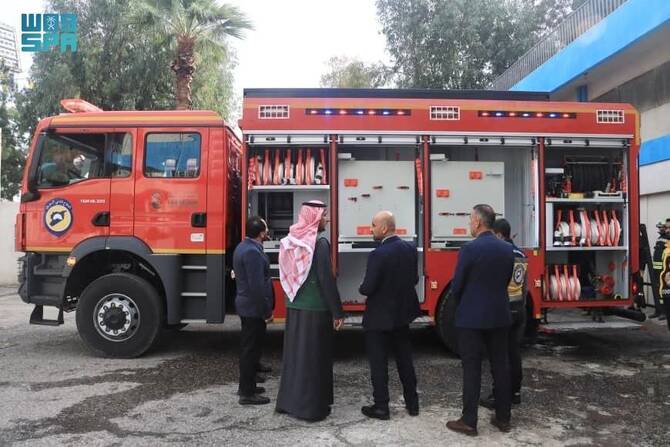
KSrelief delivered three advanced firefighting vehicles to the Syrian Arab Republic’s Ministry of Emergency and Disaster Management to support efforts to combat forest fires in Latakia governorate. (SPA)
5 / 5
KSrelief delivered three advanced firefighting vehicles to the Syrian Arab Republic’s Ministry of Emergency and Disaster Management to support efforts to combat forest fires in Latakia governorate. (SPA)
Short Url
Updated 14 December 2025
Follow

KSrelief builds 300 schools in Pakistan, expands disaster response abroad

  • Saudi aid agency also delivers firefighting vehicles to Syria’s Latakia governorate to help combat forest fires

RIYADH: Saudi aid agency KSrelief is implementing a package of humanitarian projects in Pakistan, including the construction of 300 schools across the country.

The initiative aims to support communities lacking access to government education and provide a comprehensive learning environment for children in the most vulnerable areas, according to a Saudi Press Agency report.

KSrelief is constructing four government schools in earthquake-stricken areas of Azad Jammu and Kashmir to help restore education and support affected families.

As part of these efforts, work is also underway to rehabilitate 22 projects in Khyber Pakhtunkhwa, Punjab, and Azad Jammu and Kashmir.

These include schools, health centers, and water and sanitation projects, to enhance sustainability and improve efficiency in serving beneficiaries.

In addition, a disaster management logistics warehouse is being built in the capital, Islamabad, to boost emergency preparedness and enable a rapid humanitarian response.

Meanwhile, KSrelief delivered three advanced firefighting vehicles to the Syrian Arab Republic’s Ministry of Emergency and Disaster Management to support efforts to combat forest fires in Latakia governorate.

The assistance is part of an emergency response project to provide supplies, equipment, and vehicles to fight forest fires in the governorate, the SPA reported.

Latakia Emergency and Disaster Management Director Abdulkafi Kayyal expressed appreciation to Saudi Arabia, represented by KSrelief, saying the vehicles will support firefighting efforts.

He said the support will enhance civil defense capabilities, preserve vegetation cover, improve rapid emergency response and strengthen the logistical capacity of field teams.

In Yemen, KSrelief continued with its water supply and environmental sanitation project in Hodeidah governorate. In one week, 1,147,000 liters of water for household use and 247,000 liters of potable drinking water were pumped.

The project also carried out 69 waste-removal trips from displacement camps and conducted one water-quality test, benefiting 16,170 people.

In Lebanon, KSrelief distributed 928 food baskets and date cartons to Syrian refugees and host communities in Baalbek, benefiting 2,320 people.

In southeastern Brazil, the agency distributed 6,104 kg of dates in Sao Paulo, Rio de Janeiro, Minas Gerais, and Espirito Santo, benefiting 986 families.

KSrelief also distributed 520 food baskets in Afghanistan’s Nangarhar province, benefiting Afghan returnees from Pakistan.

Since its establishment in 2015, KSrelief has implemented 3,881 projects in 109 countries costing more than $8.2 billion. Its efforts cover key sectors including food security, health, education, water and sanitation, and shelter.


Jeddah students get closer look at electric motorsport

Updated 24 January 2026
Follow

Jeddah students get closer look at electric motorsport

  • A PIF-linked initiative highlights technical and engineering careers behind electric racing events

JEDDAH: Students from local and international schools in Jeddah were introduced to STEM-related career pathways in electric motorsport this week, as part of an education program linked to the UIM E1 World Championship held on the Red Sea.

The sessions formed part of Driving Force Presented by the Public Investment Fund, an initiative run by Formula E and its electric racing series partners, to familiarize students aged eight to 18 with science, technology, engineering and mathematics through electric racing and sustainability-focused industries.

The sessions for students formed part of Driving Force Presented by the Public Investment Fund, an initiative run by Formula E and its electric racing series partners. (Supplied)

The programme took place alongside the 2026 E1 Jeddah GP and included workshops, school visits and trackside access designed to show how engineering, data, broadcast technology and event operations function within professional motorsport.

According to organisers, the initiative reached more than 60,000 students globally in 2025, with further expansion planned this year. 

HIGHLIGHTS

• The program took place alongside the 2026 E1 Jeddah GP and included workshops, school visits and trackside access.

• Students learned about E1 races and their technical and environmental dimensions and discussed the engineering and marine aspects of electric boats.

• According to organisers, the initiative reached more than 60,000 students globally in 2025, with further expansion planned this year. 

John Williams, managing director at E1, told Arab News: “The PIF is absolutely vital to everything we do here at the E1. They were crucial initial investment partner since the start of the championship and they continue to support us in a number of ways and more specifically around the Driving Force program.”

The sessions for students formed part of Driving Force Presented by the Public Investment Fund, an initiative run by Formula E and its electric racing series partners. (Supplied)

Elaborating more on the program, he said: “What we are doing is presenting and showing these students the available careers of science, technology, engineering and mathematics, as well as careers in sports, not only pilots but also engineers and mechanics.”

Williams added that the main key to the program was bringing a new generation to the mechanism of sport.

“We are introducing to these exciting new technologies around the race but it could be our technology on the boat or our broadcast products, as well as how to manage the event its self. There are a range of opportunities to show it to the children in addition to enjoying the excitement of the race and meeting the pilots.”

The program’s Jeddah activities began at King Abdulaziz University’s faculty of maritime studies, where students took part in a hands-on workshop focused on STEM careers in the motorsport and sustainability areas conducted by technology experts and famous water pilots such as Dani Clos, Emma Kimilainen and Patricia Pita.

Students learned about E1 races and their technical and environmental dimensions and discussed the engineering and marine aspects of electric boats.

They also enjoyed exclusive behind-the-scenes access at the E1 Jeddah GP, pilot meet-and-greets, and front-row seats to watch the RaceBird boats in action.