

Jeddah Book Fair 2025 opens with expanded cultural program

1 / 6
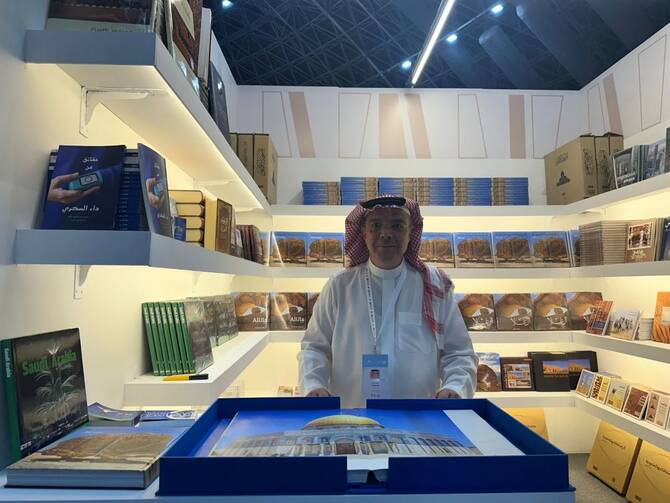
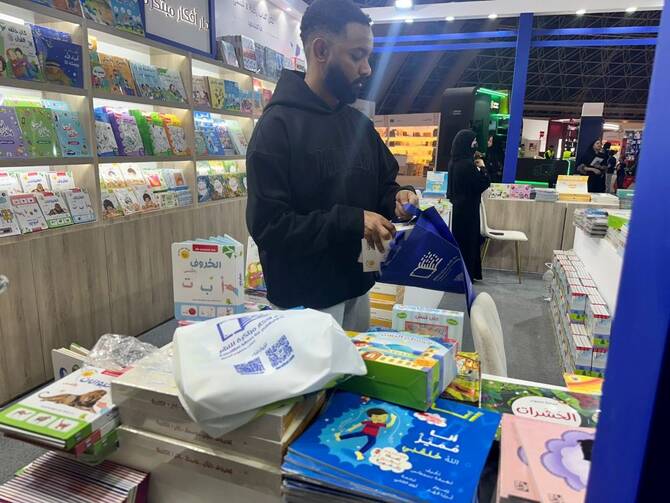
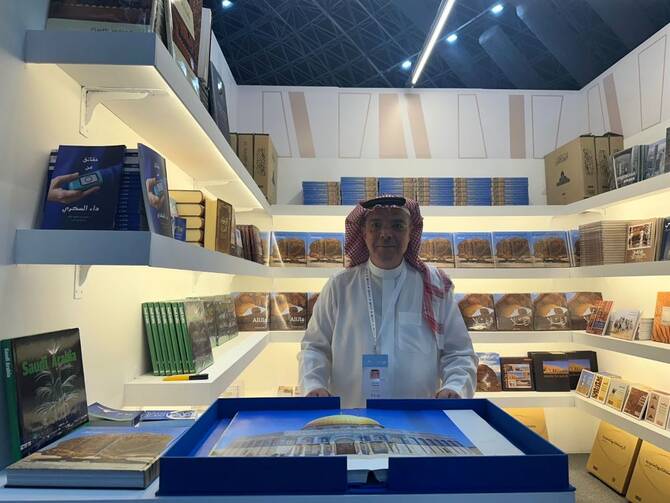
The LPTC launches Jeddah Book Fair 2025 at the Jeddah Superdome. (AN Photo)
2 / 6
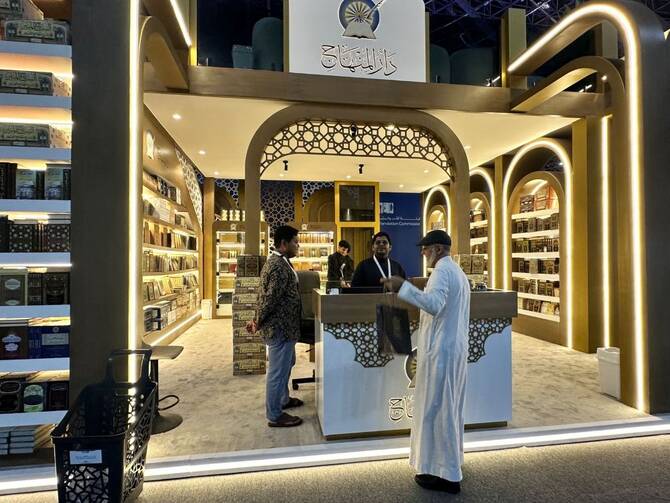
The LPTC launches Jeddah Book Fair 2025 at the Jeddah Superdome. (AN Photo)
3 / 6
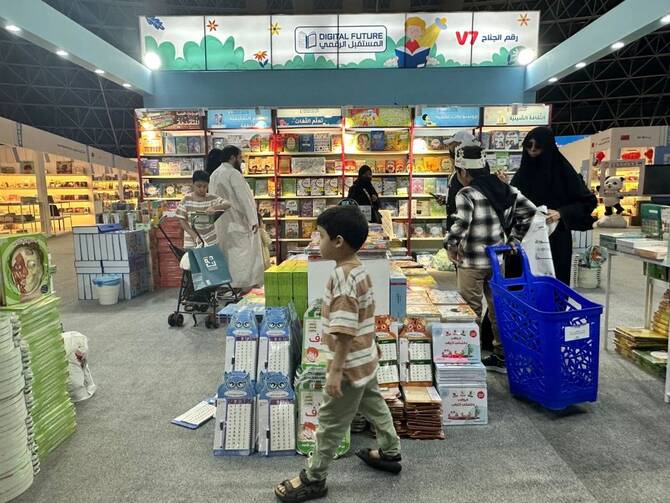
The LPTC launches Jeddah Book Fair 2025 at the Jeddah Superdome. (AN Photo)
4 / 6
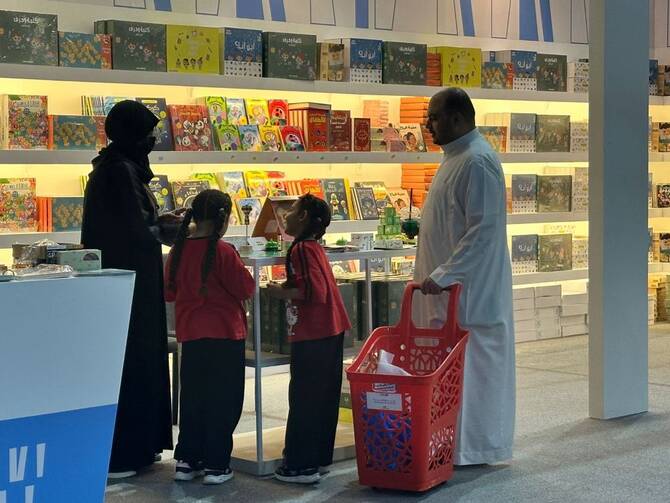
The LPTC launches Jeddah Book Fair 2025 at the Jeddah Superdome. (AN Photo)
5 / 6
The LPTC launches Jeddah Book Fair 2025 at the Jeddah Superdome. (AN Photo)
6 / 6
The LPTC launches Jeddah Book Fair 2025 at the Jeddah Superdome. (AN Photo)
Short Url
Updated 12 December 2025
Follow

Jeddah Book Fair 2025 opens with expanded cultural program

  • Bassam Al-Bassam: Since the LPTC began organizing Saudi book fairs in 2021, we have witnessed an increase in visitor numbers, as well as a rise in publishing-house sales
  • Al-Bassam: The LPTC provides a package of supportive initiatives across literature, publishing, and translation to support the sector, improve quality, and elevate outcomes

JEDDAH: Under the slogan “Jeddah Reads,” the Literature, Publishing, and Translation Commission inaugurated the Jeddah Book Fair 2025 on Thursday at the Jeddah Superdome, launching one of the city’s largest annual cultural gatherings. 

This year’s edition brings together more than 1,000 local and international publishing houses and agencies from 24 countries, spread across 400 booths, reinforcing the fair’s position as a major regional hub for creativity, knowledge exchange, and cultural engagement. 

Bassam Al-Bassam, general manager of the Publishing General Department, praised the steady development of the fair since the commission assumed responsibility for organising Saudi book fairs in 2021. 

“Since the Literature, Publishing, and Translation Commission began organizing Saudi book fairs in 2021, we have witnessed a significant increase in visitor numbers, as well as a noticeable rise in publishing-house sales,” he told Arab News. 

Commenting on the broader publishing landscape in the Kingdom, Al-Bassam said the sector is undergoing structural improvements. 

“The commission provides a package of supportive initiatives across literature, publishing, and translation to support the sector, improve quality, and elevate outcomes.” 

He also highlighted the commission’s work on regulatory reforms. “We are currently developing the sector’s core regulations and policies to facilitate the publishing process in Saudi Arabia … and enhance the sector’s overall value.” 

Regarding international partnerships, Al-Bassam said: “We provide proper infrastructure and host book fairs across various regions of the Kingdom ... opening doors for Saudi publishers to pursue international cooperation and partnerships, ultimately exporting Saudi culture abroad.” 

He added that the commission’s participation in leading global book fairs further supports the global presence of Saudi publications. 

For the first time, the fair is hosting a dedicated program for local film production, featuring daily screenings of acclaimed Saudi films supported by the “Dhaw” Film Support Program and organized in collaboration with the Film Commission. 

The initiative highlights the rise of Saudi visual storytelling and strengthens the integration between cultural and artistic sectors. 

With more than 170 cultural events, including panel discussions, lectures, poetry evenings, and specialized workshops, the fair continues to expand its role as a full-spectrum cultural platform. 

A dedicated children’s area offers interactive activities that nurture creativity and foster a love of reading among young visitors. 

Cultural institutions, universities, and community organizations are also showcasing their latest publications and initiatives during the fair. 

Other features include a manga and anime zone, a discounted books section, and a Handicrafts Corner celebrating the 2025 Year of Handicrafts by introducing visitors to traditional crafts and supporting Saudi artisans. 

Among participating publishing houses is Kadi and Ramadi, a Saudi specialist in children's books, which celebrates its 20th anniversary this year. 

Founder Thuraya Batarji expressed her joy at returning to the fair during such a milestone. 

She said the publishing house has released special anniversary editions of key titles, noting their continued commitment to both the Jeddah and Riyadh book fairs. 

As a prominent figure in children’s literature, Batarji emphasized the importance of reading from infancy. “The secret to instilling the value of reading in children is to start at a very early age, even from three to six months.” 

She added that shared reading sessions between parents and children strengthen their bond with books and foster critical-thinking skills as young readers grow. 

The opening day also drew young visitors who had grown up attending the Jeddah Book Fair. 

Sara Al-Malki, 16, from Jeddah, described the event as an essential part of her life. 

“I’ve been coming to this fair since I was a little girl,” she said. “Starting the weekend here feels special. The atmosphere, the books, the publishers I love, it all brings back memories and makes me excited for what’s new.” 

She said that visiting her favourite publishing houses on opening day has become a personal tradition, adding that the fair has influenced her love of reading and her dream of becoming a writer. 

“This fair feels like home,” she said. “Every year it grows, and every year I grow with it.” 


Saudi Arabia, Estonia strengthen cyber defense cooperation

Updated 09 February 2026
Follow

Saudi Arabia, Estonia strengthen cyber defense cooperation

  • Renowned for its leadership in digital governance, Estonia sees cybersecurity as central to its partnership potential with Saudi Arabia, building on years of regional engagement through its technology firms

RIYADH: Estonia aims to deepen defense, cybersecurity, and artificial intelligence cooperation with Saudi Arabia as both nations look to advance technology‑driven defense and cybersecurity capabilities.

Hanno Pevkur, Estonia’s minister of defense, told Arab News at the World Defense Show in Riyadh on Monday that Estonia’s defense industry is eager to contribute to the Kingdom’s fast‑growing defense ecosystem.

“In the modern world, cooperation built on trust and technology is the best defense,” he said. “It is important for us to be here because we clearly see there is a possibility to increase cooperation, not only bilaterally between Saudi Arabia and Estonia, but across the region.”

At Estonia’s pavilion, a cooperation agreement was signed between an Estonian company and a Saudi firm during the show, he noted.

Pevkur also said Estonia’s defense sector has expanded rapidly in recent years, driven by technological innovation and partnership.

“Our defense industry is growing very rapidly, and we continue to see strong momentum,” he said.

He said Estonia’s strengths lie in digital and smart‑system integration rather than large‑scale weapons production.

“We will not build airplanes or tanks, but what we can do is integrate robotics, automation and drones to make existing systems smarter,” he said.

The minister said effective defense collaboration must link businesses and governments to achieve meaningful results.

“When we want to have real cooperation, we need it on all levels,” he said. “The biggest client for any defense company is the government, so we must treat this as one ecosystem where the public and private sectors work hand in hand.”

Renowned for its leadership in digital governance, Estonia sees cybersecurity as central to its partnership potential with Saudi Arabia, building on years of regional engagement through its technology firms.

Pevkur said several Estonian companies, including Nortal, have already assisted Gulf governments in developing open IT and digital‑service systems.

“As the most digitalized nation in the world, almost every service in Estonia can be done online, except getting married,” he said. “But with such digitalization, we also need strong cyberdefense.”

He said data protection and digital resilience are treated as matters of national sovereignty in Tallinn, the capital of Estonia.

“Data is what we own. When someone steals that data, it becomes a serious threat,” he added. “That is why cyberdefense is not just about technology, it is about trust, sovereignty and protection.”

Pevkur said Saudi Arabia’s advances in AI offer promising opportunities for collaboration.

“I know that Saudi Arabia is doing great work when it comes to AI,” he said. “For us, as a small country with limited human resources, AI is essential not just for defense but for everyday life.”

Pevkur added that Estonia has launched a national AI strategy to promote responsible development and closer coordination between government and industry. One Estonian company, he said, has developed a system that allows a single operator to control hundreds of drones through AI.

“It is quite easy to put a weapon into the hands of a robot, but we also need to define who is accountable for its actions,” he said.

“The big question for the future is whether we can allow a war to be fought entirely by AI, or if humans must always make the final ethical decisions.”

He said in his conclusion that governments must reach a common understanding on how AI will be used and regulated on the battlefield.