

Volcanic eruptions may have brought Black Death to Europe, say new study

Illustration courtesy of Gemini
Short Url
Updated 07 December 2025
Follow

Volcanic eruptions may have brought Black Death to Europe, say new study

  • Study says volcanic eruptions in 1345 caused temperatures to drop, leading to crop failure and causing famine
  • This led Italy to have ships bring grain from central Asia, where the bubonic plague is thought to have first emerged
  • The plague killed tens of millions of people and wiped out up to 60 percent of the population in parts of Europe 

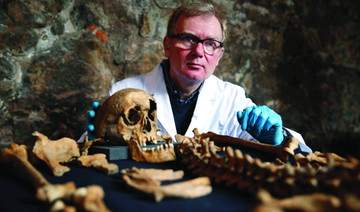
PARIS: Previously unknown volcanic eruptions may have kicked off an unlikely series of events that brought the Black Death — the most devastating pandemic in human history — to the shores of medieval Europe, new research has revealed.
The outbreak of bubonic plague known as the Black Death killed tens of millions and wiped out up to 60 percent of the population in parts of Europe during the mid-14th century.
How it came to Europe — and why it spread so quickly on such a massive scale — have long been debated by historians and scientists.
Now two researchers studying tree rings have suggested that a volcanic eruption may have been the first domino to fall.
By analyzing the tree rings from the Pyrenees mountain range in Spain, the pair established that southern Europe had unusually cold and wet summers from 1345 to 1347.
Comparing climate data with written accounts from the time, the researchers demonstrated that temperatures likely dropped because there was less sunlight following one or more volcanic eruptions in 1345.
The change in climate ruined harvests, leading to failed crops and the beginnings of famine.
Fortunately — or so it seemed — “powerful Italian city states had established long-distance trade routes across the Mediterranean and the Black Sea, allowing them to activate a highly efficient system to prevent starvation,” said Martin Bauch, a historian at Germany’s Leibniz Institute for the History and Culture of Eastern Europe.
“But ultimately, these would inadvertently lead to a far bigger catastrophe,” he said in a statement.
Deadly stowaways

The city states of Venice, Genoa and Pisa had ships bring grain from the Mongols of the Golden Horde in central Asia, which is where the plague is thought to have first emerged.
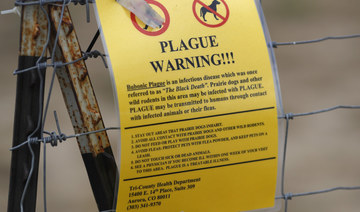
Previous research has suggested that these grain ships brought along unwelcome passengers: rats carrying fleas infected with Yersinia pestis, the bacterium that causes plague.
Between 25 and 50 million people are estimated to have died over the next six years.
While the story encompasses natural, demographic, economic and political events in the area, it was ultimately the previously unidentified volcanic eruption that paved the way for one of history’s greatest disasters, the researchers argued.
“Although the coincidence of factors that contributed to the Black Death seems rare, the probability of zoonotic diseases emerging under climate change and translating into pandemics is likely to increase in a globalized world,” study co-author Ulf Buentgen of Cambridge University in the UK said in a statement.
“This is especially relevant given our recent experiences with Covid-19.”
The study was published in the journal Communications Earth & Environment on Thursday.
English museum shines light on Mary Shelley and her Gothic classic ‘Frankenstein’  

Updated 3 sec ago
Follow

English museum shines light on Mary Shelley and her Gothic classic ‘Frankenstein’  

  • Museum in English city of Bath celebrates work of Mary Shelley
BATH: On a window of a Bath townhouse, one of the southwestern ​English city’s most famous residents looks out at passersby. Inside is Mary Shelley’s House of Frankenstein, a museum dedicated to the writer and her Gothic novel, published in 1818, which has inspired numerous screen adaptations, with the latest being Mexican filmmaker Guillermo del Toro’s Oscar contender.
“‘Frankenstein’ is regarded as one of the most important books in English literature ... It’s the world’s first science fiction novel,” said Chris Harris, co-founder and director of the immersive attraction.
“It’s a very modern story ... he’s trying to fit in, but he’s abandoned ... and rejected and ‌has prejudice thrown ‌toward him. And you think, well, from prejudice comes violence, ​which is ‌happening ⁠nowadays.”
’FEAR ABOUT ​CHANGE’
Born ⁠Mary Wollstonecraft Godwin, Shelley came up with the idea for “Frankenstein; or, the Modern Prometheus” at 18 years old. She and her future husband, poet Percy Bysshe Shelley, were staying by Lake Geneva in 1816 with Lord Byron when the latter challenged their group to write a ghost story. She found inspiration there.
Back in England, she moved to Bath, where she penned key chapters before finishing the book — about the scientist Victor Frankenstein, who brings to life a creature ⁠assembled from body parts — in the town of Marlow.
“It plays on ‌people’s fears about change,” Harris said. “Now Frankenstein is a ‌metaphor for anything we’re scared of.”
The first “Frankenstein” adaptation was ​a musical, he said.
“The Creature in her ‌book is sensitive, he talks ... but in the play, he was rendered into a ‌monster. He didn’t talk, he was mute. He just went around killing people,” Harris said.
“So, right from the off, he’s been sort of invented in a slightly different way. And that’s happened all the way through the evolution of film and theater ... So it’s interesting to see del Toro’s ‌film; they’re exploring a different side of him.”
OSCAR AND BAFTA NOMINATIONS
That film, with nine Oscar nominations including best picture, shows actor ⁠Jacob Elordi’s Creature as ⁠gentle and hungry for knowledge but facing resentment. Elordi received Best Supporting Actor nods at the Oscars and Sunday’s BAFTA Film Awards, Britain’s top movie honors, where “Frankenstein” has eight nominations.
While del Toro’s movie differs from the book in several ways, including omitting the Creature’s murders, Harris said physically it was “a similar recreation” of Shelley’s description.
The museum has its own animatronic, standing in Victor Frankenstein’s recreated laboratory. Elsewhere, visitors learn about Shelley’s life, tragedies she faced and her interest in science.
Nearby, by Bath Abbey, is a 2018 plaque marking where Shelley lived in 1816-1817 and worked on the book. Bath is also associated with another female novelist, Jane Austen, who is celebrated annually with a festival. Harris, who opened his museum in 2021, says ​Shelley deserves more recognition.
“We just want ​people to understand that this is an extraordinary young woman who came up with one of the most enduring books ever written, that will never go out of fashion.”
