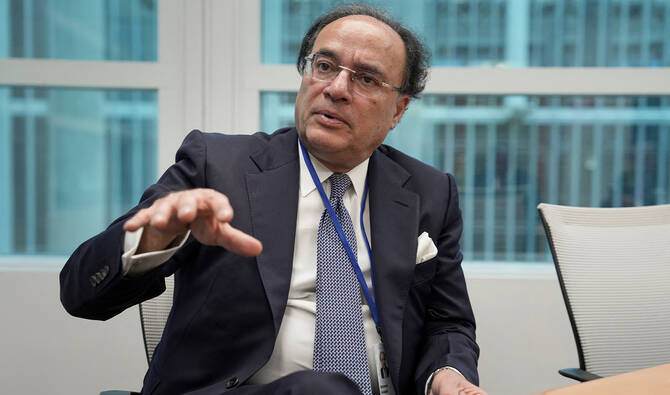

ISLAMABAD: Pakistan must finalize and submit action plans on a 15-point set of governance and anti-corruption reforms recommended by the International Monetary Fund (IMF) before Dec. 31, Finance Minister Muhammad Aurangzeb told a parliamentary panel on Wednesday.
The reforms stem from the IMF’s Governance and Corruption Diagnostic Assessment, published last month as part of the lender’s broader conditions under Pakistan’s ongoing bailout programs. The report identified weaknesses across state institutions, including the civil service, judiciary, tax administration, regulators and procurement systems, and said fully implementing the recommended measures could raise Pakistan’s GDP by 5–6.5 percent.
IMF governance diagnostics are part of a newer framework applied to around 20 borrower countries, but Pakistan’s assessment drew unusually sharp political attention because it highlighted systemic failures across all branches of the state. The report’s publication was also a prior action for the IMF Executive Board’s approval of a $1.2 billion disbursement expected next month, under Pakistan’s overlapping financial and climate-linked programs.
“We are supposed to come up with an action plan, around the 15 recommendations [of IMF]. The time frame for the action plan [submission] is Dec. 31,” Aurangzeb told the National Assembly Standing Committee on Finance.
Committee Chairman Syed Naveed Qamar said the IMF’s findings were “not only an indictment of the government but also of the parliament.”
Aurangzeb rejected suggestions that the government had delayed the report’s release.
“We initiated and facilitated this report. Over the last few months, there were more than 100 meetings involving 30-plus departments,” he said, adding that Pakistan’s experience was similar to “around 20 IMF-program countries” that had undergone comparable diagnostics.
He said every department implicated in the 15 recommendations, including the judiciary, had been directed to submit its action plan before the Dec. 31 deadline.
15-POINT PLAN
The IMF recommendations span ministries and institutions including the Public Procurement Regulatory Authority (PPRA), the Special Investment Facilitation Council (SIFC), the Securities and Exchange Commission of Pakistan (SECP), the Federal Board of Revenue (FBR), the National Accountability Bureau (NAB), and the ministries of law, finance, interior, information technology and planning.
The report urged the PPRA to improve procurement transparency by eliminating preferential treatment for state-owned enterprises, and asked the SIFC, a high-level civil-military body overseeing investment deals, to publish its first annual report with full disclosure of projects and concessions.
It recommended that the SECP create a central database of federal regulations, eliminate unnecessary rules, and develop a regulatory review process. The SECP and IT ministry were asked to accelerate digitization of compliance procedures:
“Within 15 months, establish the list of regulatory processes to be digitized, and demonstrate progress in introducing digitized compliance procedures,” the IMF said.
The law ministry was advised to publish a performance-assessment methodology for courts and judges, including data on how administrative tribunals and special courts handle commercial disputes.
The finance ministry was told to publish a tax-simplification strategy by May 2026 and report annually on progress. The IMF also called for restructuring of the FBR to reduce the autonomy of field offices and reform human-resource systems.
The GCDA report was a prior action for the IMF Executive Board’s expected approval of a $1.2 billion tranche.
Pakistan resumed close engagement with the IMF last year amid severe macroeconomic strain, securing a $7 billion bailout in September 2024 after months of negotiations, followed by a $1.4 billion, 28-month Resilience and Sustainability Facility in May 2025.