


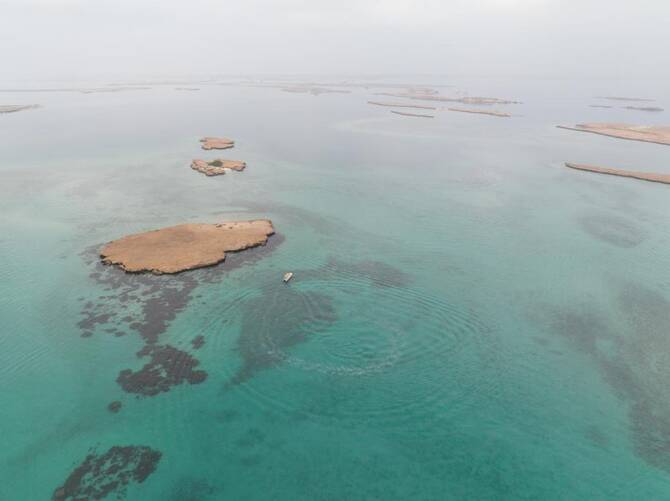


RIYADH: The Farasan Islands Marine Sanctuary was added to the Ramsar Convention list of wetlands of international importance, making it the first Saudi marine reserve to be formally recognized under the convention, the Saudi Press Agency announced on Monday.
The Ramsar Convention is an agreement adopted early in the 1970s to provide a plan for the preservation and efficient use of wetlands and their resources.
NCW CEO Mohammed Qurban commented on the news, highlighting the progress Saudi Arabia is making in ecological sustainability, including efforts to protect wetlands and migratory species.
He praised the Kingdom’s commitment to applying global conservation practices, enhancing overall international cooperation for sustainable development.
The NCW launched a national program last October, in cooperation with King Abdullah University of Science and Technology, to protect Saudi Arabia’s marine ecosystems from non-native and invasive species through field surveys, DNA-barcoding and maritime-traffic analysis.
The Farasan Islands are an archipelago in the Red Sea characterized by unique marine and coastal habitats.
They are a rich array of ecosystems that contain coral reefs, mangrove forests and a variety of wetlands.
The islands provide a haven for several rare species to thrive and serve as a significant stopping point for migratory waterbirds traveling between continents and crossing Saudi Arabia, such as the pink-backed pelican, sooty falcon and the dugong.
Farasan became the first Saudi reserve to join the UNESCO Man and the Biosphere program in 2021, highlighting its ecological and cultural value.


