DUBAI: Unarmed and unaware of their impending fate, two teenage boys pushed a handcart along a Gazan street when, without warning, a shot rang out. One of the boys fell to the ground, shot in the head by an Israeli soldier with no discernible provocation.
This is just one of dozens of examples of alleged war crimes committed by Israeli soldiers in Gaza revealed in a new documentary, “Breaking Ranks: Inside Israel’s War,” which features the accounts of active and former combatants turned whistleblowers.
“If they walk too fast, they’re suspicious. If they walk too slow, they’re suspicious, they’re plotting something,” one soldier, whose identity is hidden, tells the interviewer, as he describes the incident of the two teenage boys.
“If three men walk and one is lagging, then that is two-to-one military formation. You can incriminate everyone. I can incriminate the whole strip if I want.”
The hour-long film, produced by documentary filmmaker Benjamin Zand, recounts several instances of civilians being killed, wholesale destruction of infrastructure without justification, and acts of vandalism.

A Palestinian woman scuffles with Israeli troops during a protest demanding Israel to release Palestinian teenager Ahed Tamimi, near Israel's Ofer Prison near the West Bank city of Ramallah. (Reuters)
It raises questions about the morality and ultimate aims of the Israeli military at a time when it has come under heavy scrutiny and has even been accused of genocide by a UN independent commission of inquiry — accusations it strenuously denies.
“We made ‘Breaking Ranks’ because we wanted to understand how decisions were being made, particularly decisions that resulted in horrific acts against Gazan civilians, as described by the soldiers themselves,” Zand told Arab News.
“We hope the film helps bring much-needed transparency to a conflict where so much remains hidden.
“When soldiers describe acts that caused immense harm to civilians, those accounts deserve to be heard and examined, not sensationalized, not politicized, but understood as part of the factual record.”
Through these testimonies, the documentary questions the Israel Defense Forces’ claim of being a modern professional military and instead paints a picture of a brazen, vengeful, and at times depraved entity, acting with impunity.
Some of the whistleblowers expressed remorse for their actions, which included using human shields, defecating on Palestinian property, burning homes, killing paramedics, and using drones to blow up unarmed men walking the streets.
“In hindsight, I am disgusted with myself, but at the time, I thought this house was going to get destroyed anyway, so I might as well do what I want,” one whistleblower said in the film. “It’s crazy to think that people do such extreme things not out of revenge but just because they can.”
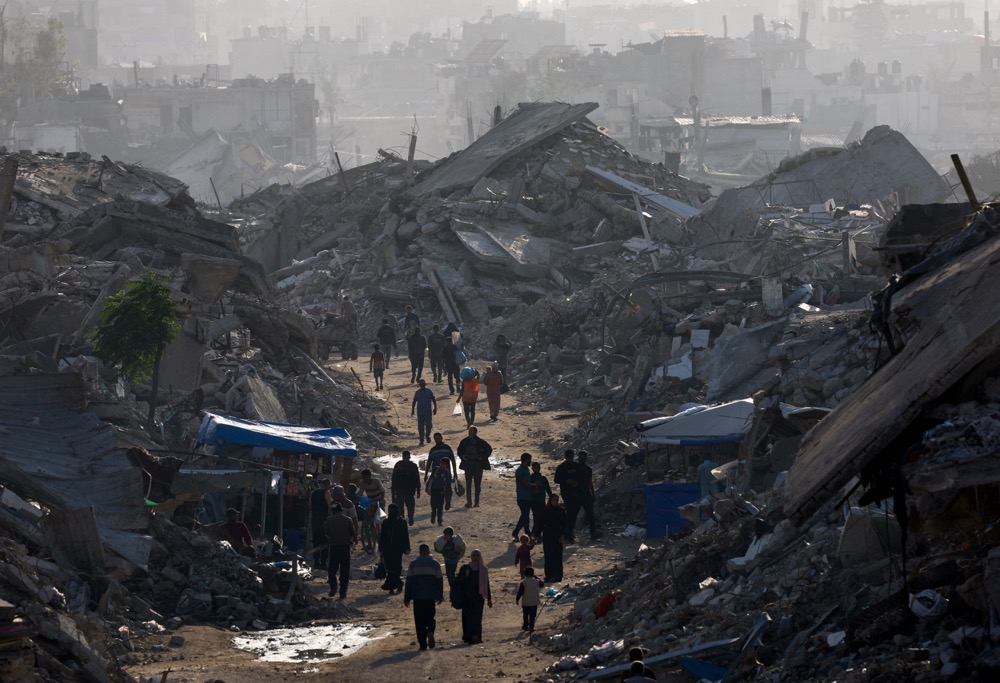
Palestinians walk among piles of rubble, amid a ceasefire between Israel and Hamas, in the northern Gaza Strip. (Reuters/File)
However, others like Lt. Col. B, an air force officer who did not share his real name, appeared to have little remorse.
“If you ask me, I would have pushed them all into the sea on Oct. 7,” he said, referring to the 2023 Hamas-led attack on southern Israel that left 1,200 dead, saw 250 taken hostage, and triggered Israel’s retaliation against Gaza.
“(I’d have) given them snorkels and had them swim to Egypt.”
Tom Giles, controller of current affairs at the UK broadcaster ITV, which aired the film, said the documentary charts the “growing disillusionment and shame of some about the war.”
However, prominent Israeli analyst Ori Goldberg said he believed the documentary would do little to bring about a moral reckoning in a society that denies any criminal responsibility for its actions in Gaza.
“There’s a general sense that, yes, of course, bad things happened, crimes were committed,” Goldberg told Arab News. “But I think most Israeli Jews will tell you that you can’t blame individual soldiers.
“Generally, they will raise Oct. 7, 2023, and say, well, after what was done to us, how could you blame anybody?”
There does not seem to be any acknowledgment among Israelis that the war in Gaza was in any way genocidal, said Goldberg. Even “reasonable” Israelis had become almost fanatical in their defense of the war, in part due to the personal loss.
“Israel is fully committed to denying the nature of its campaign in Gaza. We can’t face any consequence of owning up to what we did in Gaza because that would mean that we were wrong,” he said.
“I know people who have friends and sons and acquaintances in Gaza, these people you would consider utterly sensible, but once you start talking to them about it, then they just shut off. What are they going to say? My son is a war criminal?”

Israeli soldiers detain a Palestinian man by the village of Muqeibila near the entrance to the West Bank. (Reuters/File)
The documentary has faced criticism from pro-Israel writers like Adam Levick, editor of CAMERA-UK, the UK division of the US-based Committee for Accuracy in Middle East Reporting and Analysis, which monitors media portrayals of Israel.
Levick said the film lacked hard evidence, was based on a selection of hand-picked testimonies, and although it chronicled individual crimes, was unable to substantiate systemic problems with the IDF’s conduct.
Zand told Arab News this kind of criticism was inevitable, adding that the film had not attempted to represent the entire Israeli military but had instead given soldiers a chance to speak for themselves.
“What I can say is that ‘Breaking Ranks’ presents the testimonies of soldiers who took part in the Gaza war and who describe, in their own words, actions that had devastating consequences for civilians,” he said.
Indeed, Yuval Ben Ari, an infantryman who spent more than 50 days in Gaza, and Yotam Vilk, an armored corps officer who spent 269 days in the enclave, appear to be under no illusion about the corruption of the military in which they served.
Vilk said Israeli troops are trained to kill only when a target is considered to have the clear intent, means, and ability to cause harm, yet this training was consistently ignored in Gaza.
One whistleblower describes an incident in which his platoon killed 111 people, all of them unarmed, and his feelings of dismay when he learned that no one had even checked whether or not they were armed.
In another instance, a soldier describes a whole building being demolished, killing scores of civilians, because one man was seen on the roof hanging out laundry and was suspected of being a “spotter.”
The soldier told the interviewer: “The man was just standing there hanging jerseys. There is no intent, no means, and no ability. This man, what can he do to you?”

A Palestinian man and children stand at a heavily damaged building surrounded by rebar and rubble, amid a ceasefire between Israel and Hamas, in Gaza City. (Reuters/File)
The documentary also examines allegations of widespread looting, vandalism, and even the practice of using Palestinian civilians as human shields to map potentially boobytrapped Hamas tunnels — known as the “mosquito protocol.”
One soldier said the practice spread like wildfire and almost every company in the IDF had at least one Palestinian human shield — many of them picked up and forced to walk into the tunnels where they are used as a GPS tracker.
“As a platoon, we eventually decided we were not going to use human shields anymore,” the soldier said.
“Many said they were committing war crimes, and it was against international law. But the battalion commander came and said we don’t have to worry about international law, only the IDF spirit.”
While much of Israeli society appears to be caught in a doom loop of denial over its military’s alleged conduct in Gaza, Goldberg believes reality is quickly catching up with them, as more evidence emerges and international opinion hardens.
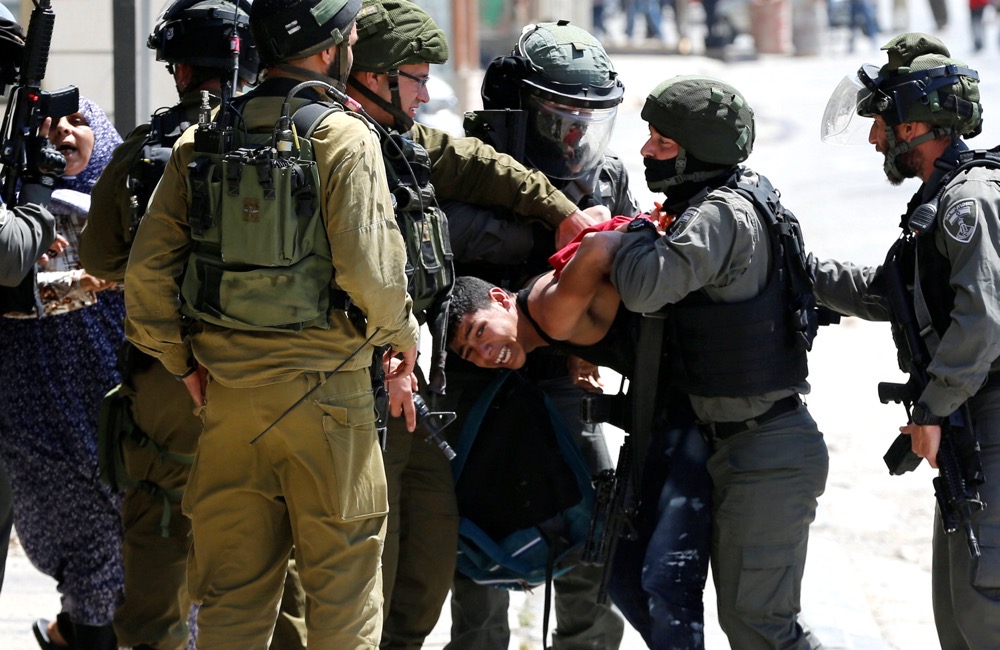
Israeli soldiers and border police detain a Palestinian during clashes following a protest in support of Palestinian prisoners on hunger strike in Israeli jails, in the West Bank town of Bethlehem. (Reuters/File)
“The general approach is denial. We are denying it,” he said.
“But I don’t think it’s going to last us very long because I don’t think anybody’s rooting for us at the moment. And as proof accumulates, we’re going to have to face up to the consequences of our actions, which is exactly what we’re trying not to do.”
The IDF has repeatedly said it operates in accordance with international law, targets Hamas rather than civilians, prohibits coercion, and investigates specific allegations when they are raised.
However, it has not published a dedicated rebuttal of the allegations raised in the film.