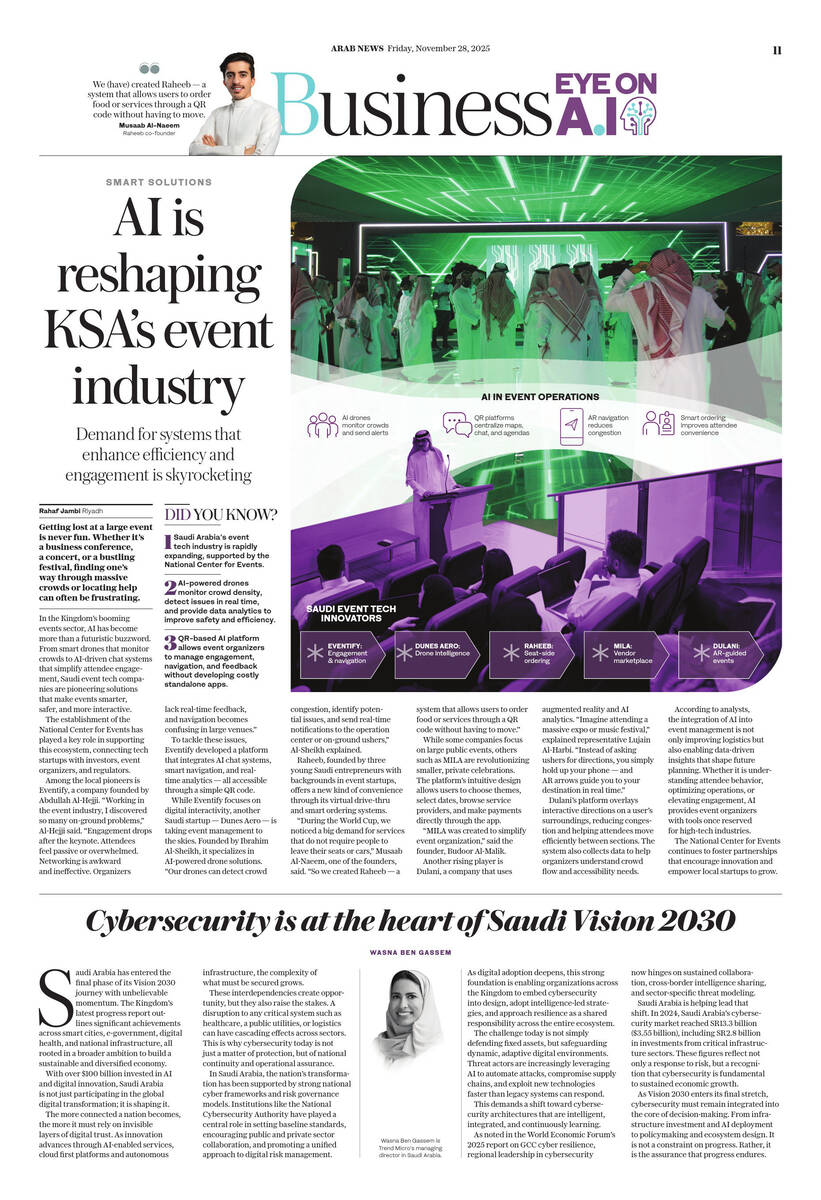
RIYADH: Getting lost at a large event is never fun. Whether it’s a business conference, a concert, or a bustling festival, finding one’s way through massive crowds or locating help can often be frustrating. Event organizers face their own challenges, from crowd management and navigation issues to gathering real-time feedback or simply finding the right vendors to bring an event to life.
But as Saudi Arabia continues to host an increasing number of events fueled by Vision 2030’s rapid transformation in entertainment, business, and tourism, local tech entrepreneurs are using artificial intelligence to solve these problems.
In the Kingdom’s booming events sector, AI has become more than a futuristic buzzword — it is a practical tool transforming how events are planned, managed, and experienced. From smart drones that monitor crowds to AI-driven chat systems that simplify attendee engagement, Saudi event tech companies are pioneering solutions that make events smarter, safer, and more interactive.
The rise of Saudi Arabia’s event industry has created a fertile ground for innovation. The government’s establishment of the National Center for Events has played a key role in supporting this ecosystem, connecting tech startups with investors, event organizers, and regulators.
As mega-events such as LEAP, Riyadh Season, and Formula E draw millions of visitors, the demand for intelligent systems that enhance both efficiency and engagement has skyrocketed.
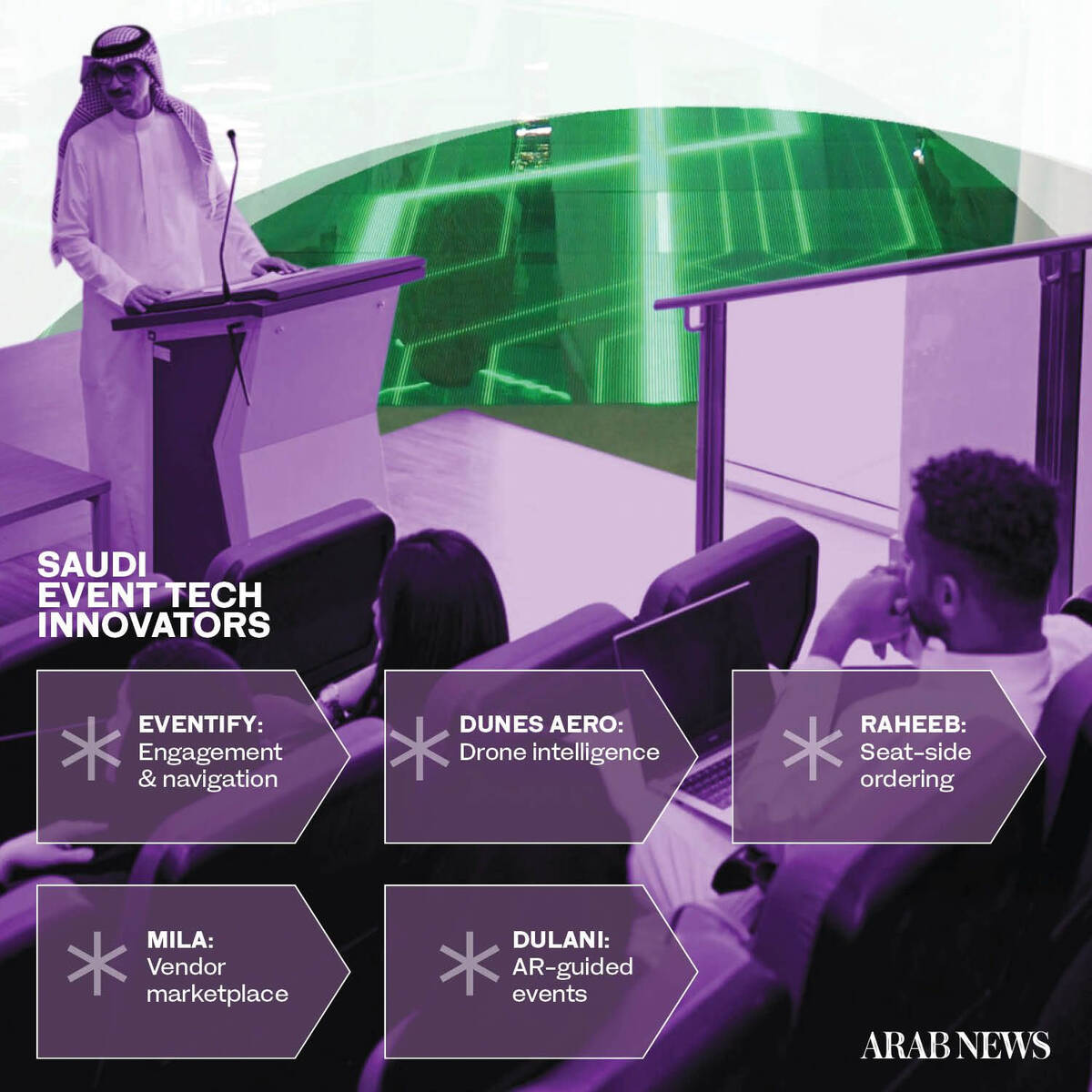
Among the local pioneers is Eventify, a Saudi company founded by Abdullah Al-Hejji, who witnessed firsthand the recurring challenges faced by organizers.
“Working in the event industry, I discovered so many on-ground problems,” Al-Hejji said. “Engagement drops after the keynote. Attendees feel passive or overwhelmed. Networking is awkward and ineffective. Organizers lack real-time feedback, and navigation becomes confusing in large venues.”
Opinion
This section contains relevant reference points, placed in (Opinion field)
To tackle these issues, Eventify developed a platform that integrates AI chat systems, smart navigation, and real-time analytics — all accessible through a simple QR code. Instead of building a costly app from scratch, clients can use Eventify’s software-as-a-service solution, which mimics a full app experience without the need for separate development.
“With our service, an organizer can instantly deploy an interactive event system that includes chat, agenda, maps, and contact features — all powered by AI,” Al-Hejji explained. “We offer three packages: Starter, Pro, and Enterprise, so it’s scalable for any event size.”
Eventify has already worked with major clients, including the National Event Center, the Ministry of Communications, and the Ignite the Game festival.
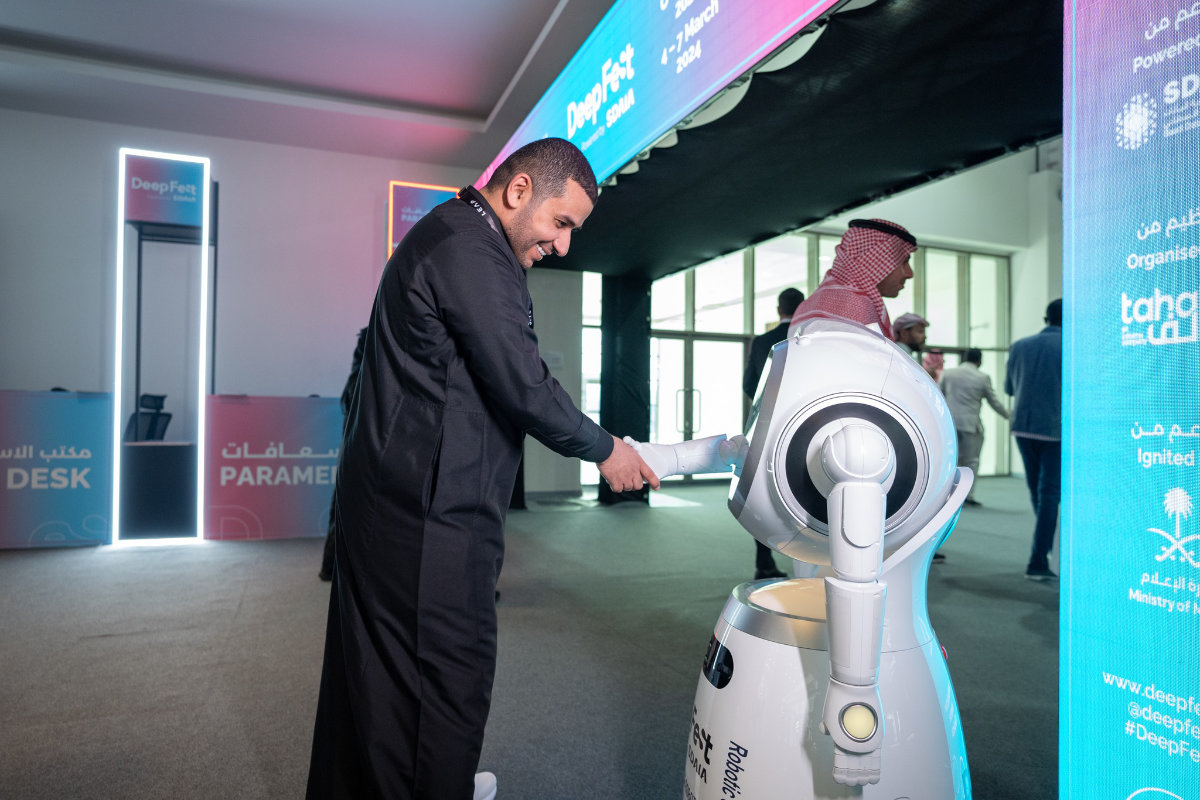
Human–AI interaction redefining visitor experience. (Supplied)
While Eventify focuses on digital interactivity, another Saudi startup — Dunes Aero — is taking event management to the skies. Founded by Ibrahim Al-Sheikh, Dunes Aero specializes in AI-powered drone solutions designed to enhance safety and efficiency during large-scale events.
“Our drones can detect crowd congestion, identify potential issues, and send real-time notifications to the operation center or on-ground ushers,” Al-Sheikh explained. “This technology is particularly useful for large entertainment events, concerts, or open-air gatherings.”
The drones also provide valuable data insights. By analyzing foot traffic patterns, entry points, and peak hours, organizers can make informed financial and operational decisions.
“For example, if an event runs for 12 hours, we can tell organizers exactly when the peak hours are, which helps them manage staffing, security, and even concession sales,” Al-Sheikh said.

Scenes from a booming events ecosystem fueled by tech. (Supplied)
Dunes Aero’s clients include major entertainment projects backed by the General Entertainment Authority, and its target market includes any event requiring large-scale outdoor monitoring — from Boulevard Riyadh City to open festivals and sports arenas.
Innovation in Saudi Arabia’s event tech sector does not stop at large-scale management. Some startups are rethinking the attendee experience itself.
Raheeb, founded by three young Saudi entrepreneurs with backgrounds in event startups, offers a new kind of convenience through its virtual drive-thru and smart ordering systems.
“During the World Cup, we noticed a big demand for services that do not require people to leave their seats or cars,” Musaab Al-Naeem, one of the founders, said. “So we created Raheeb — a system that allows users to order food or services through a QR code without having to move.”
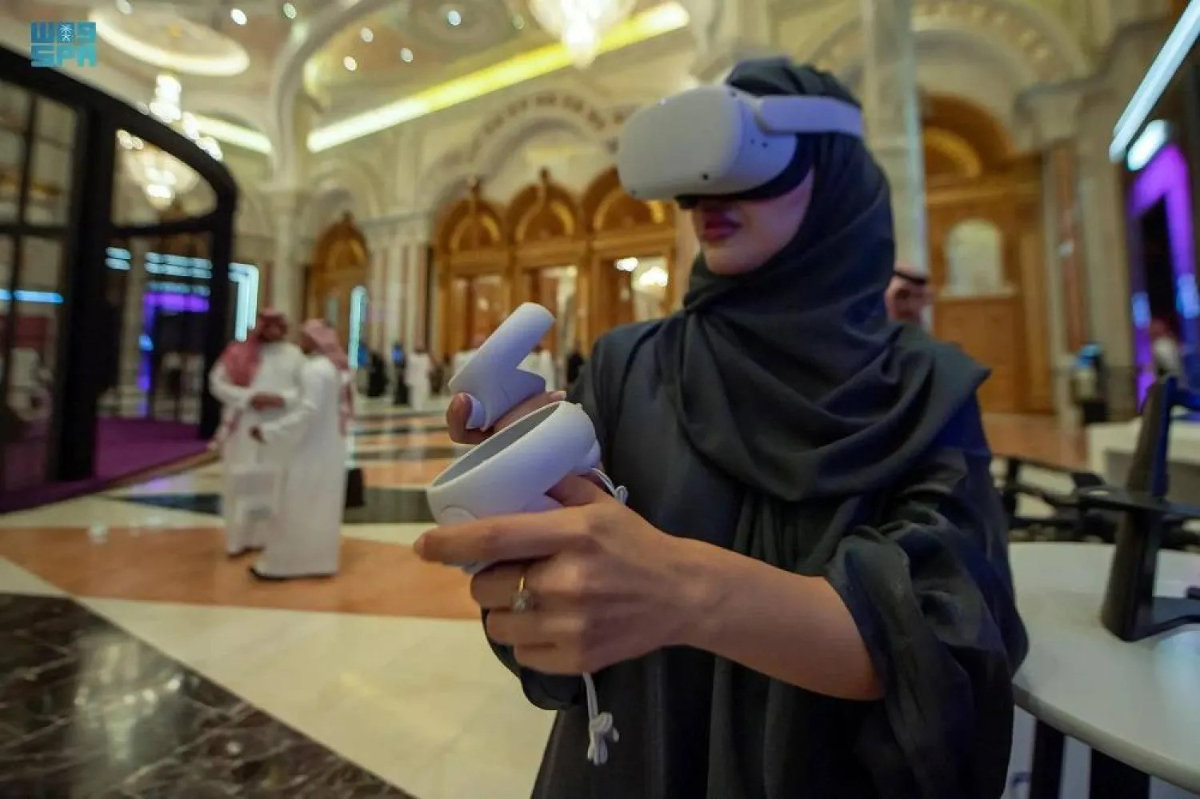
VR bringing visitors closer to the future of entertainment. (Supplied)
The platform operates in various settings, from stadiums and food festivals to parks. “It is like having a valet for your order,” he added. “You scan the QR code at your seat, place your order, and someone brings it directly to you.”
This type of user-centric innovation reflects a larger shift in Saudi Arabia’s event scene, where convenience, personalization, and digital integration are becoming the norm.
While some companies focus on large public events, others such as MILA are revolutionizing smaller, private celebrations.
DID YOU KNOW?
• Saudi Arabia’s event tech industry is rapidly expanding, supported by the National Center for Events.
• AI-powered drones monitor crowd density, detect issues in real time, and provide data analytics to improve safety and efficiency.
•QR-based AI platform allows event organizers to manage engagement, navigation, and feedback without developing costly standalone apps.
MILA is an interactive event management platform that connects clients with vendors for all types of occasions, from birthdays to baby showers. The platform’s intuitive design allows users to choose themes, select dates, browse service providers, and make payments directly through the app.
“MILA was created to simplify event organization,” said the founder, Budoor Al-Malik. “We understand that time is precious, so we bring together top-tier service providers who meet our strict quality standards. The entire process — from planning to execution — happens seamlessly through the app.”

Hands-on creativity powering Saudi event tech. (Supplied)
By merging e-commerce, AI-based recommendations, and an easy-to-use interface, MILA empowers users to design memorable experiences with minimal hassle, demonstrating how AI can personalize events even at an individual level.
Another rising player in the Kingdom’s event tech ecosystem is Dulani, a company that uses augmented reality and AI analytics to transform how visitors navigate large venues.
“Imagine attending a massive expo or music festival,” explained representative Lujain Al-Harbi. “Instead of asking ushers for directions, you simply hold up your phone — and AR arrows guide you to your destination in real time.”
Dulani’s platform overlays interactive directions on a user’s surroundings, reducing congestion and helping attendees move efficiently between sections. The system also collects data to help organizers understand crowd flow and accessibility needs.
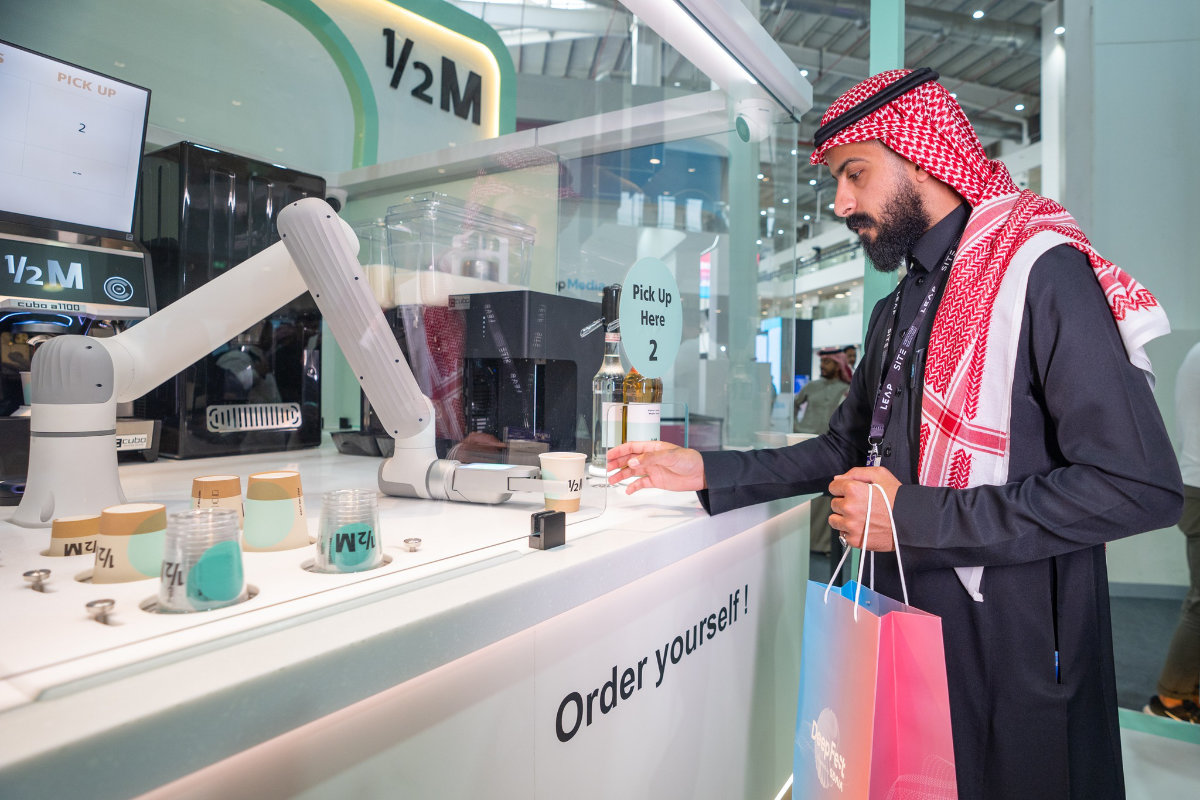
Smart service systems shaping smarter venues. (Supplied)
According to analysts, the integration of AI into event management is not only improving logistics but also enabling data-driven insights that shape future planning. Whether it is understanding attendee behavior, optimizing operations, or elevating engagement, AI provides event organizers with tools once reserved for high-tech industries.
The National Center for Events continues to foster partnerships that encourage innovation and empower local startups to grow.
As Al-Hejji of Eventify put it: “AI is not replacing people in the events industry — it is empowering them. It is helping us create smarter, more meaningful, and more connected experiences for everyone.”