



During a recent staycation in Jeddah, I discovered the delicacy of Sanaani Yemeni cuisine, and among the restaurants I visited, Sababah stood out.
The aroma of slow-cooked meat greets you the moment you step inside. The cashier recommended the hanith, but at SR180 ($48) it felt a bit pricy for a single dish, so I opted for fahsa, maraq with muza, and a glass of fermented raisin juice, especially since I wanted to try a broader range of flavors.
The food arrived in a traditional, rounded stone pot called a maghsh, sealed with a stone lid. Functioning much like cast iron, the pot retains heat exceptionally well, keeping the meat tender.
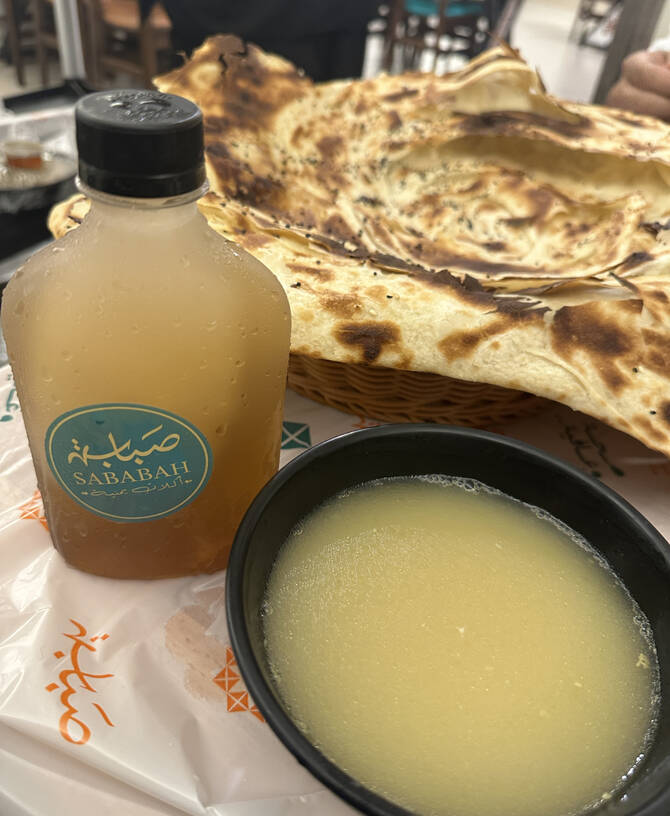
The rustic presentation connects you to Yemeni heritage, and the waiter poured out the broth with such care that the moment felt almost ceremonial.
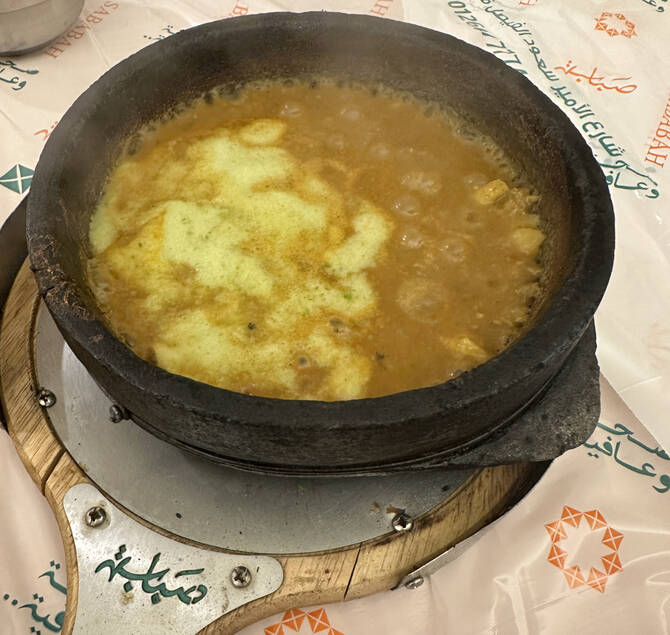
The fahsa came bubbling in an iron skillet, sending clouds of steam into the air. It was served with mulahwah, the traditional Yemeni and Jazan-style layered bread sprinkled with black sesame seeds. Its paratha-like texture pairs beautifully with sweet and savory dishes.
The meal was accompanied by white onions and lemon, the classic way to enjoy it. A dip of bread into the stew, a squeeze of lemon, and a bite of onion created a perfectly balanced mouthful.
The fahsa itself featured an okra-based stew enriched with vegetables including potatoes, cilantro, onion, garlic, spicy chili and fenugreek. For a first-timer, the flavor was a delightful surprise: bold, distinct, and deeply comforting. It’s a must-try at Sababah.
My second main dish, maraq with muza, was a nourishing bowl rich in collagen and protein. The “muza” refers to how soft the lamb shank becomes — tender enough to fall apart effortlessly. It’s a wholesome, flavorful option that I would recommend to anyone seeking something both nutritious and satisfying.
The fermented raisin juice featured notes of cardamom and cinnamon and was served ice-cold.
For dessert, I ordered arikah, a Yemeni classic. The combination of dates and ghee delivered a pronounced, distinctive flavor.
The dining area is thoughtfully decorated with paintings and photographs showcasing Yemeni culture — its people, landscapes, and nature. I found myself pausing just to appreciate the artwork. The restaurant also offers private partitioned seating for diners seeking more privacy.
Located in Al-Faisaliyyah district, Sababah delivers a memorable culinary experience with generous portions and a strong sense of identity.


