Algeria says willing to back ‘mediation’ over W.Sahara

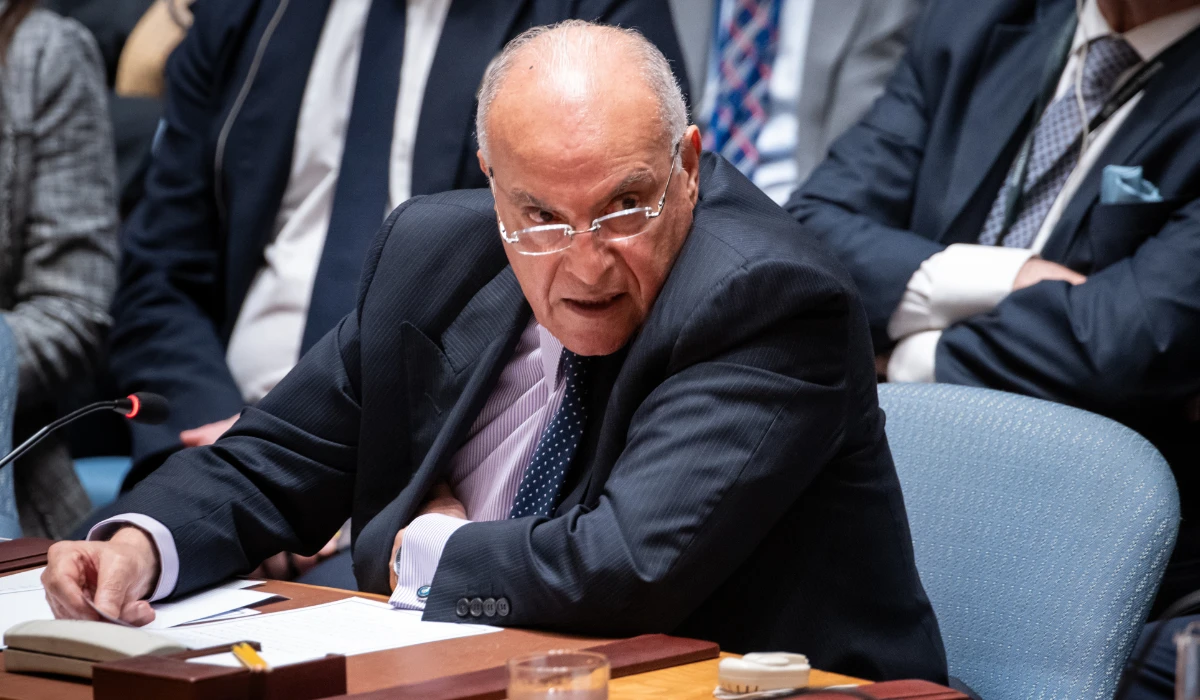
Ahmed Attaf, Algerian Foreign Minister, addresses the High-Level Security Council meeting on Palestinians and Israel during the 80th session of the United Nations General Assembly, Tuesday, Sept. 23, 2025. (AP)
Short Url
Updated 18 November 2025
Follow

Algeria says willing to back ‘mediation’ over W.Sahara

  • Tuesday’s move comes after the United Nations Security Council on October 31 voted in favor of Morocco’s plan for the territory, which would provide Western Sahara autonomy under the kingdom’s sole sovereignty

ALGIERS: Algeria said on Tuesday it was willing to back mediation between Morocco and Western Sahara’s Polisario Front in their dispute over the territory to achieve a “just and lasting” solution.
Algiers, which broke off relations with Rabat in 2021, had long called for a referendum on the Sahrawi people’s self-determination, unilaterally backing the pro-independence Polisario.
Tuesday’s move comes after the United Nations Security Council on October 31 voted in favor of Morocco’s plan for the territory, which would provide Western Sahara autonomy under the kingdom’s sole sovereignty.
Western Sahara is a vast mineral-rich former Spanish colony that is largely controlled by Morocco but has been claimed for decades by the Polisario Front.
“Algeria will spare no effort to support any mediation initiative between the two parties to the conflict, provided it falls within the UN framework and is based... on the fundamentals of a just, lasting and definitive solution,” Foreign Minister Ahmed Attaf said at a press conference.
The Security Council had previously urged Morocco, the Polisario Front, Algeria and Mauritania to resume talks to reach a broad agreement on the Western Sahara.
But at the initiative of US President Donald Trump’s administration, the council backed Rabat’s plan, which Morocco initially presented in 2007.
The resolution said “genuine autonomy could represent a most feasible outcome” under the plan to end the dispute.
Morocco must now update its proposal to reach “a final mutually acceptable solution,” according to the resolution.
Western Sahara remains on the UN list of non-self-governing territories.
The Polisario still demands a UN referendum on self-determination — promised under a 1991 ceasefire but never held.


Lebanon foreign minister declines Tehran visit, proposes talks in neutral country

Updated 10 December 2025
Follow

Lebanon foreign minister declines Tehran visit, proposes talks in neutral country

  • Lebanon’s foreign minister Youssef Raji cited ‘current conditions’ for the decision not to go to Iran

Lebanon’s foreign minister Youssef Raji said on Wednesday he had declined an invitation to visit Tehran for now, proposing instead talks with Iran in a mutually agreed neutral third country, Lebanese state news agency NNA reported.

Raji cited “current conditions” for the decision not to go to Iran, without elaborating, and stressed that the move did not mean rejection of dialogue with Iran. He did not immediately respond to a request from Reuters for additional comment.

Iran’s Foreign Minister Abbas Araqchi had extended the invitation last week, seeking talks on bilateral ties.

Raji said Lebanon stood ready to open a new phase of constructive relations with Iran, on the condition that ties be based strictly on mutual respect, full recognition of each country’s independence and sovereignty, and non-interference in internal affairs under any pretext.

In an apparent reference to calls to disarm Hezbollah, the Lebanese armed movement allied for decades to Iran, Raji added that no strong state could be built unless the government held the exclusive right to hold weapons.

Hezbollah, once a dominant political force with wide influence over the Lebanese state, was severely weakened by Israeli strikes last year that ended with a US-brokered ceasefire. It has been under mounting domestic and international pressure to surrender its weapons and place all arms under state control.

In August, Iran’s top security official Ali Larijani visited Beirut, warning Lebanon not to “confuse its enemies with its friends.” In June, Foreign Minister Araqchi said Tehran sought a

“new page” in ties.