Pakistan calls for interfaith harmony, coexistence on ‘International Day for Tolerance’

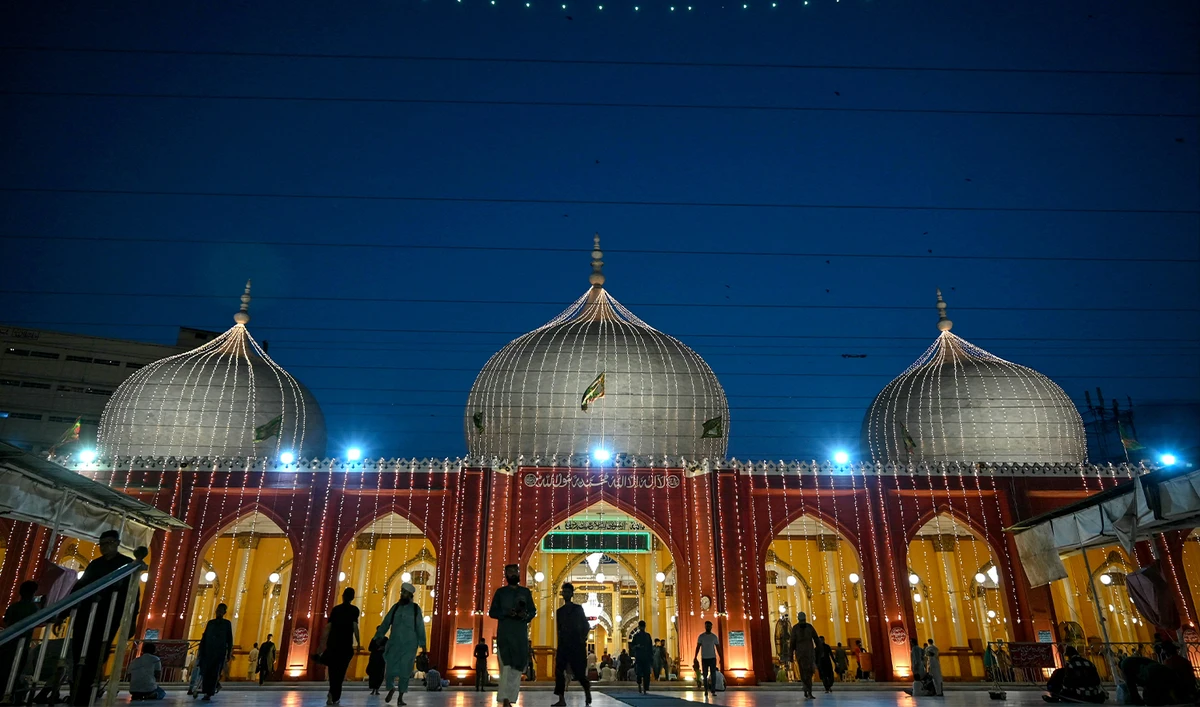
Sunni Muslims walk past the New Memon Mosque illuminated ahead of Eid-e-Milad-un-Nabi, which commemorates the birth anniversary of Prophet Mohammed in Karachi on September 4, 2025. (AFP/File)
Short Url
Updated 16 November 2025
Follow

Pakistan calls for interfaith harmony, coexistence on ‘International Day for Tolerance’

  • World marks ‘International Day for Tolerance’ on Nov. 16 each year to denounce sectarian tensions, religious discrimination
  • President Asif Ali Zardari urges religious scholars, representatives of minorities to educate the masses about love, coexistence

ISLAMABAD: President Asif Ali Zardari on Sunday called on citizens to promote interfaith harmony and peaceful coexistence among various sections of society, as the world marks “International Day for Tolerance.”

The world marks Nov. 16 every year as the International Day for Tolerance to shed on growing incidents of intolerance worldwide, despite the international community more connected with each other now than ever before. 

Programs and seminars are held in countries across the world to denounce sectarian tensions, violent extremism, human rights violations and religious discrimination.

“On this day, I call upon all citizens, particularly our youth, to stand firm against prejudice, discrimination, and hate in every form,” Zardari said, according to the Press Information Department (PID).

“I urge all segments of society, including religious scholars, representatives of minorities and the media, to educate the people about the spirit of love, tolerance, brotherhood and unity for making Pakistan into a safe haven with tolerance, unity, and social cohesion being the hallmarks.”

The Pakistani president pointed out that the eradication of the causes that may lead to socio-religious exploitation remain the cornerstone of his government’s policies. 

“The idea is to facilitate all segments of society, particularly our non-Muslim citizens, enabling them to play constructive role in our national life,” he said. 

He pointed out the parliament’s move to pass the National Commission for Minorities’ Rights Bill, 2025 and said that the Minorities Caucus body in the Senate has been recently formed to safeguard constitutional and legal rights of religious minorities.

Pakistan has struggled to ensure interfaith harmony in recent years, with the country reporting dozens of instances of mob violence against religious minorities. An attack on Christians in Jaranwala, a town in Punjab province, saw churches, homes and businesses set ablaze in August 2023. 

Meanwhile, in the southern Sindh province, Hindus have frequently complained about forced conversions, particularly of young girls, and attacks on temples. 

According to the latest digital census conducted in 2023, over 96 percent of Pakistan’s population is Muslim, with the remaining four percent comprising 5.2 million Hindus, 3.3 million Christians, 15,992 Sikhs and others.

Islamabad has vowed to protect religious minorities against discrimination and violence.


Pakistan says repaid over $13.06 billion domestic debt early in last 14 months

Updated 29 January 2026
Follow

Pakistan says repaid over $13.06 billion domestic debt early in last 14 months

  • Finance adviser says repayment shows “decisive shift” toward fiscal discipline, responsible economic management
  • Says Pakistan’s total public debt has declined from over $286.6 billion in June 2025 to $284.7 billion in November 2025

KARACHI: Pakistan has repaid Rs3,650 billion [$13.06 billion] in domestic debt before time during the last 14 months, Adviser to the Finance Minister Khurram Schehzad said on Thursday, adding that the achievement reflected a shift in the country’s approach toward fiscal discipline. 

Schehzad said Pakistan has been repaying its debt before maturity, owed to the market as well as the State Bank of Pakistan (SBP), since December 2024. He said the government had repaid the central bank Rs300 billion [$1.08 billion] in its latest repayment on Thursday. 

“This landmark achievement reflects a decisive shift toward fiscal discipline, credibility, and responsible economic management,” Schehzad wrote on social media platform X. 

Giving a breakdown of what he said was Pakistan’s “early debt retirement journey,” the finance official said Pakistan retired Rs1,000 billion [$3.576 billion] in December 2024, Rs500 billion [$1.78 billion] in June 2025, Rs1,160 billion [$4.150 billion] in August 2025, Rs200 billion [$715 million] in October 2025, Rs494 billion [$1.76 billion] in December 2025 and $1.08 billion in January 2026. 

He said with the latest debt repaid today, the July to January period of fiscal year 2026 alone recorded Rs2,150 billion [$7.69 billion] in early retirement, which was 44 percent higher than the debt retired in FY25.

He said of the total early repayments, the government has repaid 65 percent of the central bank’s debt, 30 percent of the treasury bills debt and five percent of the Pakistan Investment Bonds (PIBs) debt. 

The official said Pakistan’s total public debt has declined from over Rs 80.5 trillion [$286.6 billion] in June 2025 to Rs80 trillion [$284.7 billion] in November 2025. 

“Crucially, Pakistan’s debt-to-GDP ratio, around 74 percent in FY22, has declined to around 70 percent, reflecting a broader strengthening of fiscal fundamentals alongside disciplined debt management,” Schehzad wrote. 

Pakistan’s government has said the country’s fragile economy is on an upward trajectory. The South Asian country has been trying to navigate a tricky path to economic recovery under a $7 billion loan from the International Monetary Fund.