WASHINGTON: The United States announced Wednesday that it was imposing sanctions on an armed Myanmar group — alongside four of its senior leaders — accusing them of supporting cyber scam centers that target Americans.
The action took aim at the Democratic Karen Benevolent Army (DKBA), alongside companies Trans Asia and Troth Star, for their alleged roles in helping to develop these scam centers, the US Treasury Department said.
“The revenue generated by scam center workers — who are often themselves victims of human trafficking — supports organized crime and allows the DKBA to finance its harmful activities,” the Treasury added.
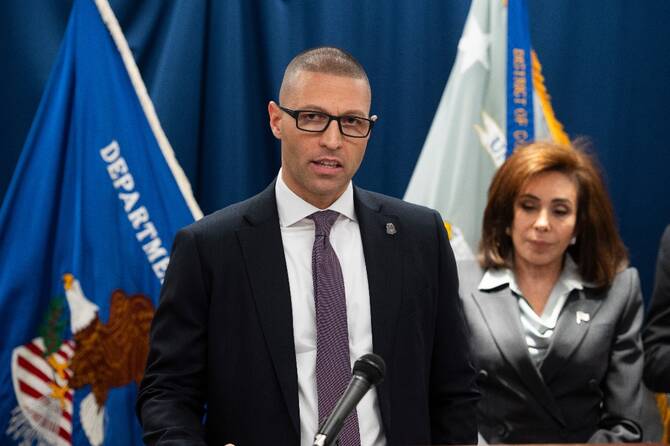
John Hurley, the department’s undersecretary for terrorism and financial intelligence, said that criminal networks operating out of Myanmar “are stealing billions of dollars from hardworking Americans through online scams.”
“These same networks traffic human beings and help fuel Burma’s brutal civil war,” he said in a statement, warning that the US government would continue pursuing cybercriminals.
The two firms targeted, alongside Thai national Chamu Sawang, are also linked to Chinese organized crime, the Treasury said.
The agency’s move adds to earlier actions against “illicit actors perpetrating these scams.”
In May, it designated the Karen National Army as a transnational criminal organization, alongside its leader and his two sons for their “roles in facilitating human trafficking and cyber scams that harm US citizens.”
In October, the Treasury — with UK counterparts — sanctioned a Cambodian business conglomerate called the Prince Group that operates scam centers, it added.
A US government estimate noted that Americans lost at least $10 billion in 2024 to Southeast Asia-based scam operations. This marked a 66-percent rise over the prior year.

US sanctions Myanmar armed group over scams
Short Url
https://arab.news/838xh
US sanctions Myanmar armed group over scams
- John Hurley, the department’s undersecretary for terrorism and financial intelligence, said that criminal networks operating out of Myanmar “are stealing billions of dollars from hardworking Americans through online scams”
Chaos erupts at Indian airports as country’s largest airline cancels flights
NEW DELHI: Chaos gripped major Indian airports Friday as passengers of the country’s biggest airline, IndiGo, scrambled to cope up with widespread flight disruptions and cancelations triggered by newly enforced rules limiting working hours for crew and pilots.
Scenes of frustration played out as passengers slept on airport floors, queued for hours at customer service counters and waited without clear communication from the airline.
Friday was the fourth straight day of disruptions as the low cost carrier struggles with new regulations that mandate longer rest periods and limit night flying hours to address concerns about fatigue and safety.
The first phase of the rules came into effect in July while the second phase kicked in November. IndiGo struggled to adapt its rosters in time, resulting in widespread cancelations and disruptions.
On Thursday, more than 300 IndiGo flights were grounded while several hundreds delayed. A passenger advisory from the Delhi airport Friday stated that all domestic IndiGo flights will remain canceled until midnight. Other major airlines, including Air India, have not faced similar issues so far.
IndiGo operates around 2,300 flights daily and controls nearly 65 percent of India’s domestic aviation market.
Senior citizen Sajal Bose was scheduled to travel with his wife Senjuti Bose early Friday from Kolkata to New Delhi to attend a friend’s silver jubilee celebration. His flight was canceled an hour before the scheduled take off.
Bose told The Associated Press he was now taking a nine-hour train ride to the city Bagdogra, where he plans to get a flight to New Delhi on another airline. “Its very irresponsible and complete negligence. Very difficult for older people like us,” he said.
In an internal email to employees this week, seen by The Associated Press, IndiGo CEO Pieter Elbers apologized, and cited technology glitches, schedule changes, adverse weather conditions, heightened congestion and the implementation of the new rules as the reasons for flight disruptions.
The Civil Aviation Ministry said in a statement that the disruptions arose primarily through misjudgment and planning gaps as the airline implemented phase two of the new rules, and that the airline acknowledged that the effect on crew strength exceeded their expectations.
IndiGo has sought temporary exemptions in implementing the new rules and told the government that corrective measures were underway. It has indicated the operations will be fully restored by Feb. 10.
More cancelations are expected in the next couple of weeks, and the airline said it would reduce its flight operations from Dec. 8 to minimize disruptions.
Scenes of frustration played out as passengers slept on airport floors, queued for hours at customer service counters and waited without clear communication from the airline.
Friday was the fourth straight day of disruptions as the low cost carrier struggles with new regulations that mandate longer rest periods and limit night flying hours to address concerns about fatigue and safety.
The first phase of the rules came into effect in July while the second phase kicked in November. IndiGo struggled to adapt its rosters in time, resulting in widespread cancelations and disruptions.
On Thursday, more than 300 IndiGo flights were grounded while several hundreds delayed. A passenger advisory from the Delhi airport Friday stated that all domestic IndiGo flights will remain canceled until midnight. Other major airlines, including Air India, have not faced similar issues so far.
IndiGo operates around 2,300 flights daily and controls nearly 65 percent of India’s domestic aviation market.
Senior citizen Sajal Bose was scheduled to travel with his wife Senjuti Bose early Friday from Kolkata to New Delhi to attend a friend’s silver jubilee celebration. His flight was canceled an hour before the scheduled take off.
Bose told The Associated Press he was now taking a nine-hour train ride to the city Bagdogra, where he plans to get a flight to New Delhi on another airline. “Its very irresponsible and complete negligence. Very difficult for older people like us,” he said.
In an internal email to employees this week, seen by The Associated Press, IndiGo CEO Pieter Elbers apologized, and cited technology glitches, schedule changes, adverse weather conditions, heightened congestion and the implementation of the new rules as the reasons for flight disruptions.
The Civil Aviation Ministry said in a statement that the disruptions arose primarily through misjudgment and planning gaps as the airline implemented phase two of the new rules, and that the airline acknowledged that the effect on crew strength exceeded their expectations.
IndiGo has sought temporary exemptions in implementing the new rules and told the government that corrective measures were underway. It has indicated the operations will be fully restored by Feb. 10.
More cancelations are expected in the next couple of weeks, and the airline said it would reduce its flight operations from Dec. 8 to minimize disruptions.
© 2025 SAUDI RESEARCH & PUBLISHING COMPANY, All Rights Reserved And subject to Terms of Use Agreement.


