

Korea-Arab Friendship Caravan strengthens cultural ties in Riyadh

1 / 4
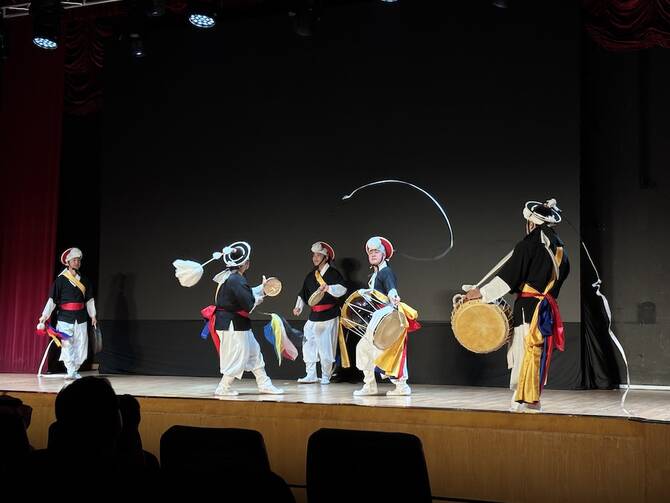
Members of the Pangut troupe perform a traditional Korean percussion routine during the 18th Korea-Arab Friendship Caravan at Prince Sultan University in Riyadh. (AN Photo/Waad Hussain)
2 / 4
Members of the Pangut troupe perform a traditional Korean percussion routine during the 18th Korea-Arab Friendship Caravan at Prince Sultan University in Riyadh. (AN Photo/Waad Hussain)
3 / 4
Members of the Pangut troupe perform a traditional Korean percussion routine during the 18th Korea-Arab Friendship Caravan at Prince Sultan University in Riyadh. (AN Photo/Waad Hussain)
4 / 4
Members of the Pangut troupe perform a traditional Korean percussion routine during the 18th Korea-Arab Friendship Caravan at Prince Sultan University in Riyadh. (AN Photo/Waad Hussain)
Short Url
Updated 08 November 2025
Follow

Korea-Arab Friendship Caravan strengthens cultural ties in Riyadh

  • Event part of drive to boost cultural understanding between regions
  • Live performances showcase different elements of Korean heritage

RIYADH: The 18th Korea-Arab Friendship Caravan stopped in Riyadh on Friday, presenting a full program of traditional and contemporary Korean performing arts at Prince Sultan University as part of an annual cultural exchange between South Korea and the Arab world.

The event was organized by the Korea-Arab Society in cooperation with the Embassy of South Korea in Saudi Arabia. It is part of a broader tour aimed at strengthening cultural understanding and people-to-people ties between the two regions.

This year’s edition introduced Saudi audiences to five live performances showcasing different elements of Korean heritage and modern entertainment.

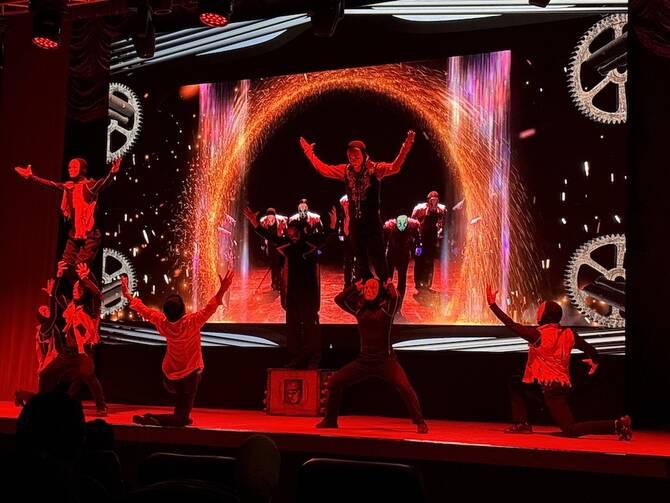
The lineup included the folk percussion act Pangut, the ritual dance Bokgae-Chum, the fan dance Buchae-Chum, the percussion-based Samulnori and the B-boy theater show Marionette by the award-winning Expression Crew.

Speaking to Arab News after the performance, Korean artist Ko You Min from the Pangut team said it was the first time the group had performed in the Kingdom.

“It was a really valuable and good experience for us. It was our first time performing in Saudi Arabia and it was a meaningful event for us,” he said.

Founded in 2008, the Korea-Arab Society is a nonprofit organization supported by government and institutional partners in both regions, working to promote cultural, economic and academic cooperation. Its longest running program, the caravan, is staged annually across multiple Arab capitals.

Each segment of Friday’s show highlighted a different aspect of Korean artistic identity.

Pangut featured musicians in traditional hats spinning long ribbons while performing on drums and wind instruments. Bokgae-Chum showcased a symbolic rice-bowl lid used in Korean folk culture to convey blessings and protection.

Buchae-Chum displayed synchronized fan movements representing nature, while Samulnori emphasized the rhythmic energy of Korea’s four core percussion instruments.

The closing act, Marionette, offered a different tone, combining hip-hop choreography with silent theater and visual storytelling.

Established in 1992, Expression Crew is one of Asia’s most influential B-boy groups and has performed worldwide.

The event attracted a diverse audience of students, faculty, diplomats and others, reflecting the Kingdom’s growing interest in international cultural programs.

Prince Sultan University hosted the performance as part of its extracurricular initiatives to expose students to global arts and traditions.

Organizers described the Riyadh stop as part of a broader effort to “connect cultures through performance” and said that the caravan blended heritage acts with modern Korean entertainment to engage new audiences in the region.

The Korea-Arab Friendship Caravan will continue to tour Arab countries and present the same program in different settings throughout the year.


Rebuilding lives: Saudi initiative gives fresh hope to amputees

Updated 5 sec ago
Follow

Rebuilding lives: Saudi initiative gives fresh hope to amputees

  • Baitureh Health Association has provided life-changing support to more than 1,000 people
  • Prosthetic limbs can cost up to $76,000

MAKKAH: The Baitureh Health Association for the Care of Amputees has quickly become one of Saudi Arabia’s most impactful humanitarian initiatives, transforming support for people with lost limbs.

Established in 2020, the association deals with people’s physical, psychological and social needs and fills a long-standing gap in the national health system.

CEO Badr bin Alyan told Arab News that the initiative was created in response to a growing need, driven by amputations linked to accidents, blood disorders, occupational injuries and other causes.

Its operations were “based on service integration rather than fragmentation, enabling beneficiaries to return to their lives with confidence, ability and independence,” he said.

This holistic process covers everything from initial evaluations to psychological and physical rehabilitation, family support, prosthetic fitting and ongoing maintenance.

Its psychological support programs include group sessions led by certified mentors who have undergone similar experiences, as well as field visits to support patients before and after amputation.

More than 1,000 people across the Kingdom have so far benefitted from the association’s work, about 10 percent of them children, whom Alyan said were “the most sensitive and the most in need of intensive psychological and family support.”

Its specialist programs for children — My First Step and Therapeutic Entertainment — help young people adapt to prosthetics, overcome trauma and build confidence in a safe and supportive setting.

The association has completed more than 300 prosthetic fittings, including silicone cosmetic limbs, mechanical, hydraulic, electronic and 3D-printed models. 

Alyan said the type of prosthetic selected depended on a number of factors, such as age, lifestyle, type of amputation, activity level and psychological readiness.

Children also have to undergo frequent adjustments to their new limbs to account for their growth.

Each prosthetic cost between SR20,000 ($5,300) and SR285,000, Alyan said.

The association funds its work through sponsorships, community contributions and strategic partnerships.

Despite its success, Alyan said there were still challenges to be faced, including the lack of a consolidated base for the provision of psychological support and therapy services and prosthetics development and maintenance.

There was also a shortage of local experts, he said.

In response, the association set up a rehabilitation center, which Alyan said would help to localize prosthetics manufacturing, reduce costs and accelerate fitting processes and create opportunities for local experts to develop their knowledge and experience.

But providing prosthetics was only part of the association’s work, he said.

“Rebuilding a human life is the deeper goal.”