UN genocide adviser warns ‘threshold about to be crossed’ in Sudan’s El-Fasher atrocities

The UN special adviser on the prevention of genocide on Friday said that Sudan may be nearing a tipping point for atrocities amid growing reports of widespread killings and attacks on civilians in El-Fasher. (AFP)
Short Url
Updated 07 November 2025
Follow

UN genocide adviser warns ‘threshold about to be crossed’ in Sudan’s El-Fasher atrocities

  • ‘Direct attacks on civilians’ highlight need for urgent action, Chaloka Beyani says
  • UN warns of worsening conditions in North Darfur, with hundreds of thousands facing acute shortages of food, water, medical care

NEW YORK: The UN special adviser on the prevention of genocide on Friday said that Sudan may be nearing a tipping point for atrocities amid growing reports of widespread killings and attacks on civilians in El-Fasher.

Warning that “a threshold is about to be crossed,” Chaloka Beyani said that “once our office sounds the alarm, (it) rings over and beyond ordinary violations of human rights or of international humanitarian law.”

He said the scale of atrocities shows “there has to be early action taken.”

Beyani said there had been “massive violations of international human rights law” and “direct attacks on civilians” by warring parties in Darfur.

Graphic reports and videos that surfaced late last month appeared to show atrocities carried out by the paramilitary Rapid Support Forces after they seized control of El-Fasher from government troops, ending a siege that had lasted more than 500 days.

UN Emergency Relief Coordinator Tom Fletcher told the Security Council recently that “the horror is continuing” in Darfur, warning that civilians remain trapped amid widespread violence.

Beyani’s office said several risk indicators for atrocities were now present in Sudan, though only an international court could determine whether genocide had occurred.

The International Criminal Court also expressed “profound alarm” earlier this week, saying it was gathering evidence of mass killings, rapes, and other atrocities allegedly committed in El-Fasher.

Meanwhile, reports indicate that the RSF has agreed to a “humanitarian ceasefire” proposed by the US, Saudi Arabia, and the UAE.

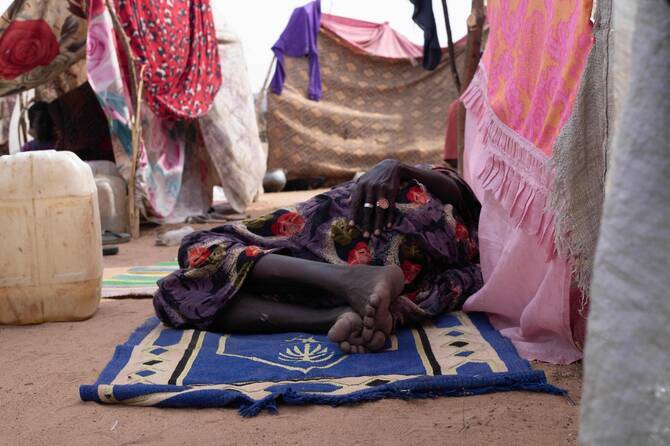
The UN has warned of deteriorating conditions in North Darfur, where hundreds of thousands displaced from El-Fasher face acute shortages of food, water, and medical care. Aid agencies are setting up new camps in Tawila and other nearby areas, but more than 650,000 people remain in desperate need of assistance.


Lebanon foreign minister declines Tehran visit, proposes talks in neutral country

Updated 31 sec ago
Follow

Lebanon foreign minister declines Tehran visit, proposes talks in neutral country

  • Lebanon’s foreign minister Youssef Raji cited ‘current conditions’ for the decision not to go to Iran

Lebanon’s foreign minister Youssef Raji said on Wednesday he had declined an invitation to visit Tehran for now, proposing instead talks with Iran in a mutually agreed neutral third country, Lebanese state news agency NNA reported.

Raji cited “current conditions” for the decision not to go to Iran, without elaborating, and stressed that the move did not mean rejection of dialogue with Iran. He did not immediately respond to a request from Reuters for additional comment.

Iran’s Foreign Minister Abbas Araqchi had extended the invitation last week, seeking talks on bilateral ties.

Raji said Lebanon stood ready to open a new phase of constructive relations with Iran, on the condition that ties be based strictly on mutual respect, full recognition of each country’s independence and sovereignty, and non-interference in internal affairs under any pretext.

In an apparent reference to calls to disarm Hezbollah, the Lebanese armed movement allied for decades to Iran, Raji added that no strong state could be built unless the government held the exclusive right to hold weapons.

Hezbollah, once a dominant political force with wide influence over the Lebanese state, was severely weakened by Israeli strikes last year that ended with a US-brokered ceasefire. It has been under mounting domestic and international pressure to surrender its weapons and place all arms under state control.

In August, Iran’s top security official Ali Larijani visited Beirut, warning Lebanon not to “confuse its enemies with its friends.” In June, Foreign Minister Araqchi said Tehran sought a

“new page” in ties.