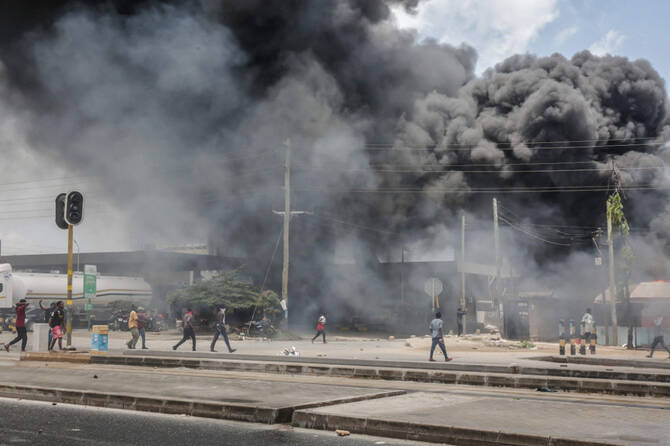
DODOMA, Tanzania: Prosecutors in Tanzania on Friday charged dozens of people with treason over their alleged roles in violence surrounding the country’s disputed election.
The charge sheet identified 76 suspects accused of intending to obstruct the Oct. 29 election “for the purpose of intimidating” the authorities in Dar es Salaam, the commercial capital.
In addition to treason, the suspects also face criminal conspiracy charges.
Tanzania is reeling from violence following an election that international observers say fell short of a free and fair vote. The authorities face questions over the death toll after security forces tried to quell riots and opposition protests in the East African country.
The main opposition party, Chadema, has claimed that more than 1,000 people were killed and said Tuesday that security forces were trying to hide the scale of the deaths by secretly disposing of the bodies.
President Samia Suluhu Hassan, who took office in 2021 after the death of her predecessor, took more than 97 percent of the vote, according to an official tally. Her main rivals, Tundu Lissu of Chadema and Luhaga Mpina of ACT-Wazalendo, were barred from running in what rights groups have called a climate of repression. There were enforced disappearances, arbitrary arrests and extrajudicial killings, according to Amnesty International. Tanzania’s government denies the claims.
The African Union said this week that its observers had concluded the election “did not comply with AU principles, normative frameworks, and other international obligations and standards for democratic elections.”
AU observers reported ballot stuffing at several polling stations and cases where voters were issued multiple ballots. The environment surrounding the election was “not conducive to peaceful conduct and acceptance of electoral outcomes,” the statement said.


![]()

Tanzania charges dozens with treason over violence linked to disputed election
Short Url
https://arab.news/9x7ph
Tanzania charges dozens with treason over violence linked to disputed election
- The charge sheet identified 76 suspects accused of intending to obstruct the Oct. 29 election
- In addition to treason, the suspects also face criminal conspiracy charges


Latest updates



© 2026 SAUDI RESEARCH & PUBLISHING COMPANY, All Rights Reserved And subject to Terms of Use Agreement.