



RIYADH: Once found across parts of Saudi Arabia, Globularia alypum — a delicate blue-flowered shrub — has recently been rediscovered in the Kingdom’s northwest regions.
Yet, despite this encouraging sighting, the species is now listed as critically endangered due to overgrazing and land degradation, according to environmental consultant and former adviser at the National Center for Vegetation Cover Development and Combating Desertification, Oubaid Alouni.
“The primary cause of extinction is overgrazing, as it is an excellent grazing species. The second cause is land degradation. The third cause is neglect,” he said.
Belonging to the Plantaginaceae family, Globularia alypum — locally known as “Zuraiqa” or “Aynon Kuhli” and internationally as the blue daisy — is a perennial evergreen shrub native to the Mediterranean basin. It is typically found in North Africa, southern Europe, and Southwest Asia, particularly in mountainous and rocky regions.
“This plant is highly grazing, so it is not found in plains or open areas because camels heavily graze it. Therefore, it is more commonly found in mountainous or calcareous regions,” commented Alouni.
According to Alouni, the NCVC has been intensifying its efforts to protect native plants and rehabilitate degraded lands. To preserve Globularia alypum, he recommends replanting it in its natural northwestern habitats, encouraging home cultivation, and raising public awareness about its ecological and medicinal value. Crucially, he stresses the need to preserve its seeds in the Ministry of Agriculture’s seed bank to safeguard its future.
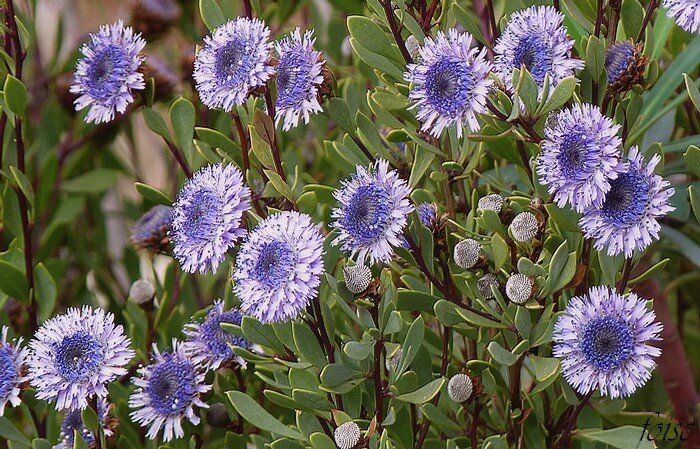
The native habitat for The Globularia alypum is the Mediterranean area like in North African countries, southern Europe, and Southwest Asia. (SUPPLIED)
Typically growing between 30 and 80 centimeters tall, the shrub forms dense, woody bushes with leathery, oval leaves that remain green year-round. Its spherical clusters of pale blue to deep violet flowers bloom from October through June, adding vibrant color to arid landscapes.
“The advantage of this shrub, which is perennial and not annual, is that it can become an annual in some places that are very hot, so that the seeds fall into the soil, and if winter comes and the weather becomes mild and the rains come, it sprouts again,” said Alouni.
Opinion
This section contains relevant reference points, placed in (Opinion field)
He added: “Its distinctive feature and captivating beauty is that it blooms abundantly and has branching limbs... like a beautiful dress with its lovely navy-blue color and round shape.”
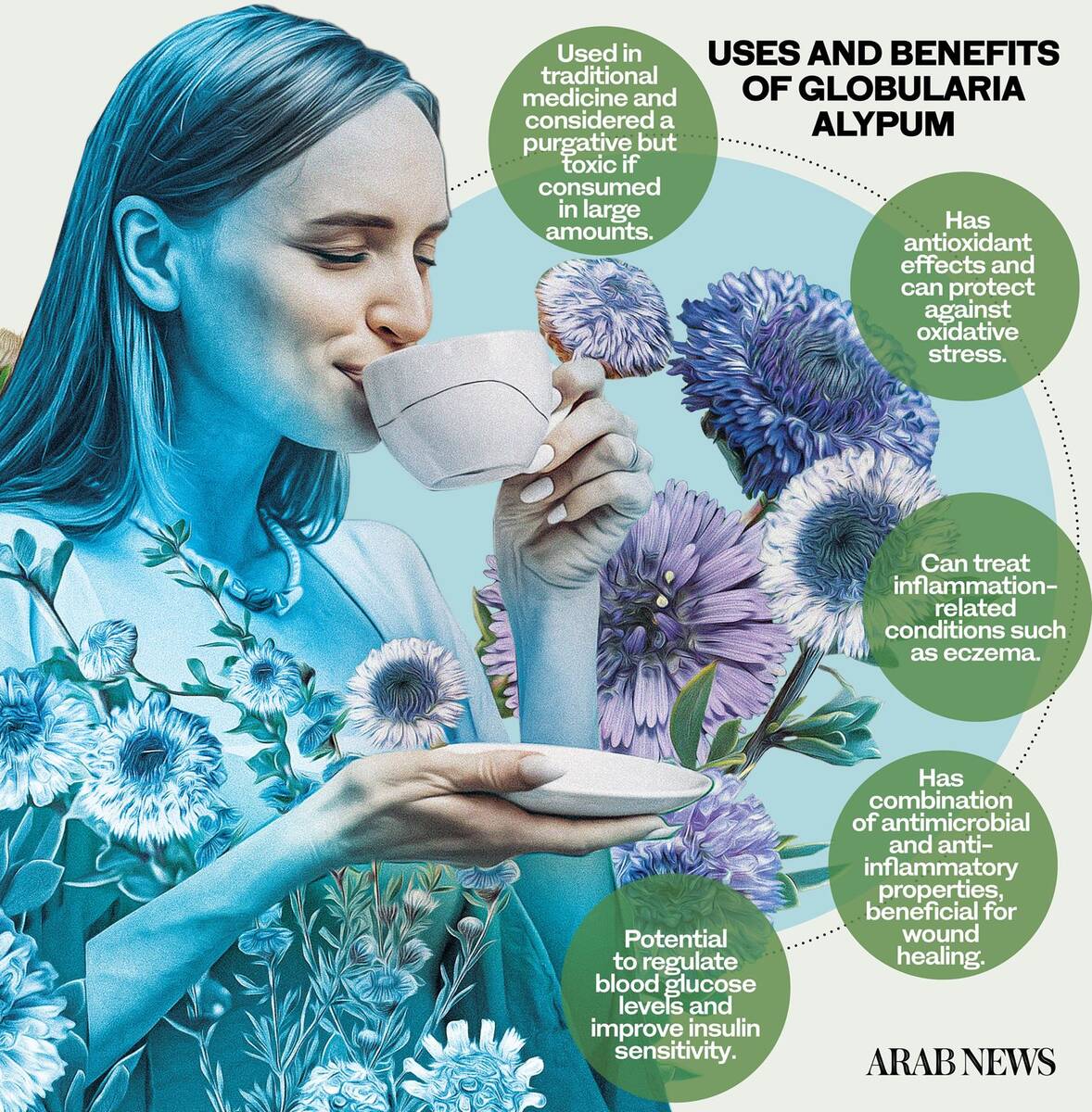
Beyond its striking appearance, Globularia alypum has long been valued in traditional medicine for its anti-inflammatory, antioxidant, hepatoprotective, and antidiabetic properties.
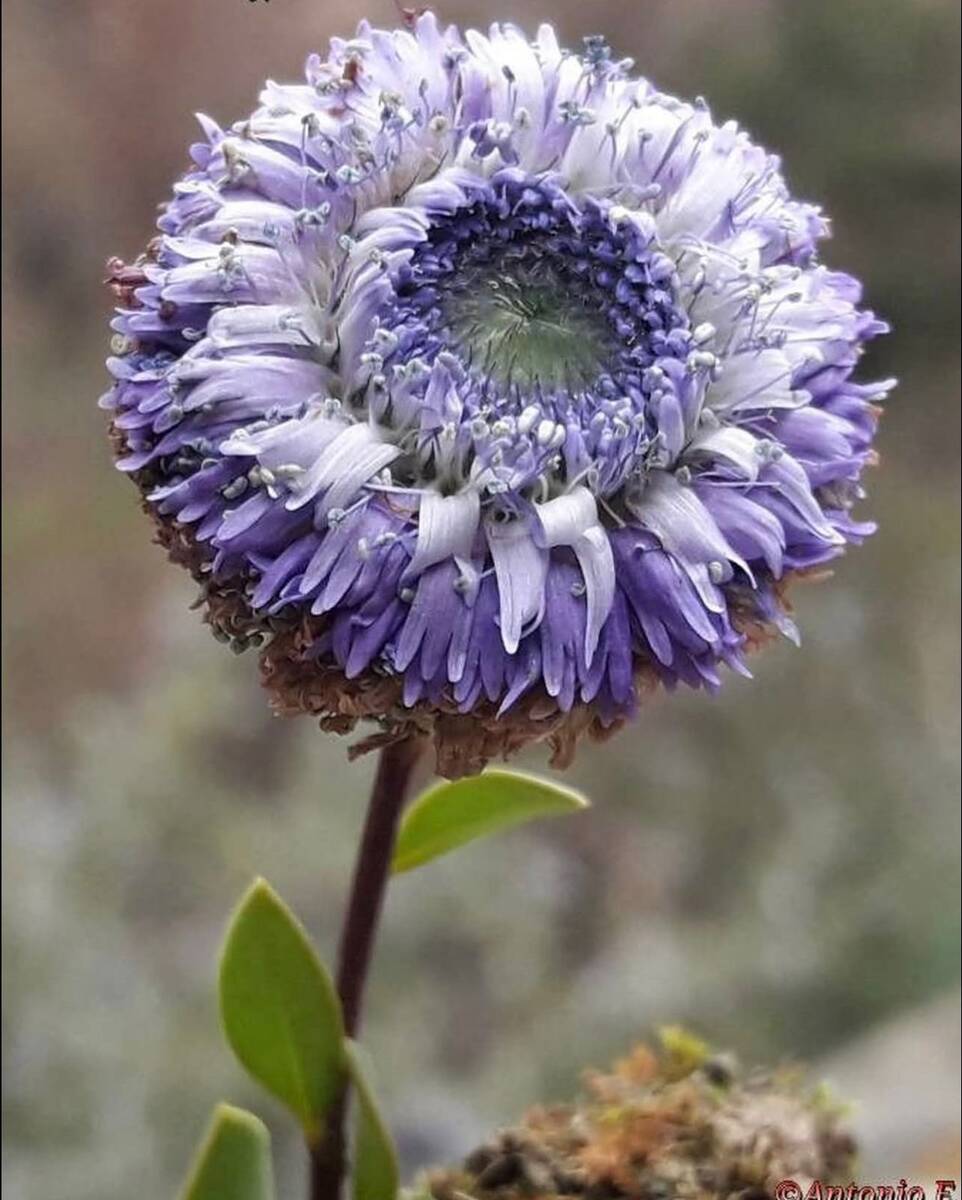
As the interest in plants in the kingdom grows globally, Globularia alypum is one of the greate example of how ancient botanical knowledge and modern science can converge to promote human health and environmental sustainability. (SUPPLIED)
Research published by the National Institutes of Health supports these claims, showing that extracts from the plant can help lower blood glucose levels and improve insulin sensitivity — benefits attributed to its rich polyphenolic content that aids carbohydrate metabolism and reduces oxidative stress.
“It is useful as an anti-rheumatic, antidiabetic, and anti-intermittent fever, in addition to its use as a laxative,” said Alouni.
Although the plant has been observed recently in Saudi Arabia’s northern regions, Alouni noted that some specimens remain undocumented in the Kingdom’s flora classification, likely due to their rarity. He emphasized the importance of properly recording and updating plant data nationwide to preserve botanical knowledge.
DID YOU KNOW?
• Globularia alypum has recently been rediscovered in the Kingdom’s northwest regions.
• It has been used in traditional medicine in the past as a treatment for various health issues.
• It is a winter-flowering plant, blooming mainly from October to June.
“In addition to the Saudi flora, we take the scientific name… those who classify plants are few, and researchers take information from classifiers because they are the ones who write the scientific name (referring to them as a source of data),” Alouni told Arab News.
For Alouni, documenting species such as Globularia alypum is not only vital for science but also for sustaining the Kingdom’s natural heritage. The flower stands as a reminder of how traditional ecological wisdom and modern science can work hand in hand — ensuring that this once-abundant shrub, with its medicinal promise and stunning beauty, does not fade from Saudi Arabia’s landscape.


