

Saudi-French archeological mission uncovers ancient sites on Farasan Island

1 / 3
A joint Saudi-French archeological mission to excavate ancient sites on Farasan Island, in the Jazan region, has been concluded by the Heritage Commission. (X: @MOCHeritage)
2 / 3
A joint Saudi-French archeological mission to excavate ancient sites on Farasan Island, in the Jazan region, has been concluded by the Heritage Commission. (X: @MOCHeritage)
3 / 3
A joint Saudi-French archeological mission to excavate ancient sites on Farasan Island, in the Jazan region, has been concluded by the Heritage Commission. (X: @MOCHeritage)
Short Url
Updated 26 May 2025
Follow

Saudi-French archeological mission uncovers ancient sites on Farasan Island

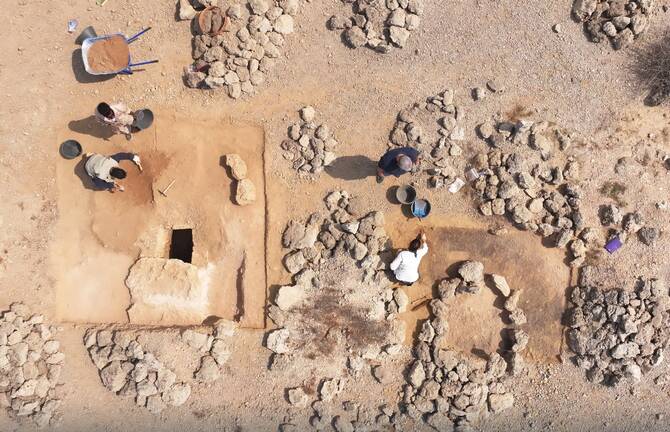
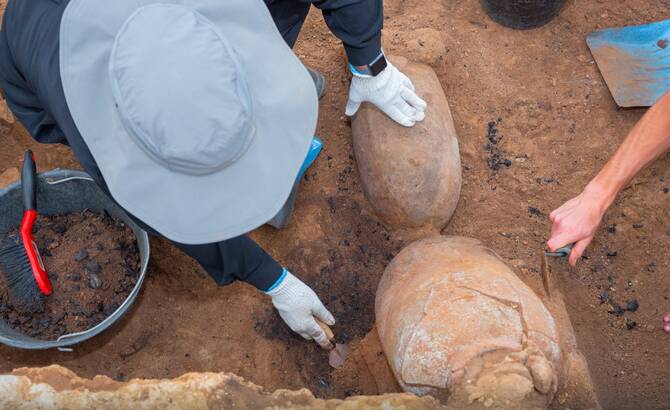
RIYADH: A joint Saudi-French archeological mission to excavate ancient sites on Farasan Island, in the Jazan region, has been concluded by the Heritage Commission.

The initiative, in collaboration with Paris 1 Pantheon-Sorbonne University, featured a team of experts from the French National Centre for Scientific Research, the Saudi Press Agency reported.

It aimed to reveal settlement phases and chronological sequences at the excavation sites — Qusar, Ghurrayn, and Wadi Shami, which date from the first to third centuries — as well as study various burial grounds.

The work is part of a scientific project highlighting the historical and strategic importance of the Farasan archipelago, particularly its key role in maritime trade across the Red Sea through various historical periods.

It included male and female students from national universities, as well as participants from Paris 1 Pantheon-Sorbonne University.

Previous excavations under the same project, which took place from 2011 to 2024, have yielded significant findings dating back to the Bronze Age and the periods of Southern Arabian states.

Discoveries have included watchtowers and industrial sites believed to be remnants of a camp dating back to the second century B.C.

The findings underscore the rich cultural exchange that took place on Farasan Island, highlighting its pivotal role in connecting Southern Arabian civilizations with those of the Mediterranean. Prehistoric shell mounds and human settlements further emphasize the islands’ historical significance.


Ithra will bring Spain to life for 2-week cultural celebration

Updated 08 January 2026
Follow

Ithra will bring Spain to life for 2-week cultural celebration

  • Ithra Cultural Days will unfold across the plaza, museum, theater, lush garden, library, idea lab, cinema, children’s museum, energy exhibit and Ithra tower

DHAHRAN: Visitors to the King Abdulaziz Center for World Culture (Ithra) can enjoy a taste of Spanish culture from Jan. 12-31.

Under the banner “Live Spain,” spaces at Ithra will be transformed to give a glimpse of life in this vibrant European country.

Ithra Cultural Days will unfold across the plaza, museum, theater, lush garden, library, idea lab, cinema, children’s museum, energy exhibit and Ithra tower, with exhibitions dedicated to Spanish photography, fashion and sports. There will also be Spanish cuisine and interactive installations exploring historical and linguistic connections between Arab and Spanish traditions.

There will be live performances across various stages, with a production of “Carmen” among the highlights.

“Cultural exchange is a core part of Ithra’s approach to programming. Celebrating Spain’s culture and history reflects this focus, particularly as this year’s Cultural Days take on a distinctive character by exploring Spain’s cultural heritage,” Noura Alzamil, program manager at Ithra, said.

“Visitors to Ithra will experience an exciting program in every sense, given the scale and variety of events designed to appeal to all tastes and interests.”

Cinema showings will feature Spanish short and feature films, accompanied by post-screening discussions to provide additional cultural context, while talks and sessions in the idea lab and library will explore architecture, literature and creative practice.

Hands-on workshops will invite visitors to engage directly with Spanish crafts and creative traditions, from visual arts and design to food-related practices.

A dedicated program for children and youth will run alongside with storytelling, creative workshops and performances among the attractions. Food and market experiences in Ithra’s public spaces will reflect the important social role played in the country by food.

Ithra Cultural Days present international cultures through immersive, public-facing experiences. This year’s focus on Spain follows the success of last year’s Japan edition, which welcomed more than 200,000 visitors in just two weeks.