

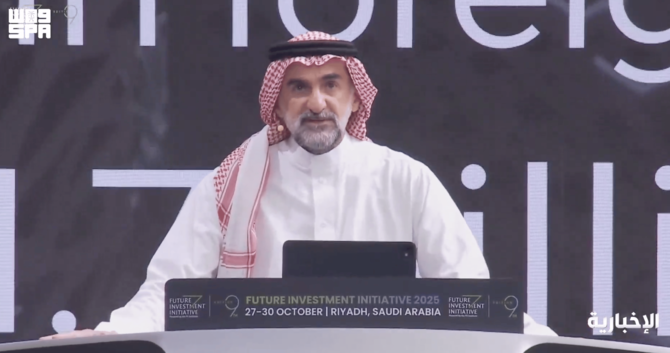

RIYADH: More than $250 billion in deals have been signed through the Future Investment Initiative platform since its launch less than a decade ago, according to Yasir Al-Rumayyan, governor of the Public Investment Fund and chairman of the FII Institute.
Opening the ninth edition in Riyadh, he said this year’s gathering seeks to elevate the initiative’s global effectiveness.
Al-Rumayyan described FII as the world’s largest forum convening leaders, decision-makers, and investors to influence the trajectory of the global economy, Al Arabiya reported.
He said attendees from government and the private sector collectively represent significant capital and responsibility, alongside greater opportunities to help shape economic outcomes.
Al-Rumayyan urged participants to act with that responsibility in mind and to capitalize on the opportunities at hand.
Over the past year, he noted, investor and corporate ambitions have shifted amid rapid economic and technological change.
He argued traditional economic models are no longer sufficient and called for governments and businesses to operate as true partners to advance a new model of international cooperation and global prosperity.
PIF serves as a cornerstone of Saudi Arabia’s Vision 2030 economic transformation strategy, driving diversification and sustainable growth beyond the oil sector.
As one of the world’s largest sovereign wealth funds, PIF manages assets exceeding $1.15 trillion, up from about $925 billion a year earlier, according to official data.
The fund’s investments span multiple sectors and geographies, with a growing focus on technology, infrastructure, and green energy.
PIF’s mandate aligns with the Kingdom’s broader ambition to position Saudi Arabia as a leading global investment destination, supported by large-scale projects and international partnerships designed to accelerate non-oil gross domestic product growth.
Al-Rumayyan said FII has become the venue where global leaders and investors discuss shared opportunities and challenges.
He pointed to a widening gap between individuals’ optimism about their personal futures and their pessimism about the world’s outlook, adding that technology can help bridge this divide if deployed inclusively.
He cautioned that artificial intelligence could widen educational disparities unless governed fairly and responsibly.
He identified inequality as a major impediment to human progress and cited expectations that around 10 percent of the global population could be living in extreme poverty by 2025.
Nonetheless, he expressed confidence that the leaders gathered at FII can convert today’s challenges into opportunities that benefit society.
Addressing Saudi Vision 2030, Al-Rumayyan said the program has set a new global benchmark for economic transformation.
He noted foreign direct investment in the Kingdom has grown 24 percent to $31.7 billion, and said Saudi Arabia has emerged as a major global destination, supported by its megaprojects and preparations to host Expo 2030 and the 2034 FIFA World Cup.
He urged that true wealth is measured by the prosperity of people rather than numbers, and encouraged participants to use the three-day forum to forge cross-border partnerships that unlock transformative opportunities for the benefit of humanity.
Richard Attias, acting CEO of the FII Institute, highlighted the growing scale and inclusivity of this year’s edition, which brought together more than 9,000 participants, including delegates, members, and media representatives from around the world.
He emphasized that the 2025 program builds on the institute’s mission to foster collaboration across sectors, with discussions centered on artificial intelligence, health, and human development under the theme “The Key to Prosperity.”
Attias said: “Our dream at the inception of FII Institute was simple: to bring together world decision makers not to compete but to collaborate, not just to talk about the future, but to shape the future.”


