ABOARD AIR FORCE ONE: US President Donald Trump left on Friday for Asia and high-stakes trade talks with Chinese counterpart Xi Jinping – adding that he would also like to meet North Korean leader Kim Jong Un on his trip.
Trump is set to meet Xi in South Korea on the last day of his regional swing in a bid to seal a deal to end the bruising trade war between the world’s two biggest economies.
He will also visit Malaysia and Japan on his first trip to Asia since he returned to the White House in January in a blaze of tariffs and international dealmaking.
Trump told reporters aboard Air Force One that he hoped for a “very good meeting” with Xi, adding that he expected China to make a deal to avoid further 100 percent tariffs that are due to come into effect on November 1.
As he left Washington, Trump added to speculation that while on the Korean peninsula he could meet Kim Jong Un for the first time since 2019.
“I would. If you want to put out the word, I’m open to it,” Trump added aboard the presidential plane. “I had a great relationship with him.”
The two leaders last met in Hanoi, Vietnam, during Trump’s first term. Kim has said he would also be open to meeting the US president if Washington drops its demand that Pyongyang give up its nuclear arsenal.
Seoul’s reunification minister has said there is a “considerable” chance that Trump and Kim will meet while the US leader is in South Korea, mainly for a regional summit.
Peace and trade deals
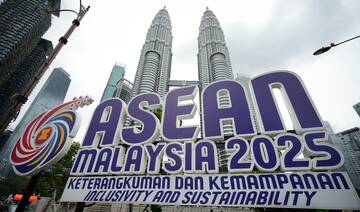
Trump’s first stop will be Malaysia, where he arrives on Sunday, for the Association of Southeast Asian Nations (ASEAN) summit – a meeting he skipped several times in his first term.
Trump is set to ink a trade deal with Malaysia, but more importantly he will oversee the signing of a peace accord between Thailand and Cambodia, as he continues his quest for a Nobel Peace Prize.
He said he also expected to meet Brazilian President Luiz Inacio Lula da Silva on the sidelines of the summit to improve ties with the leftist leader after months of bad blood.
Trump’s next destination will be Tokyo, where he arrives on Monday. He will meet conservative Sanae Takaichi, named this week as Japan’s first woman prime minister, on Tuesday.
The US leader said he had “heard great things about her” and hailed the fact that she was an acolyte of assassinated former premier Shinzo Abe, who had close ties with Trump.
Japan has escaped the worst of the tariffs Trump slapped on countries around the world to end what he calls unfair trade balances that are “ripping off the United States.”
Trump and Xi
But the highlight of the trip is expected to be South Korea, with Trump due to land in the southern port city of Busan on Wednesday ahead of the Asia-Pacific Economic Cooperation (APEC) summit.
Trump will meet South Korean President Lee Jae Myung, address an APEC lunch with business leaders and meet US tech bosses for dinner, on the sidelines of the summit in the city of Gyeongju.
On Thursday, Trump will meet Xi for the first time since his return to office.
Global markets will be watching closely to see if the two men can halt the trade war sparked by Trump’s sweeping tariffs earlier this year, especially after a recent dispute over Beijing’s rare-earth curbs.
Trump initially threatened to cancel the meeting and announced the fresh 100 percent tariffs during that row, before saying he would go ahead after all.
The US president says he will also discuss fentanyl with Xi, as he raises pressure on Beijing to curb trafficking of the powerful opioid and cracks down on Latin American drug cartels.