World Bank estimates $216bn needed to rebuild Syria after civil war

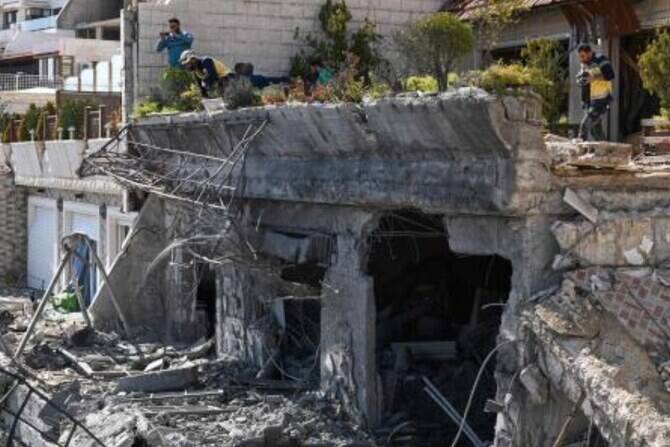
Rebuilding Syria after over a decade of civil war is expected to cost about $216 billion, the World Bank said in an assessment published Tuesday. The cost is almost ten times Syria’s 2024 gross domestic product. (AFP/File)
Short Url
Updated 21 October 2025
Follow

World Bank estimates $216bn needed to rebuild Syria after civil war

  • The conflict destroyed large swaths of the country and battered critical infrastructure
  • The World Bank says the rebuilding may cost between $140 billion and $345 billion

DAMASCUS: Rebuilding Syria after over a decade of civil war is expected to cost about $216 billion, the World Bank said in an assessment published Tuesday. The cost is almost ten times Syria’s 2024 gross domestic product.
Syria’s civil war began in 2011 when mass protests against the government of then-President Bashar Assad were met with a brutal crackdown and spiraled into armed conflict. Assad was ousted in December in a lightning rebel offensive.
The conflict destroyed large swaths of the country and battered critical infrastructure, including its electrical grid.
The World Bank says the rebuilding may cost between $140 billion and $345 billion, but their “conservative best estimate” is $216 billion.
The World Bank estimates that rebuilding infrastructure will cost $82 billion. It estimated the cost of damages for residential buildings at $75 billion and $59 billion for non-residential structures.
The province of Aleppo and the Damascus countryside, where fierce battles took place, will require the most investment, according to the assessment.
“The challenges ahead are immense, but the World Bank stands ready to work alongside the Syrian people and the international community to support recovery and reconstruction,” World Bank Middle East Director Jean-Christophe Carret said in a statement.
Despite reestablishing diplomatic relations with the West and signing investment deals worth billions of dollars with Gulf countries since Assad was ousted, the country is still struggling financially.
While the United States and Europe have lifted many of the sanction s imposed during the rule of the Assad dynasty, the impact on the ground has so far been limited.
Cuts to international aid have worsened living conditions for many. The United Nations estimates that 90 percent of Syria’s population lives in poverty.


Syria’s growth accelerates as sanctions ease, refugees return

Updated 06 December 2025
Follow

Syria’s growth accelerates as sanctions ease, refugees return

  • Economy grows much faster than World Bank’s 1% estimate, fueling plans for currency’s relaunch

NEW YORK: Syria’s economy is growing much faster than the World Bank’s 1 percent estimate for 2025 as refugees flow back after the end of a 14-year civil war, fueling plans for the relaunch of the country’s currency and efforts to build a new Middle East financial hub, central bank Governor AbdulKader Husrieh has said.

Speaking via video link at a conference in New York, Husrieh also said he welcomed a deal with Visa to establish digital payment systems and added that the country is working with the International Monetary Fund to develop methods to accurately measure economic data to reflect the resurgence. 

The Syrian central bank chief, who is helping guide the war-torn country’s reintegration into the global economy after the fall of Bashar Assad’s regime about a year ago, described the repeal of many US sanctions against Syria as “a miracle.”

The US Treasury on Nov. 10 announced a 180-day extension of the suspension of the so-called Caesar sanctions against Syria; lifting them entirely requires approval by the US Congress. 

Husrieh said that based on discussions with US lawmakers, he expects the sanctions to be repealed by the end of 2025, ending “the last episode of the sanctions.”

“Once this happens, this will give comfort to our potential correspondent banks about dealing with Syria,” he said.

Husrieh also said that Syria was working to revamp regulations aimed at combating money laundering and the financing of terrorism, which he said would provide further assurances to international lenders. 

Syria’s central bank has recently organized workshops with banks from the US, Turkiye, Jordan and Australia to discuss due diligence in reviewing transactions, he added.

Husrieh said that Syria is preparing to launch a new currency in eight note denominations and confirmed plans to remove two zeroes from them in a bid to restore confidence in the battered pound.

“The new currency will be a signal and symbol for this financial liberation,” Husrieh said. “We are glad that we are working with Visa and Mastercard,” Husrieh said.