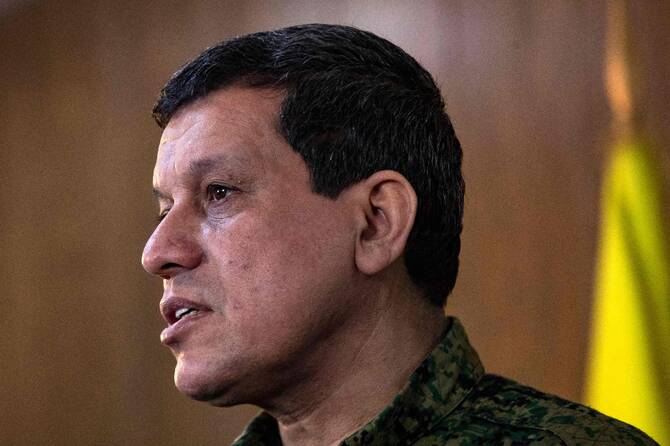

HASAKEH: Syrian Kurdish leader Mazloum Abdi has announced to AFP that he had reached a “preliminary agreement” with Damascus on the integration of his troops into Syria’s military and security forces.
Abdi, who heads the powerful Syrian Democratic Forces (SDF), had met Syrian interim President Ahmed Al-Sharaa in Damascus last week, along with US envoy Tom Barrack and US commander Brad Cooper.
While the Kurdish forces — who control large swathes of Syria’s oil-rich northeast — had signed an agreement with the new Syrian authorities in March to merge their civil and military institutions, the deal’s terms were not implemented.
“What is new in our recent talks in Damascus is the shared determination and strong will to accelerate the implementation of the terms” of the agreement, Abdi told AFP in an interview at a military base in the northeastern city of Hasakah on Sunday.
“The most important point is having reached a preliminary agreement regarding the mechanism for integrating the SDF and the (Kurdish) Internal Security Forces within the framework of defense and interior ministries,” he added.
The Washington-backed SDF and Kurdish security forces consist of around 100,000 male and female members, according to them.
The SDF played a vital role in the fight against the Daesh group in Syria, which ultimately led to the jihadist organization’s territorial defeat in the country in 2019.
Abdi said that military and security delegations from his forces are currently in Damascus to discuss the mechanism for their integration.
- Disagreements -
After the fall of longtime leader Bashar Assad in December, Sharaa announced the dissolution of all armed groups, to be absorbed by state institutions.
Abdi explained that “the SDF will be restructured through its integration into the defense ministry,” as part of several formations.
However, some disagreements remain.
“We demand a decentralized system in Syria... we have not agreed on it,” he added, as they are “still discussing finding a common formula acceptable to all.”
He stressed that they “agree on the territorial integrity of Syria, the unity of national symbols, the independence of political decision-making in the country, and the fight against terrorism.”
“We all agree that Syria should not return to the era of war, and that there should be stability and security. I believe these factors are sufficient for us to reach a permanent agreement.”
During the last meeting with Sharaa, Abdi said he had called for “modifying or adding some clauses to the existing constitutional declaration” announced in March, particularly those related to “guaranteeing the rights of the Kurdish people in the constitution.”
“There was a positive response to this matter, and we hope this will happen soon,” he added.
Abdi also expressed his gratitude to the United States and France for facilitating negotiations with Damascus.
Asked about Damascus’s main backer Turkiye, which has always been hostile to the SDF, Abdi said “any success of the negotiations will certainly depend on Turkiye’s role,” expressing hope that it will play a “supportive and contributing role in the ongoing negotiation process.”
Turkish President Recep Tayyip Erdogan urged the SDF on Wednesday to “keep their word” and “complete their integration with Syria.”
When questioned on the region’s fossil fuel reserves, Abdi noted they “have not yet discussed the oil issue, but it will certainly be addressed in upcoming meetings.”
“Oil and other underground resources in northeastern Syria to belong to all Syrians, and their revenues and revenues must be distributed fairly across all Syrian provinces.”