SARCO, UAE’s Go Energy partner on Saudi Arabia’s green hydrogen push 

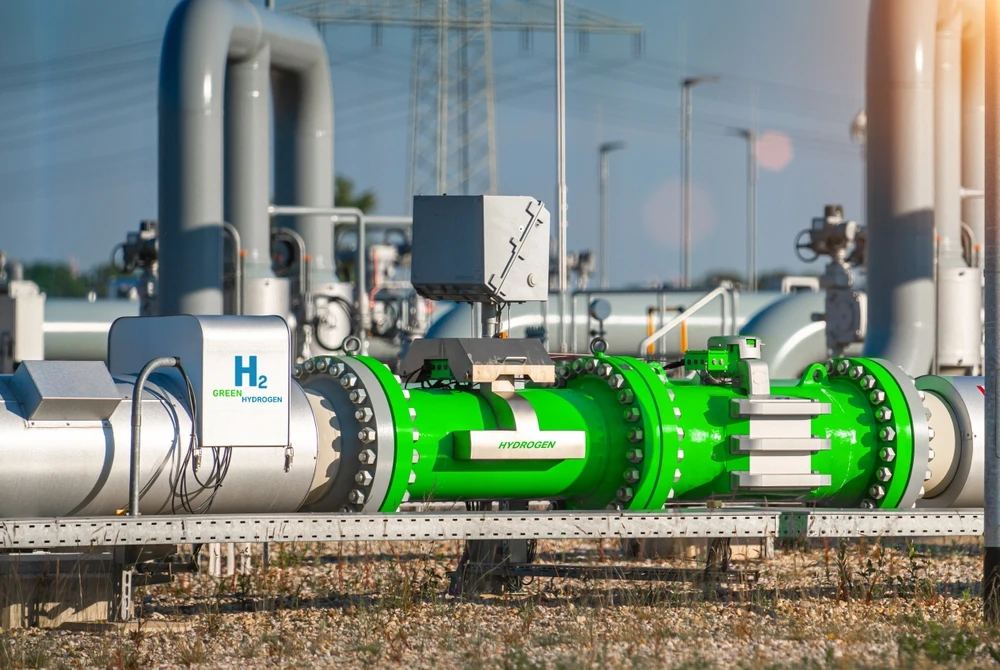
The deal will see the two companies conduct a joint study on the project and design a legal framework to support their collaboration. Shutterstock
Short Url
Updated 12 October 2025
Follow

SARCO, UAE’s Go Energy partner on Saudi Arabia’s green hydrogen push 

RIYADH: A green hydrogen and ammonia project is set to take shape in the Kingdom after Saudi Arabia Refineries Co. signed a non-binding memorandum of understanding with UAE-based Go Energy. 

The deal will see the two companies conduct a joint study on the project and design a legal framework to support their collaboration, SARCO said in a statement to Tadawul.  

The MoU is valid for one year unless extended by mutual agreement, the statement added. 

The deal aligns with Saudi Arabia’s wider strategy to generate 50 percent of its electricity from renewable sources by 2030 and to become the world’s largest exporter of green hydrogen, targeting annual production of 1.2 million tonnes by the end of the decade. 

This commitment is part of the broader National Renewable Energy Program strategy, aimed at diversifying Saudi Arabia’s energy portfolio and reducing reliance on fossil fuels. 

“SARCO is pleased to announce the signing of a non-binding MoU with the UAE-based GO Energy Company to collaborate on developing the green hydrogen (ammonia) project in Saudi Arabia,” the Tadawul-listed firm said.  

SARCO added that the agreement has no immediate financial implications and involves no related parties. The move also reflects the company’s strategy to expand services through specialized energy partnerships. 

Green hydrogen, created through electrolysis powered by renewable energy, is seen as a critical component in reducing global carbon emissions because it produces no greenhouse gases during production. 

With a net-zero emissions target by 2060, Saudi Arabia is investing heavily in both green and blue hydrogen, with companies like Saudi Aramco and ACWA Power spearheading the energy transition in the Kingdom. 

The Kingdom is also building the world’s largest green hydrogen plant in the futuristic city of NEOM, expected to be operational by December 2026, as confirmed by NEOM Green Hydrogen Co. CEO Wesam Al-Ghamdi in November 2024. 

In July, ACWA Power also signed multiple agreements to export renewable electricity and green hydrogen to Europe, reinforcing the Kingdom’s drive to become a global clean energy hub. 

Saudi Arabia raises $1.5bn in November sukuk issuance: NDMC 

Updated 7 sec ago
Follow

Saudi Arabia raises $1.5bn in November sukuk issuance: NDMC 

RIYADH: Saudi Arabia’s National Debt Management Center has raised SR5.83 billion ($1.55 billion) through its latest sukuk issuance, maintaining monthly offerings above the $1 billion mark. 

The November total represents a 22.7 percent decline from October, when the Kingdom raised SR7.54 billion. Saudi Arabia issued SR8.03 billion in September and SR5.31 billion in August, extending a trend of strong activity in the domestic debt market.  

Sukuk are Shariah-compliant financial instruments similar to bonds, granting investors a share of an issuer’s underlying assets and adhering to Islamic finance principles that prohibit interest-based transactions. 

According to NDMC, the November issuance was divided into five tranches. The first tranche was valued at SR700 million and is set to mature in 2027. The second amounted to SR1.37 billion, maturing in 2029, while the third tranche, worth SR180 million, will expire in 2032.  

The fourth portion, valued at SR197 million, is due in 2036, while the last tranche due in 2039 was valued at SR3.38 billion. 

Saudi Arabia’s debt market has expanded rapidly in recent years, with fixed-income instruments drawing increased attention as rising global interest rates reshape investor demand. 

This comes as the Gulf Cooperation Council sukuk outstanding climbed 12.7 percent to $1.1 trillion by the end of the third quarter of 2025, according to a recent Fitch Ratings report. 

The US-based credit rating agency said debt capital market activity in the GCC is expected to remain strong into 2026, supported by a healthy pipeline of anticipated issuances.      

The report noted that sukuk issuances increased 22 percent year on year in the first nine months of this year, accounting for 40 percent of total GCC DCM outstanding. Sukuk also outpaced bond growth, which expanded 7.2 percent year on year.