

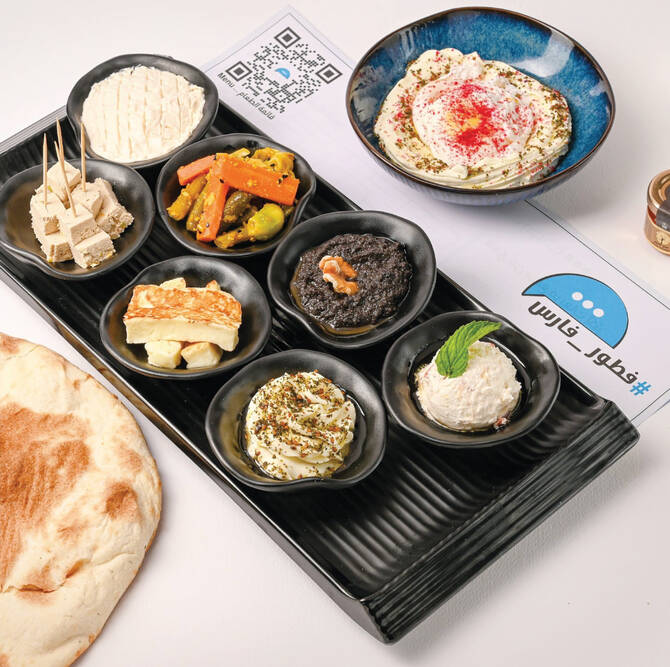

ALKHOBAR: With delivery now dominating the food game, Saudi entrepreneurs are rethinking how restaurants operate and how kitchens can do more with less.
From asset optimization to rapid brand launches, the cloud kitchen playbook is getting sharper. For Saudi entrepreneur Faris Al-Turki, the move to cloud kitchens wasn’t about chasing a trend; it was about unlocking the full value of what already existed.
“We invested millions into the branch,” said Al-Turki, founder of Faris Breakfast. “But it was only used in the mornings. So, we asked: Why not turn it into a cloud kitchen the rest of the day?”
That shift, using idle kitchens to launch virtual brands and serve new segments, has opened up a path to increased revenue without new real estate.
“Even if it adds a bit of cost,” he said, “our fixed costs are already there. So we might as well expand — different meals, different audiences, same kitchen.”
It’s a hybrid model that keeps overhead low and output high and reflects a broader transformation underway in the Kingdom’s food scene.
But turning physical space into digital brands comes with new pressures, especially when there’s no street visibility or foot traffic.
“One of the biggest challenges is that you don’t have a physical store with a clear logo in a busy area,” Al-Turki said. “You’re completely dependent on ads, influencer marketing, paid placements inside apps.”
That means most customers only encounter the brand in-app, making marketing a survival tool. “If they don’t see your name on the list, they won’t even know your food exists, no matter how good it is.”
While Al-Turki is maximizing physical space, others are skipping it altogether.
Foodtech platform Kaykroo, which entered the Saudi market in 2021, is operating at a different scale. The Dubai-born company runs over 77 digital-first brands in Saudi Arabia alone, with a presence in Riyadh, Jeddah, Dammam and more.
“We’re well past the early rollout phase,” said Fawaz Al-Otaibi, co-founder and KSA CEO of Kaykroo. “Our platform model allows us to scale quickly while tailoring brands to local consumer demand.”
Instead of leasing kitchen space to outside operators, Kaykroo owns and runs its entire portfolio, combining culinary R&D, logistics, and data science under one umbrella.

Our platform model allows us to scale quickly while tailoring brands to local consumer demand.
Fawaz Al-Otaibi, co-founder and KSA CEO of Kaykroo
Since launching, the company has sustained a double-digit CAGR in delivery orders, with a significant portion of sales coming from repeat customers. “That reflects the loyalty we’ve built in the Saudi market,” Al-Otaibi added.
For Kenzy Al-Harbi, the cloud kitchen model was a strategic gateway. At just 18 years old, the Madinah-based entrepreneur launched Earth Art, a delivery-only food brand inspired by visual aesthetics and high-end comfort food.
“I chose the cloud kitchen model because it’s much cheaper than a traditional restaurant,” Al-Harbi said. “It gave me a way to test the idea and build the brand without taking a big risk.”
With no storefront to rely on, she focused on packaging, social media, and storytelling to build loyalty. “I invested in visual branding and nice packaging. I wanted people to feel the brand experience even without visiting a branch.”
Still, Al-Harbi says platform commissions eat into margins, and make efficiency critical.
“The hardest part is managing costs, especially the commission that delivery platforms take,” she explained. “I had to create bundles and offers to increase order value, and optimize inventory so I wasn’t wasting money.”
While platforms like Jahez and HungerStation help reach customers, they also serve as gatekeepers. Visibility, rankings, and promotions all come at a cost. “You have to pay just to show up,” Al-Turki added. “And if you want to be near the top of the app, that usually means discounts or free delivery.”
For these operators, tracking performance is no longer optional; it’s built into the workflow.
“I noticed customers love seasonal items or dishes tied to occasions,” Al-Harbi said. “That insight pushed me to update my menu regularly. I also adjusted prices based on what was selling and when.”
Al-Turki agreed: “The market’s moving fast. People want variety, they want convenience, and they want speed. You have to adapt constantly — menus, marketing, even kitchen workflows.”
Kaykroo takes that even further, with teams monitoring customer behavior across all 77 plus brands to optimize offers, locations, and operating hours.
As cloud kitchens multiply, questions around regulation, consolidation, and long-term viability are beginning to surface. “There’s definitely growing competition,” Al-Harbi said. “And I think we’ll start seeing clearer regulations to protect both businesses and customers.” Al-Turki sees a shift already underway. “Dine-in traffic is going down. People want to eat where they are. At home, at work, with friends. That’s not a trend, that’s reality.”
Al-Otaibi, who plays a role in shaping policy frameworks for the sector, expects more structure.
As the industry matures, strong operators will survive and grow, and weak ones will phase out or consolidate.
Al-Harbi’s advice to first-time founders: “Start small, test your concept, and don’t overspend. Focus on quality and the customer experience — and never stop improving.”
Al-Turki keeps it blunt. “It’s not easy; you’re in a constant fight to stay visible and stay relevant. But if you’re lean, creative, and persistent, the opportunity is there.” As the Kingdom’s F&B scene evolves, one thing is clear: In the race to capture the delivery-first consumer, the winners won’t just cook well, they’ll think fast, market smarter, and adapt without waiting for permission.


