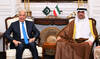
NEW DELHI: India will reopen its embassy in the Afghan capital Kabul that was shut four years ago, Indian Foreign Minister Subrahmanyam Jaishankar said on Friday, a significant move that expands the diplomatic links of the country governed by the Taliban.
India had closed its embassy in Kabul after the Taliban seized power following the withdrawal of US-led NATO forces in 2021, but opened a small mission a year later to facilitate trade, medical support, and humanitarian aid.
About a dozen countries including China, Russia, Iran, Pakistan and Turkiye have embassies operating in Kabul, although Russia is the only country to have formally recognized the Taliban administration.
New Delhi’s announcement came as Afghan Taliban Foreign Minister Amir Khan Muttaqi began talks with Jaishankar on what is the first visit to India by a Taliban leader since 2021.
“India is fully committed to the sovereignty, territorial integrity and independence of Afghanistan,” Jaishankar told Muttaqi in his opening remarks.
“Closer cooperation between us contributes to your national development, as well as regional stability and resilience,” he said, adding that India’s “technical mission” in Kabul was being upgraded to an embassy.
Jaishankar did not mention a timeline for the change.
Muttaqi is on a six-day visit to India aiming to boost ties with New Delhi. Analysts say the trip highlights Taliban efforts to expand engagement with regional powers in a quest for economic relations and eventual diplomatic recognition.
India and Afghanistan have historically had friendly ties, but New Delhi does not recognize the Taliban government.
Western diplomats have said the Taliban administration’s path to recognition is being stalled by its curbs on women.
Talks between the two countries are expected to include discussions on political, economic and trade issues, the Afghan foreign ministry said this week.
Muttaqi’s trip was made possible after the UN Security Council Committee temporarily lifted a travel ban on him to allow diplomatic engagements abroad.
He is among Afghan Taliban members who are under UN sanctions, including a travel ban and asset freeze. Temporary exemptions are sometimes granted for diplomacy.