- Pakistan sent 1.88 million workers to Saudi Arabia between 2020 and 2024, up 21 percent from 1.56 million from 2015 till 2019
- Remittances from Kingdom rose from $7.39 billion in 2020 to $8.59 billion in 2024, reflecting steady demand for Pakistani labor
ISLAMABAD: Pakistan is planning to double its manpower exports to Saudi Arabia after the signing of a landmark defense deal between the two countries last month, officials told Arab News on Monday.
The country’s human resource exports to Saudi Arabia have already witnessed a steady rise over the past five years, according to the Bureau of Emigration & Overseas Employment (BEOE). Pakistan sent 1.88 million workers to Saudi Arabia between 2020 and 2024, up 21 percent from 1.56 million in 2015–2019.
Remittances from the Kingdom rose from $7.39 billion in 2020 to $8.59 billion in 2024, reflecting steady demand for Pakistani labor. In contrast, inflows from the United Arab Emirates fluctuated between $5.8 billion and $6.8 billion during the same period, while those from Qatar remained below $1 billion annually, according to the State Bank of Pakistan (SBP).
In Sept., both countries signed a landmark defense pact that is meant to enhance joint deterrence and deepen decades of military and security cooperation. Top Pakistani government officials, including National Food Security Minister Rana Tanveer, have said Islamabad and Riyadh will sign a wide-ranging economic pact in the follow up of the defense deal.
“The Saudi-Pakistan defense pact will have a great impact on manpower export. Current average export is around half a million workers per year, and from next year, we hope to double it to one million,” said Gul Akbar, a senior director at the BEOE.
The BEOE is working with officials of Pakistan’s Special Investment Facilitation Council (SIFC), a civil-military body formed to boost investment, particularly from the Middle East, to make it possible through a number of steps, according to the official. The draft will be shared with Saudi officials by their Pakistani counterparts in upcoming meetings.
The Pakistan government on Sunday constituted a high-level committee comprising ministers and officials to oversee bilateral economic engagements and negotiations with Saudi Arabia (KSA).
Akbar said Pakistan has proposed setting up technical training institutes in both countries to improve skill certification and employability of local workforce.
“We are also proposing an e-visa system for Pakistani workers,” he added.
The Kingdom remains the largest destination for Pakistani workers and the biggest source of remittances that amounted to $736.7 million in Aug. out of a total inflow of $3.1 billion, according to the State Bank of Pakistan (SBP).
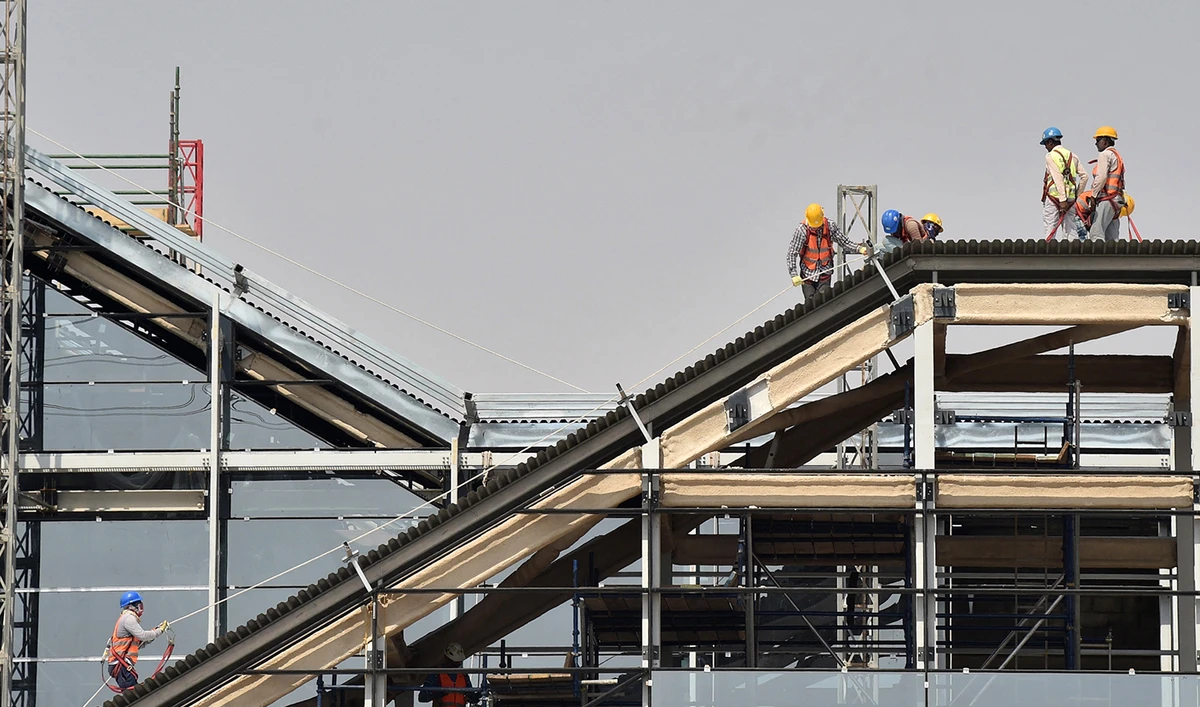
Experts link the rise in number of Pakistani workers traveling to Saudi Arabia to ongoing development projects in the Kingdom under its Vision 2030, which they say have created strong demand for skilled and semi-skilled foreign labor.
Saudi Arabia’s hosting of the 2034 FIFA World Cup is further fueling demand for foreign labor, amid construction of large stadiums, transport networks and hospitality infrastructure in the Kingdom.
Meanwhile, Pakistan’s human resource exports to the UAE declined sharply by 65 percent from 1.32 million to 463,000 from 2020 till 2024, while Qatar more than doubled its intake from 74,000 to 170,000 Pakistani workers, reflecting shifting labor dynamics across the Gulf region.
To meet Saudi Arabia’s labor needs, Pakistan has partnered with Takamol, a Pakistani skill verification program, and its National Vocational and Technical Training Commission (NAVTTC) is certifying workers in 62 skilled categories, ranging from construction to technical services.
Speaking to Arab News, Masood Ahmad, CEO of M.Pak Makkah Manpower Services, said his firm alone dispatched 2,000 workers to Saudi Arabia this year.
“The defense pact has boosted Saudi employers’ confidence in Pakistani workers as both countries deepen cooperation,” he said, highlighting a growing demand for health care professionals and delivery drivers.
Akbar dismissed concerns about “brain drain” and called overseas employment a “national achievement.” Pakistan’s surplus labor should be seen as an economic resource that brings home remittances, knowledge and technical skills, he added.
Remittances remain a cornerstone of Pakistan’s external finances, providing hard currency that supports household consumption, narrows the current-account deficit, and strengthens foreign exchange reserves.
In the last fiscal year, Pakistan recorded $38.3 billion workers’ remittances — an $8 billion increase from the previous year, surpassing the country’s $7 billion International Monetary Fund (IMF) loan program.