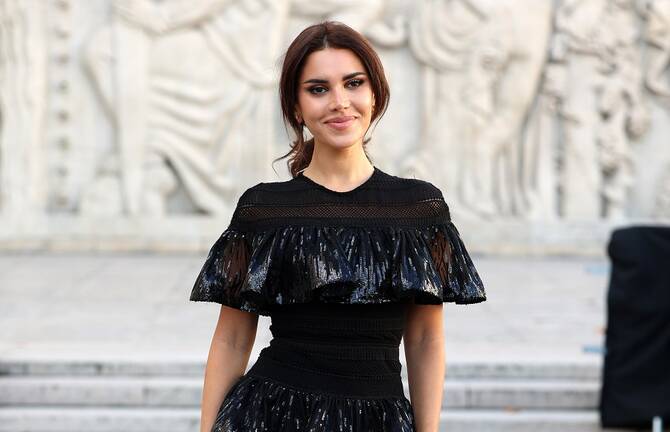
Nojoud Al-Rumaihi spotted at Paris Fashion Week

Nojoud Al-Rumaihi attended Lebanese couturier Elie Saab’s Spring/Summer 2026 showcase. (Getty Images)
Short Url
Updated 06 October 2025
Follow

Nojoud Al-Rumaihi spotted at Paris Fashion Week

DUBAI: Saudi influencer Nojoud Al-Rumaihi, who is also a fashion consultant, has been spotted at a number of runway shows during Paris Fashion Week.

Al-Rumaihi attended Lebanese couturier Elie Saab’s Spring/Summer 2026 showcase, as well as shows staged by Hermes, Valentino, and Lebanese designer Georges Hobeika.

She has been sharing behind-the-scenes glimpses of her time at fashion week on social media, with insights on her favorite runway looks as well as her own outfits.

Al-Rumaihi shared a series on Instagram Stories about Hermes designer Nadege Vanhee’s latest show in Paris, in which Vanhee sent out a collection of brassiere tops, quilted silk coats and racer-back dresses.

Models marched around the space in tall riding boots, their silky ponytails swishing. They wore sandy-colored shirts, skirts and brassiere ensembles, cinched snugly with leather straps and lacework. Racer backs revealed shoulder blades, while leather bra tops held silk fabric in place, covering the chest, Reuters reported.

The color palette was dominated by muted beige and khaki tones, with a few touches of bright red — a leather trouser set, a handbag and motifs on scarves.

Al-Rumaihi also attended Italian label Valentino’s showcase in Paris, during which creative head Alessandro Michele’s latest collection Fireflies was put on show.

Prim retro silhouettes — bows, ruching, velvet skirts — set a mood at Paris Fashion Week of controlled nostalgia, Associated Press noted.

The high point was a draped gold gown with a feathered white collar, evoking myth and Valentino’s Roman past. A polka-dot shirt, satin skirts split with bright yellow panels, and occasional colorblocking kept the eclectic spirit alive, though without the exuberant force Michele had deployed before.

That was the story of the show: less spectacle, more editing. Where Michele’s early collections for the house, and his Gucci tenure before that, thrived on sheer overload — tassels, turbans, ruffles, references piled high — here he cut cleaner lines and pared styling back. The result felt more wearable, but also less astonishing.

Valentino’s identity is rooted in beauty and polish. Under founder Valentino Garavani, the house meant jet-set elegance and “Valentino red.” Under designer Pierpaolo Piccioli, it leaned into couture-like refinement. Michele entered with a different tool kit: maximalist nostalgia, gender-fluid styling, and deep archive mining. He has said the job is to “manipulate the past to make it now,” balancing modern maximalism with relevance so the brand does not freeze in time.

For her part, Al-Rumaihi billed it as “a magnificent experiential show” on Instagram, where she shared a video of models traversing a spotlit runway.

‘The Wild Within’ sees artists breathe new life into Mideast buildings

Updated 16 December 2025
Follow

‘The Wild Within’ sees artists breathe new life into Mideast buildings

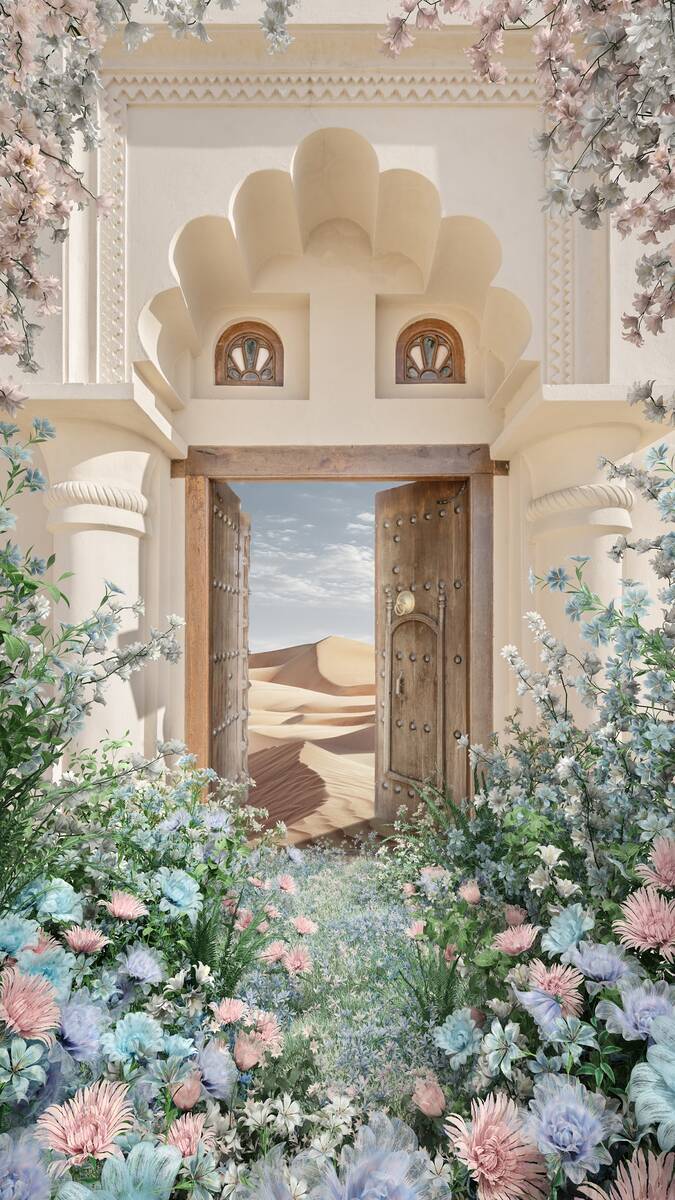
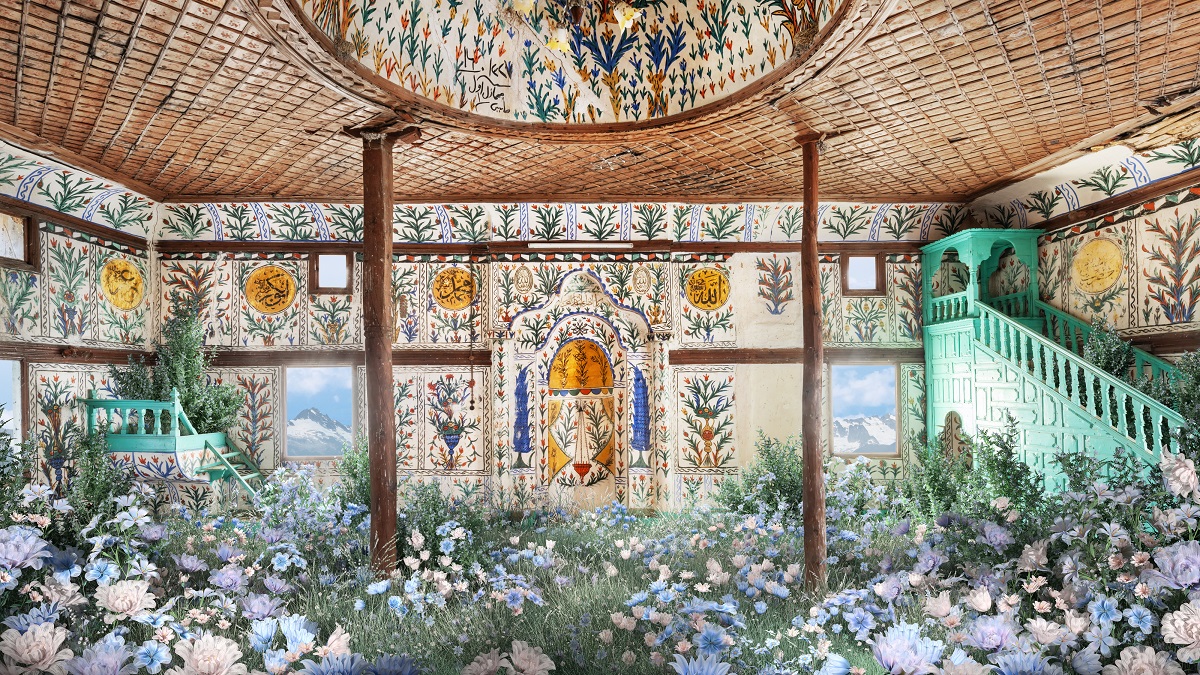
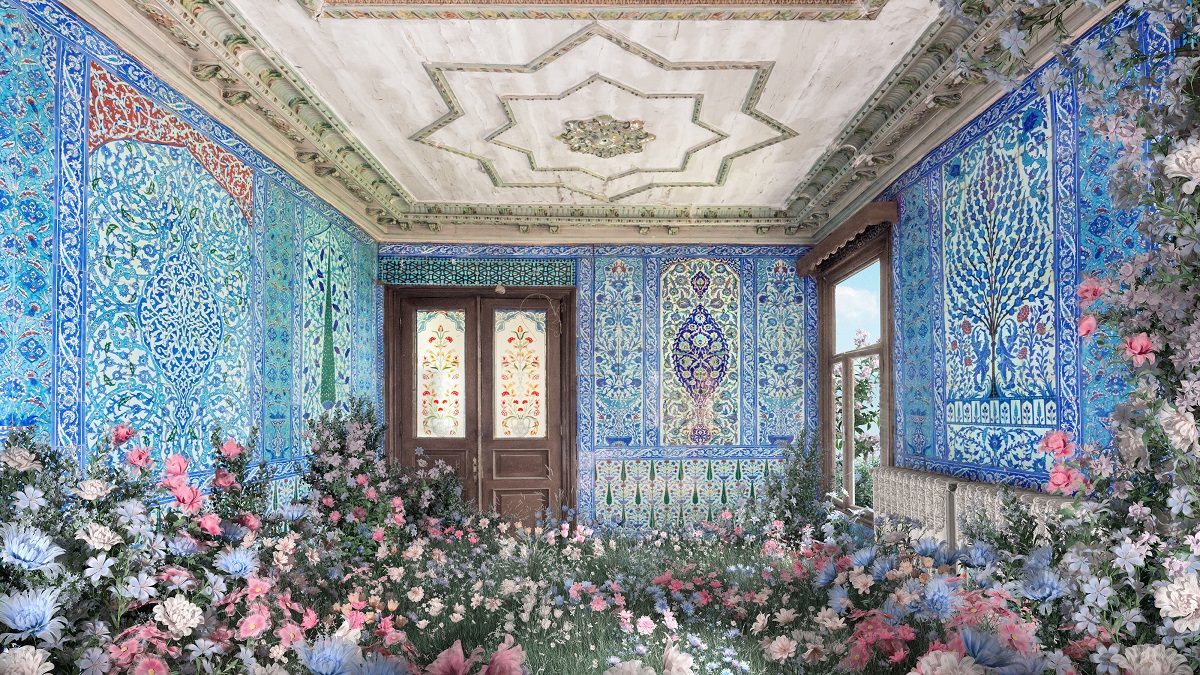
DUBAI: Lens-based artist Ryan Koopmans and digital artist Alice Wexell are staging a showcase at Dubai’s Leila Heller Gallery that breathes new life into regional buildings.

The series of digital artworks is part of the exhibition “The Wild Within,” featuring images of old structures in Beirut, Istanbul, and Abu Dhabi filled with wild flowers.

Two of the largest works, “Heartbeats” and “The Wish,” are displayed using Ventana, a microLED architectural display surface created by visual technology company Megapixel.

'Around Us' by Ryan Koopmans and Alice Wexell. (Supplied) 

The former artwork depicts the entrance hall of Qasr Al-Watan, the UAE’s presidential palace in Abu Dhabi, while the latter reimagines the upper floors of the Emirates Palace Mandarin Oriental in Abu Dhabi.

“Each building we work with comes to us through a combination of research, travel, and intuition,” the artists told Arab News in a joint statement.

'Constellations' by Ryan Koopmans and Alice Wexell. (Supplied) 

“We are drawn to structures that carry both emotional and historical resonance, often buildings that once embodied human ambition and now exist in a state of quiet transformation.”

Koopans and Wexell made sure to research the context of each building they choose to recreate, saying “an old villa in Jeddah or a former school in Sharjah each hold their own cultural memory, influencing everything from the lighting and atmosphere to the plants and flowers that we digitally sculpt and implement into the photographs.”

'Heart of Sharjah' by Ryan Koopmans and Alice Wexell. (Supplied) 

The hypnotic works depict the interior of buildings in the region, with digitally rendered flowers carpeting the floor in a bid to “(reimage) these spaces (and) explore the relationship between nature, place, and time, while celebrating each site as a unique work of architecture with its own spirit and story,” the artists said.

Koopmans is of dual Canadian and Dutch heritage, while Wexell is Swedish and based in Stockholm, so it is noteworthy that both artists chose to explore the Middle East for their latest project.

'Blossom of the Ancestors' by Ryan Koopmans and Alice Wexell. (Supplied) 

“In the Middle East especially, the architecture reflects a layered past that merges different styles and eras, while also expressing a sense of renewal and forward-looking energy, particularly in the region’s fantastic contemporary buildings. We are drawn to the symmetry, geometry and patterns that are found not only in nature itself, but in the architectural language of the region both past and present,” they said.

The series — featuring works such as “Adore You,” “Between Worlds,” and “Blossom of the Ancestors” — explores contrasts between the natural world and human-made forms, as well as the traditional and contemporary worlds.

“We are interested in how these elements coexist and merge into one another, creating a sense of hyperrealism that feels both familiar and imaginary. By merging photography with digital sculpture, the artworks question where the boundary lies between documentation and invention, and how technology can extend rather than replace our sense of the natural world.”

'Under the Rain of Light' by Ryan Koopmans and Alice Wexell. (Supplied) 

Although the scale of the artworks ensures they leave the viewer entranced, it did pose challenges, according to the artists.

“Presented at a large scale, every texture in these artworks becomes visible, which can be demanding but is also incredibly rewarding. The magnified detail allows the visceral and atmospheric layers of the pieces to come through with greater impact,” they said, adding that each piece took “many months” to create.

“Ultimately, we want our collectors to experience a sense of wonder and contemplation, as if they are standing inside a dream that feels both entirely real yet unreal.”

The exhibition runs until Jan. 15, 2026.