

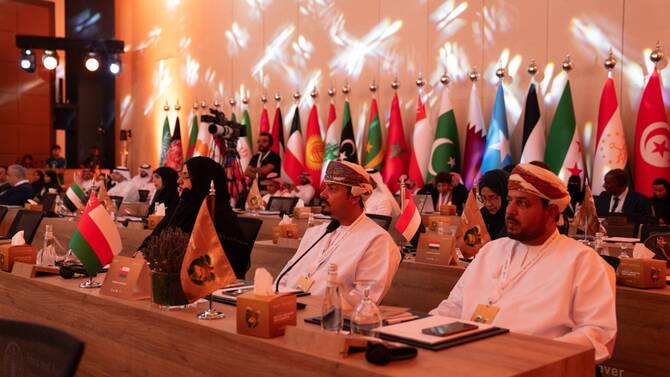
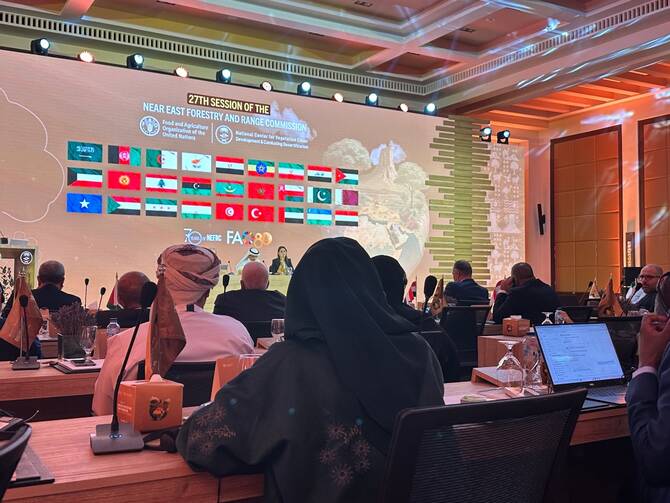

JEDDAH: Saudi Arabia hosted the 27th session of the Near East Forestry and Range Commission in Jeddah this week, bringing together officials, experts and representatives from across the region to discuss sustainable solutions for forests, rangelands and biodiversity.
The three-day session was held in cooperation with the UN Food and Agriculture Organization and the National Center for Vegetation Cover Development and Combating Desertification.
Participants discussed practical solutions to maximize the role of forests and rangelands in tackling climate change, looking at topics such as improving food systems, supporting sustainable rural development, and exploring ways to link forestry with agroforestry.
Speaking at the opening, center acting CEO Ahmad Alayadh said the region was home to more than 42 million hectares of forests and over 303 million hectares of rangelands, depended on by millions of people for their livelihoods and biodiversity protection.
“Despite their importance, these resources face enormous challenges due to climate change, desertification, and land degradation. Globally, around 40 percent of land is degraded, affecting 3.2 billion people. This leads to higher food prices, pressure on freshwater resources, loss of biodiversity, and increased carbon emissions,” he said.
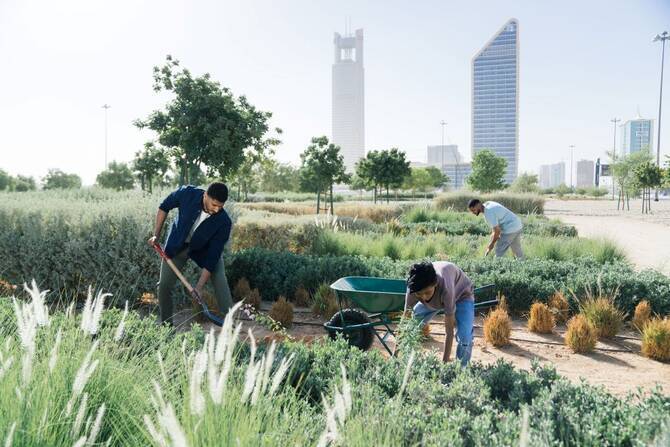
Alayadh highlighted the Kingdom’s efforts under the Saudi Green Initiative and Middle East Green Initiative, which aim to plant 10 billion trees in the Kingdom and 50 billion across the region. So far, more than 151 million trees have been planted nationwide, while over 505,000 hectares of degraded land have been restored.
He added a global initiative to decrease land degradation by 50 percent by 2040, Reducing Land Degradation and Enhancing Conservation of Terrestrial Habitats, was launched by Saudi Arabia during its G20 presidency in 2020, underlining efforts to drive regional and international cooperation.
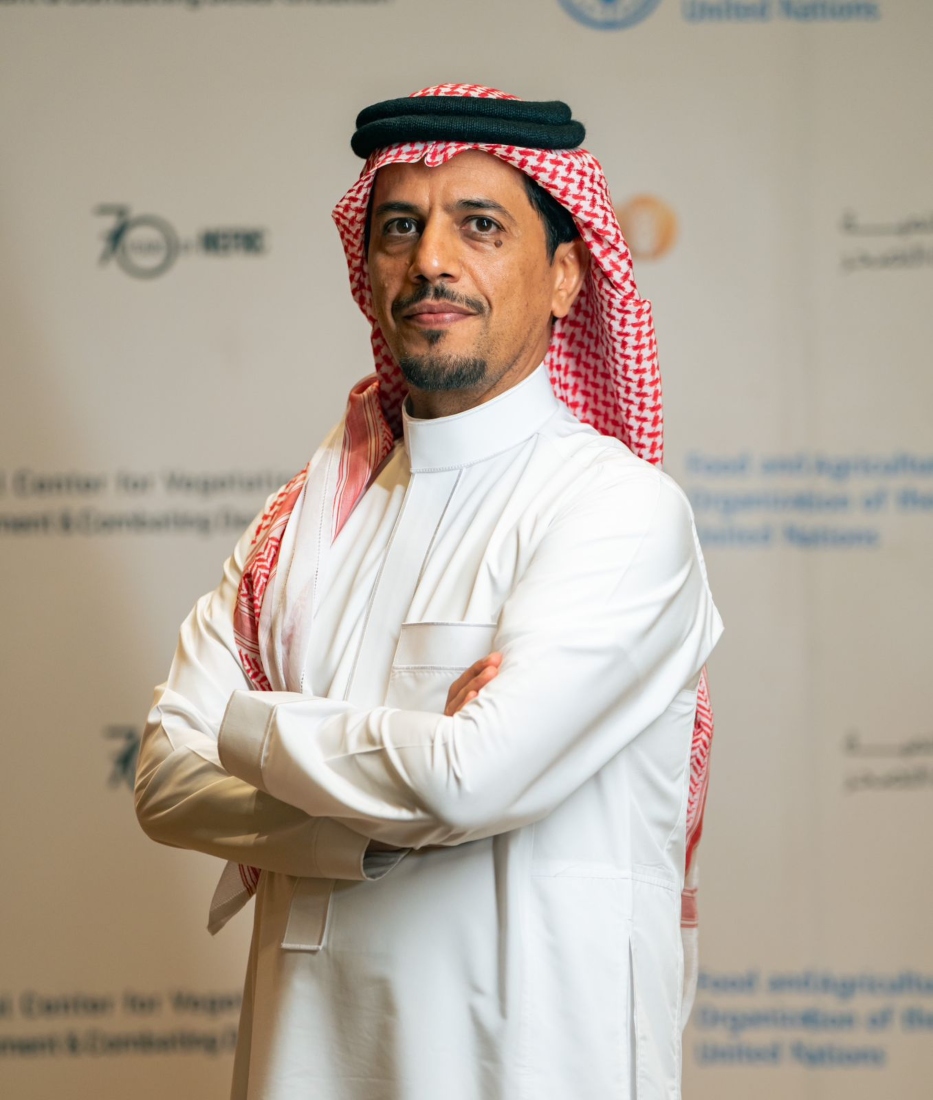
Saleh Al-Zamanan, director of mangrove forest management at the NCVC. (SUPPLIED)
Saleh Al-Zamanan, director of Mangrove Forest Management at NCVC, told Arab News the Kingdom was rich in diverse forest ecosystems.
“Mountain forests are spread across the southwest, including the Sarawat range and Fayfa mountains, with juniper being the most prominent species. Valley forests include sidr and acacia, while mangrove forests thrive along the Red Sea and Arabian Gulf coasts,” he said.
The Kingdom has adopted strategies to protect and restore these ecosystems, including large-scale afforestation projects, community engagement campaigns and support for local livelihoods such as mangrove honey production.
“Forests and rangelands are not luxuries; they are essential for sustainability, biodiversity and securing natural resources for future generations,” Al-Zamanan stressed.
FASTFACT
Did You Know?
• The Near East Forestry and Range Commission, established by the Food and Agriculture Organization in 1953, holds meetings every 2 years to address regional issues
• Using agroforestry practices, soil fertility can be improved through the nitrogen fixation process
• Among the many benefits of forests, agroforestry systems create vital habitat and nutrients for plants and animals to thrive
The FAO’s assistant director-general and regional representative for the Near East and North Africa Abdel, Hakim Elwaer, said expanding forest and rangeland restoration could “turn environmental challenges into a sustainable future.”
“Every tree is a natural asset and a pillar of sustainability due to its resilience against environmental threats. We are working to develop strategies to address urgent challenges such as wildfires and invasive species,” he said.
And FAO Forestry Division Director Zhimin Wu described the commission as a “key platform for regional policy dialogue, knowledge exchange, and technical cooperation.”
“Forests and rangelands are not just environmental assets; they are pillars of livelihoods, resilience and economic growth. With the right policies and investments, these ecosystems can enable prosperity, climate adaptation, food and water security, and rural development,” he said.
Wu praised Saudi Arabia’s large-scale tree planting, land rehabilitation and expansion of protected areas as examples of how vision can drive global cooperation.
According to Al-Zamanan, there are clear strategies and plans in place to develop and sustain these forests, including afforestation projects across all ecosystems.
“Protecting forests and rangelands is a real investment in the sustainability of natural resources. It reflects the Kingdom’s commitment to environmental protection and to enhancing regional cooperation in this vital field,” he added.

NCVC CEO Ahmad Alayadh said the region was home to more than 42 million hectares of forests and over 303 million hectares of rangelands, depended on by millions of people for their livelihoods and biodiversity protection. (NCVC Photo)
Forests remain a national priority in Saudi Arabia as a vital sector that supports its environmental sustainability goals, contributes to achieving Saudi Vision 2030 and aligns with global efforts to combat climate change.
Al-Zamanan said: “Community awareness and the involvement of local communities and non-profit organizations are essential in developing vegetation cover. This aligns with the global objectives for forests. We place our trust in communities through volunteer initiatives such as tree-planting campaigns and by celebrating international environmental days, including the International Day of Forests in March, the International Day for the Conservation of the Mangrove Ecosystem on July 26, and World Wetlands Day on February 2.
“Additionally, there is direct support for local communities, such as allocating areas for mangrove honey production and supporting beekeepers. These efforts strengthen the community’s bond with vegetation cover, as society is a key partner in ensuring the long-term sustainability of forests and rangelands.”
He emphasized that raising awareness through international days and environmental conferences carried an essential message for society, helping increase awareness among younger generations and strengthen citizens’ interest in vegetation cover.

“Mountain forests are spread across the southwest, including the Sarawat range and Fayfa mountains, with juniper being the most prominent species. Valley forests include sidr and acacia, while mangrove forests thrive along the Red Sea and Arabian Gulf coasts,” Said Saleh Al-Zamanan, director of Mangrove Forest Management at NCVC. (SUPPLIED)
“Forests, rangelands, regulated grazing and the protection of vegetation cover are not luxuries,” he said. “They are necessities for ensuring financial sustainability, preserving biodiversity, and strengthening natural resources for present and future generations. Developing vegetation cover is therefore a responsibility shared by every individual and society as a whole.”
The session included the commission’s first-ever Youth Day, giving young leaders a platform to present their visions for a greener, more sustainable future. It also saw the launch of the Forest Ambassadors Initiative, the first of its kind under the FAO, aimed at empowering individuals to take a leading role in protecting ecosystems.
Nizar Haddad, FAO representative in Saudi Arabia, said: “We aspire to present a model not only for the Kingdom or the region, but for the entire world. Some talents are driven by passion far beyond routine work, from government, civil society, and individuals alike.”
NCVC continues to develop and protect vegetation sites across the Kingdom, including monitoring violations, restoring damaged land, preventing illegal logging and managing rangelands, forests, and national parks.


