
RIYADH: Waste, be it food waste, plastic, or industrial byproducts, has severe negative effects on the environment, human health, and economies.
Globally, food loss and waste amount to more than 1 billion tonnes of all food produced every day, according to the statistics division at the United Nations. This crisis not only squanders water, land, energy, and labor but is also responsible for significant greenhouse gas emissions.
For example, food loss and waste contribute between 8 percent and 10 percent of global greenhouse gas emissions, also stressing land resources and biodiversity, as reported by the UN. Without urgent policy and behavioral changes, global waste generation is projected to grow dramatically.
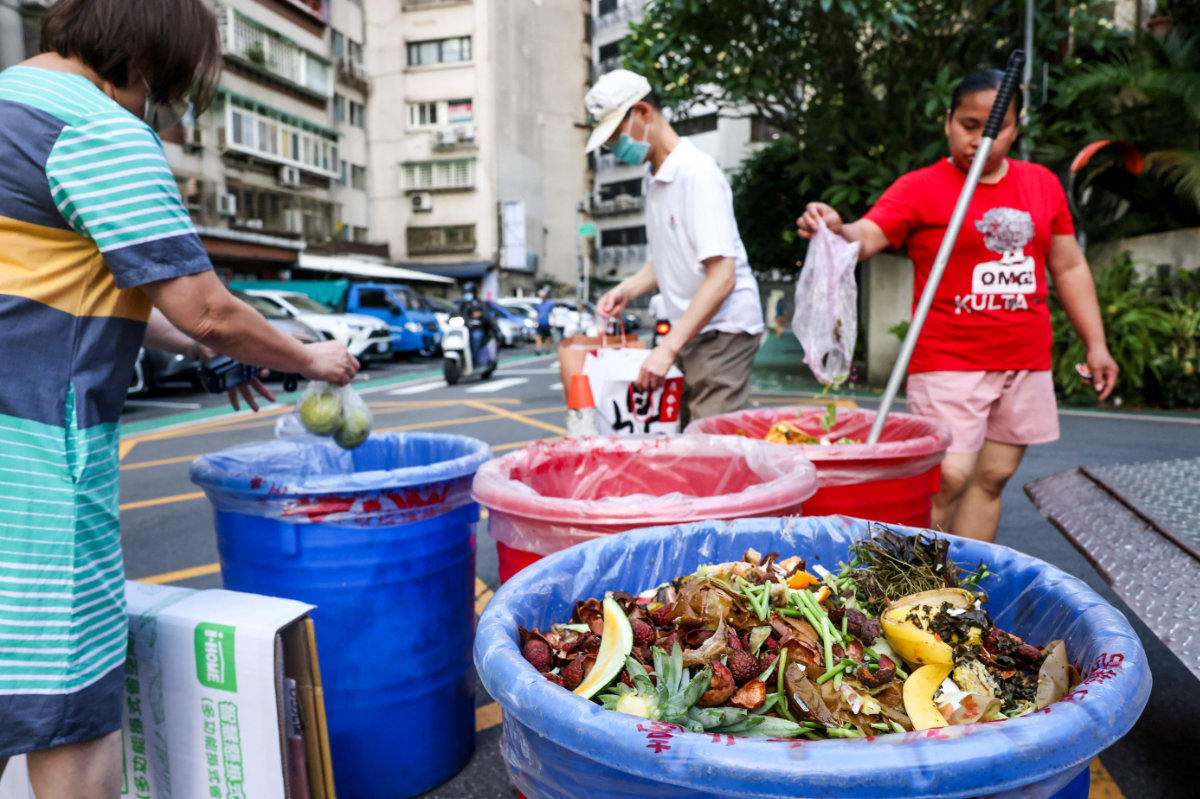
This photo taken on June 19, 2025 shows residents throwing food waste into buckets next to a recycling collection truck in Taipei, Taiwan. (AFP)
According to the World Bank, solid waste is projected to increase by 70 percent by 2050 if urgent action is delayed, posing a threat to ecosystems, biodiversity, air quality, water quality, and human health.
In Saudi Arabia, the scale of waste is also alarming. Saudis generate about 1.7 kilograms of waste per day for each person, according to 2023 study published by the National Library of Medicine, as the country produces about 7 million tonnes of plastic waste a year.
Food loss and waste in the Kingdom account for approximately 33 percent of the food produced, according to the same source, which corresponds to about 4 million tonnes annually, valued at approximately SR40 billion ($10.6bn)
Opinion
This section contains relevant reference points, placed in (Opinion field)
However, according to a 2024 report by the Saudi Press Agency, Saudi Arabia is moving to address these issues, as the ministry of environment, water, and agriculture has set ambitious targets to recycle up to 95 percent.
Additionally, the country aims to eliminate 82 percent of existing waste sites by 2035 as part of its push toward a circular economy model, as earlier reported in the Saudi Public Investment Fund news site.
Such efforts demonstrate how the Kingdom is taking increasingly serious steps to reduce single-use plastics, promote recycling, and transform waste into value. One of the green methods to minimize waste is recycling materials into gift products.
Muhammed Tantawy, chief marketing officer of Green Point, in an interview explained how the Saudi-based company is helping organizations shift from wasteful practices toward meaningful, sustainable alternatives, especially in the domain of gift items.
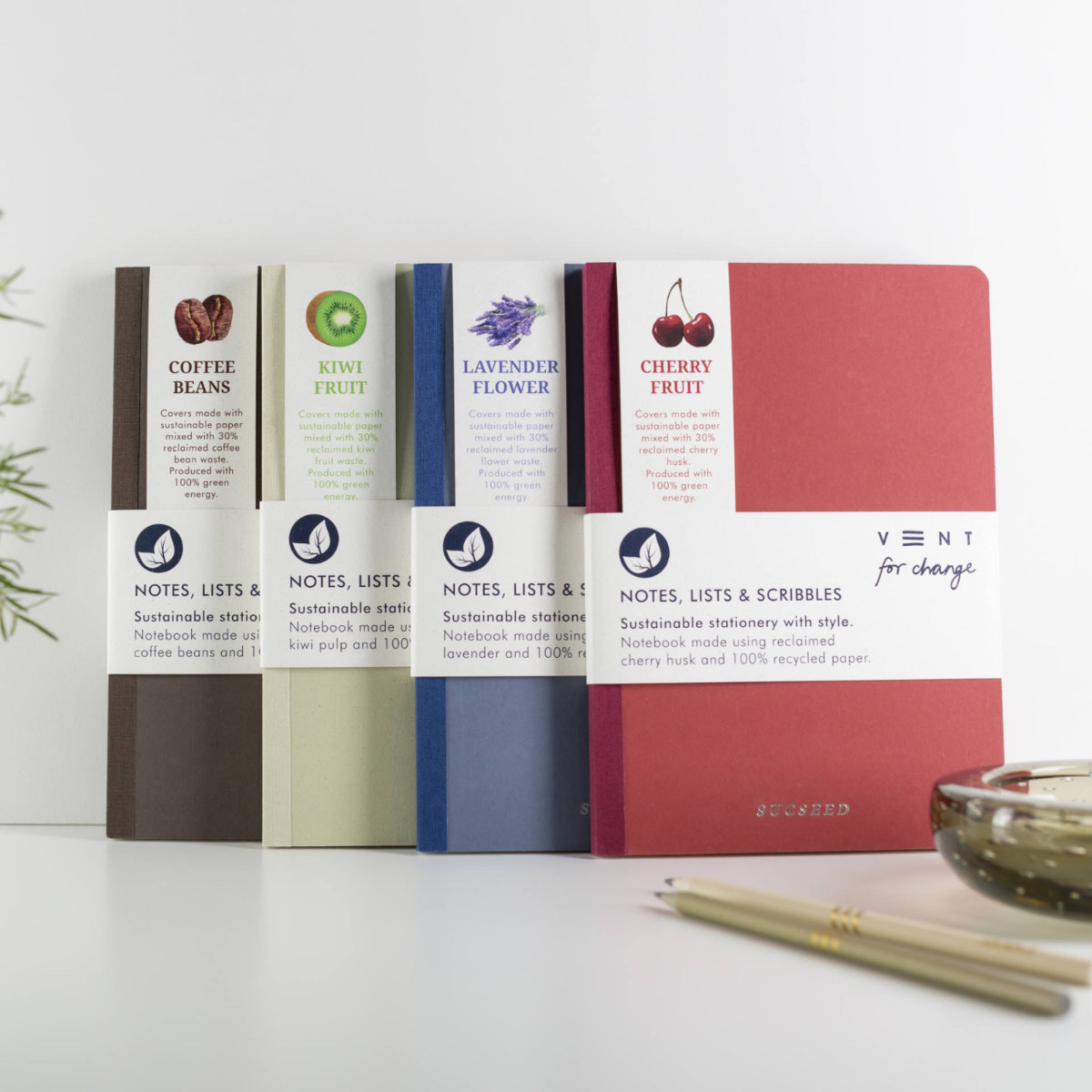
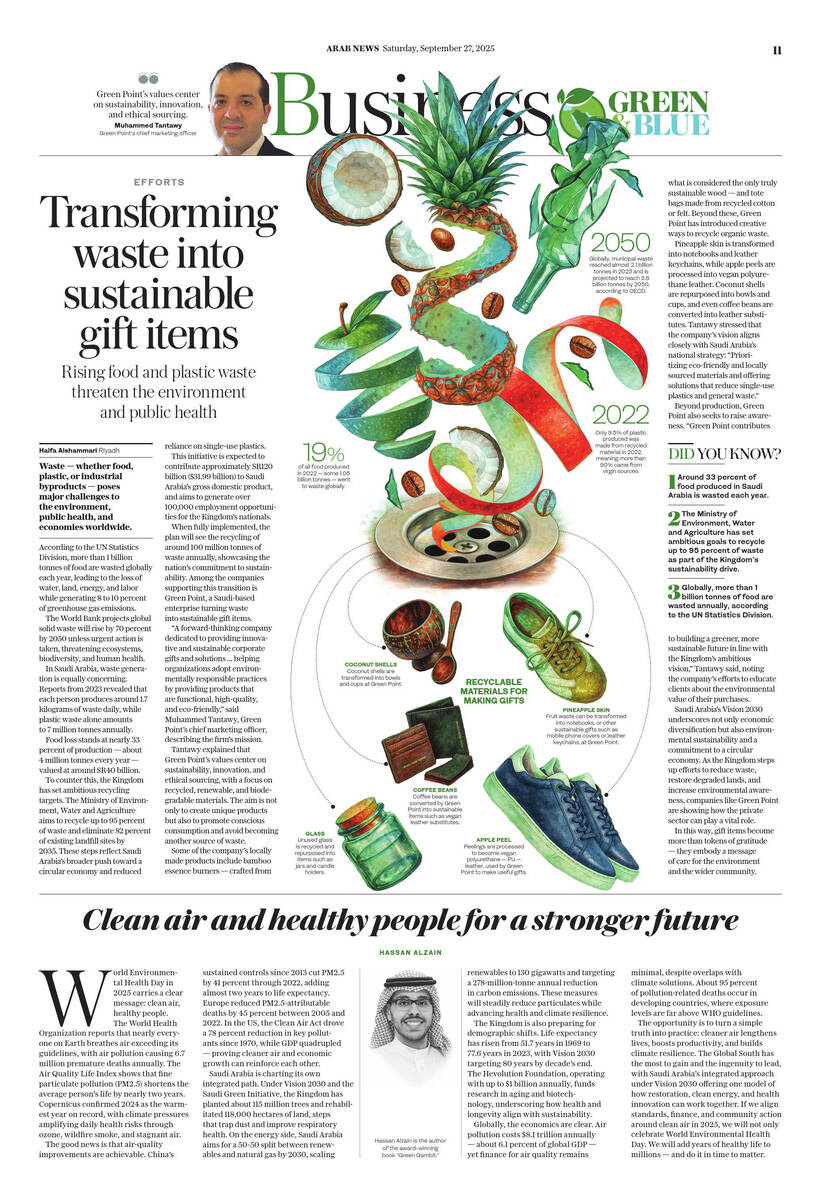
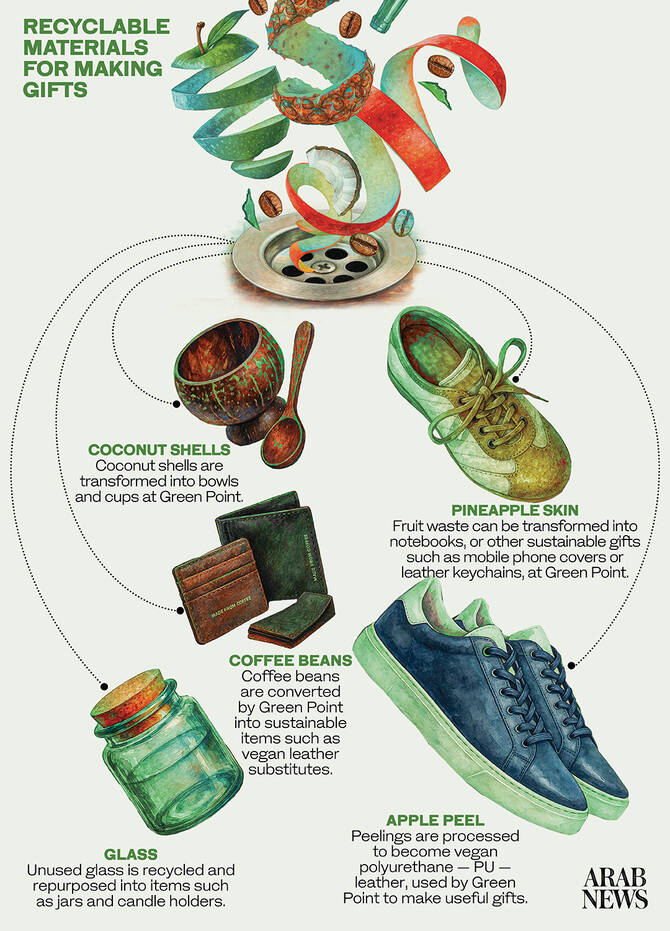
Green Point transform pineapple skin into notebooks and leather keychains, and apple peels into vegan Polyurethane leather, which makes it a green alternative to animal-derived leather. (Supplied)
“A forward-thinking company dedicated to providing innovative and sustainable corporate gifts and solutions ... helping organizations adopt environmentally responsible practices by providing products that are functional, high-quality, and eco-friendly," said Tantawy, outlining Green Point’s core values.
According to him, the company values being built revolve around sustainability, innovation, and ethical sourcing. The company prioritizes recycled, renewable, and biodegradable materials to minimize waste, while promoting conscious consumption. This approach enables Green Point to avoid becoming another source of waste and focus on being part of the solution.
Some of Green Point’s sustainable gifts are produced locally, such as essence burners made from natural bamboo, which they believe is the only truly sustainable and eco-friendly wood. Another item made from recycled cotton, or felt, is a tote bag.

"Green Point contributes to building a greener, more sustainable future in line with the Kingdom's ambitious vision." Said Muhammed Tantawy, Chief Marketing Officer of Green Point. (Supplied)
Yet, what is more impressive is how the company recycles organic waste, which benefits the environment and is biodegradable.
For example, pineapple skin is transformed into notebooks and leather keychains, and apple peels into vegan polyurethane leather, which makes it a green alternative to animal-derived leather.
The company also processes coconut shells into bowls and cups, in addition to converting coffee beans into vegan leather substitutes.
DID YOU KNOW?
• Food loss and waste in the Kingdom account for approximately 33 percent of the food produced daily.
• Saudi Arabia is working to tackle food-waste issues through the Ministry of Environment, Water, and Agriculture, setting ambitious targets to recycle up to 95%.
• On a global scale, food loss and waste result in the waste of more than 1 billion tonnes of food a day, according to the UN.
But what makes Green Point align with Saudi Vision 2030 and the Kingdom’s sustainability goals is how the company supports the national agenda, Tantawy said.
According to him, they are “prioritizing eco-friendly and locally sourced materials and offering solutions that reduce single-use plastics and general waste.”
Even further, the CMO discussed one of their responsibilities towards a greener future, as they are promoting sustainability more broadly by educating clients about the environmental value of their products. This approach involves not just selling an item, but also raising awareness.
“Green Point contributes to building a greener, more sustainable future in line with the Kingdom’s ambitious vision,” Tantawy said.
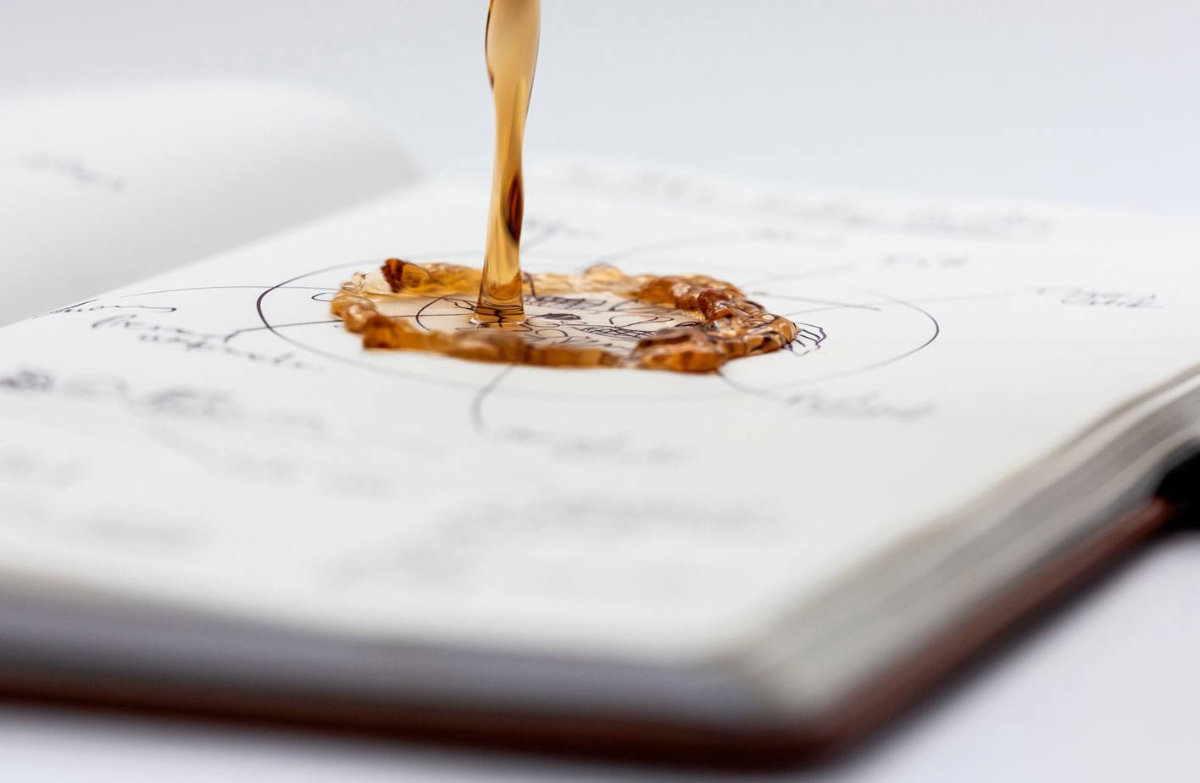
They also process coconut shells into bowls and cups, in addition to converting coffee beans into vegan leather substitutes. (Supplied)
Overall, Saudi Arabia’s Vision 2030 is not only focused on economic diversification and infrastructural development; it also emphasizes environmental sustainability while ensuring the establishment of a circular economy.
Because the Kingdom is committed to reducing plastic waste, promoting recycling and restoring degraded lands, and more importantly, increasing environmental awareness throughout society, Green Point illustrates how the private sector can play a role in the transformation process, by using waste and turning it into gift products, keeping practices green as well as ethical.
Through a sustainable approach, the company demonstrates that gifts are not only an expression of gratitude or celebration, but also an expression of care for the environment and the overall community in the Kingdom.