



RIYADH: As Saudi Arabia accelerates its transformation under Vision 2030, the beauty industry is not only keeping pace — it is helping to lead the charge.
At the forefront of this dynamic is L’Oreal, whose latest socio-economic impact study, conducted by Asteres, reveals a commitment to shaping the future of beauty.
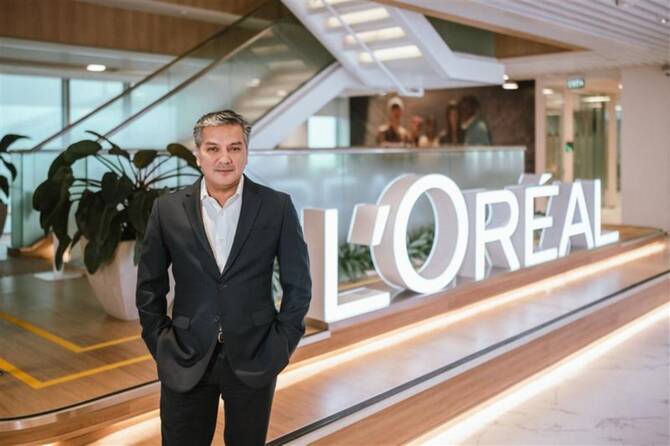
Speaking on the sidelines of the report’s release, Vismay Sharma, President of L’Oreal’s South Asia Pacific, Middle East and North Africa division, shared how Saudi Arabia is fast becoming a global epicenter for beauty innovation, digital transformation, and youth empowerment.
“Saudi Arabia is one of the fastest growing and most dynamic beauty markets worldwide. L’Oreal views the Kingdom as a cornerstone of our future, a $2 billion market with immense growth potential,” said Vismay.
With 99 percent internet penetration and 134 percent mobile connectivity, Saudi Arabia stands among the most digitally connected societies in the world. This connectivity is revolutionizing the consumer landscape, making multichannel retail and beauty tech standard practice rather than futuristic fantasy.
“A typical Saudi woman uses nine makeup products every day — more than the average of seven in Europe,” Vismay noted. “Saudi consumers are digitally-savvy and highly connected, and this is driving growth in social commerce and interest in beauty tech.”
From artificial intelligence-powered hair diagnostics to augmented reality virtual try-ons, L’Oreal is embedding cutting-edge tech into everyday routines. The Lancome Saudi Arabia website already offers such immersive experiences, allowing customers to find their ideal foundation, lipstick or mascara with just a click.
“Three-quarters of Saudi consumers buy beauty products both online and offline, reflecting this ‘omnichannel’ shopping trend,” said Vismay. “We partner with leading e-commerce players to create outstanding experiences.”
With nearly 50 percent of the population under the age of 30, Saudi Arabia’s youth are not only the largest consumer segment but also the future workforce of the beauty industry.
“Gen Z consumers are redefining cultural shifts and consumption trends, demanding personalized, digital-first experiences,” said Vismay.
Campaigns like Garnier’s “Ramadaniyat,” a culturally relevant talk show that engaged young Saudis during Ramadan, exemplify how L’Oreal is speaking the language of the next generation. On the workforce side, the L’Oreal Professional Hairdressing Academy has already trained over 100 Saudi women, with an ambitious goal of 1,000 graduates by 2029.
L’Oreal’s influence is not only economic, but social. The group’s initiatives have reached over 35,000 individuals, with programs supporting women’s empowerment, education, upskilling and entrepreneurship.
“We’re incredibly proud that to date, over 100 Saudi women have already graduated from five academies across the Kingdom,” Vismay shared.
“These programs directly support Saudi Vision 2030’s goal of increasing female workforce participation,” he added.
FASTFACT
Key figures from L’Oreal’s socio-economic impact study:
• 8,765 jobs supported in Saudi Arabia via the L’Oreal value chain
• SR3.2 billion in total sales generated
• 35,000+ individuals impacted by social programs
• 348 tons of waste recycled through the Garnier Green Beauty initiative
• 100+ Saudi women trained through the L’Oreal Professional Hairdressing Academy
• 57 Arab female scientists supported since 2014, including 16 from Saudi Arabia as part of the L’Oreal-UNESCO For Women in Science Middle East Regional Young Talents
The Kingdom is not just a market — it is a testing ground for global innovation.
“Driven by Vision 2030 and events like LEAP, Saudi Arabia is a leading incubator for tech innovation. For L’Oreal, we see the Kingdom as a gateway to scale beauty innovation,” said Vismay.
L’Oreal’s presence at LEAP 2025, where it was the only beauty company exhibiting over 20 AI-driven innovations, underscored Saudi Arabia’s role as a launchpad for beauty tech across emerging markets.
FASTFACT
Other standout initiatives in the region include:
• 30,000+ people trained via the Stand-Up Against Street
• Harassment program in partnership with Himayah Organization
• 600+ women supported through the Safe Homes initiative in partnership with L’Oreal Saudi Arabia
• 1,000 chemotherapy patients assisted by the Fight With Care program, a partnership between La Roche-Posay and King Faisal Specialist Hospital Foundation
• 16 Saudi female scientists supported via the L’Oreal-UNESCO For Women in Science awards
“Our journey in the Kingdom is grounded in our belief that business performance and positive impact must go hand-in-hand,” said Laurent Duffier, managing director of L’Oreal Middle East and L’Oreal Saudi Arabia.
As Saudi Arabia continues to reimagine its future, L’Oreal’s presence offers a compelling model for how the beauty industry can drive economic inclusion, social progress, and sustainable innovation — from the Kingdom and far beyond.


