Gulf funds lead global deals as MENA sovereign assets head to $8.8tn by 2030 — report

Global SWF is a research firm monitoring sovereign wealth funds and public pensions. Getty
Short Url
Updated 01 October 2025
Follow

Gulf funds lead global deals as MENA sovereign assets head to $8.8tn by 2030 — report

RIYADH: Sovereign investors across the Middle East and North Africa are on track to lift their combined assets to around $8.8 trillion by 2030, a jump of more than 57 percent in five years. 

According to the latest Global SWF report, MENA state-owned investors deployed $56.3 billion across 97 deals in the first nine months of 2025, with the US emerging as the top destination. 

Inbound sovereign flows into the region, however, remained limited. 

The surge comes as Gulf funds intensify efforts to diversify beyond oil. 

“The MENA region continues its transition to a sustainable, diversified, and resilient model. While oil and gas still play a central role — particularly in the Gulf — diversification is gaining ground,” Global SWF said. 

It added: “Countries are increasingly investing in emerging sectors such as renewable energy, digital technology, artificial intelligence and tourism, seeking to position themselves as regional innovation hubs and global economic players.”

According to the report, the most active investors were the “Oil Five”: Mubadala with $17.4 billion, Abu Dhabi Investment Authority with $9.6 billion, Qatar Investment Authority with $7.6 billion, the Saudi Public Investment Fund with $6.2 billion, and Abu Dhabi Developmental Holding Co., or ADQ, with $4.8 billion. 

Beyond the league tables, the report pointed to three broad themes shaping flows. First, Gulf funds remain the global engine of state-owned investment, accounting for about 40 percent of sovereign investor deals year-to-date, despite lower oil prices. 

Second, North America continued to attract the largest ticket sizes, particularly in technology, infrastructure, and real assets. 

Third, inbound flows to MENA remained comparatively modest, suggesting scope for more co-investment and on-shoring of capital as regional projects scale. 

Global SWF, a research firm monitoring sovereign wealth and public pensions, covers state-owned investors — including central banks, and pension schemes — offering data, analysis, and insights on their capital flows, strategies, and governance. 

The post-pandemic upswing in hydrocarbon receipts, asset transfers from governments to funds, and deepening capital-market access have all expanded the firepower of Gulf sovereign investors. 

Many funds have also formalized domestic development mandates, allocating more capital to in-country projects that crowd in private investment while maintaining significant international portfolios for returns, hedging and strategic partnerships. 

Global SWF’s outlook to $8.8 trillion by 2030 reflects this dual track: building at home while investing abroad, with the Gulf as the region’s growth driver. 

PIF illustrates the model: as an enabler of national projects, the fund channels capital, sets standards, and de-risks early-stage ventures so private investors can follow.

As a global investor, it secures partnerships and technologies that feed back into the domestic economy, consistent with its 2030 ambition and mandate. 

PIF’s domestic footprint spans giga-projects such as Neom, the Red Sea, Qiddiya, Diriyah, ROSHN, Soudah and New Murabba, as well as platforms in gaming and esports, tourism, transport, and renewables.

PIF spotlight 

Saudi Arabia’s sovereign wealth fund sits at the heart of the Kingdom’s Vision 2030 transformation, tasked with deploying capital both at home, into giga-projects and new industries, and abroad, into strategic stakes that can transfer know-how and supply chains back to the Kingdom. 

Global SWF’s profile of PIF notes its ambition to become one of the world’s largest sovereign investors, with a long-stated goal of reaching around $2 trillion in assets. Recent upgrades and affirmations from rating agencies have reinforced its capacity to raise and deploy capital at scale. 

On the funding side, PIF has diversified well beyond government transfers. It has tapped international debt markets through sukuk and bond programs and maintains multiple channels for capital raising. In February 2024, PIF priced a $2 billion international sukuk that was eight times oversubscribed, part of an ongoing program to broaden its investor base. 

The fund also completed its inaugural international sukuk in 2023, and subsequent communications emphasize four main funding sources: retained earnings, asset monetization/transfer, bank and capital-market debt, and government capital. 

Credit quality has strengthened in parallel with Saudi Arabia’s sovereign standing. Moody’s upgraded the Kingdom to Aa3 in late 2024 and later raised PIF’s rating to Aa3 as well, while Fitch has affirmed PIF at A+ with a stable outlook — actions that reduce borrowing costs and support the fund’s global issuance plans. 

Ratings agencies tie PIF’s credit to the sovereign’s strength and to the fund’s strategic importance and extraordinary support assessment as a government-related entity. 

Moody’s cited alignment with the state’s rating trajectory and robust credit links, while Fitch equalized PIF’s rating with the sovereign under its government-related entity criteria. These views, combined with the fund’s demonstrated market access, including multiple oversubscribed international sukuk, suggest ample capacity to fund its pipeline.


Mapping Saudi soils to grow better crops

Updated 19 December 2025
Follow

Mapping Saudi soils to grow better crops

  • Palm trees, root crops, and coastal plants reveal the land’s story

RIYADH: Saudi Arabia’s land tells stories written beneath the feet. From fertile plains and rugged highlands to vast deserts, the Kingdom’s diverse landscapes shape what can grow, where it grows, and how agriculture can thrive.

Alongside geography and climate, soil conditions play a decisive role in agricultural success. Understanding soil types across the Kingdom helps determine which crops can flourish and what interventions may be needed to sustain them.

In an interview with Arab News, Turki Almutairi, a senior environmental specialist at the National Afforestation Center under the National Center for Vegetation Cover Development and Combating Desertification, outlined the main soil types found across Saudi Arabia.

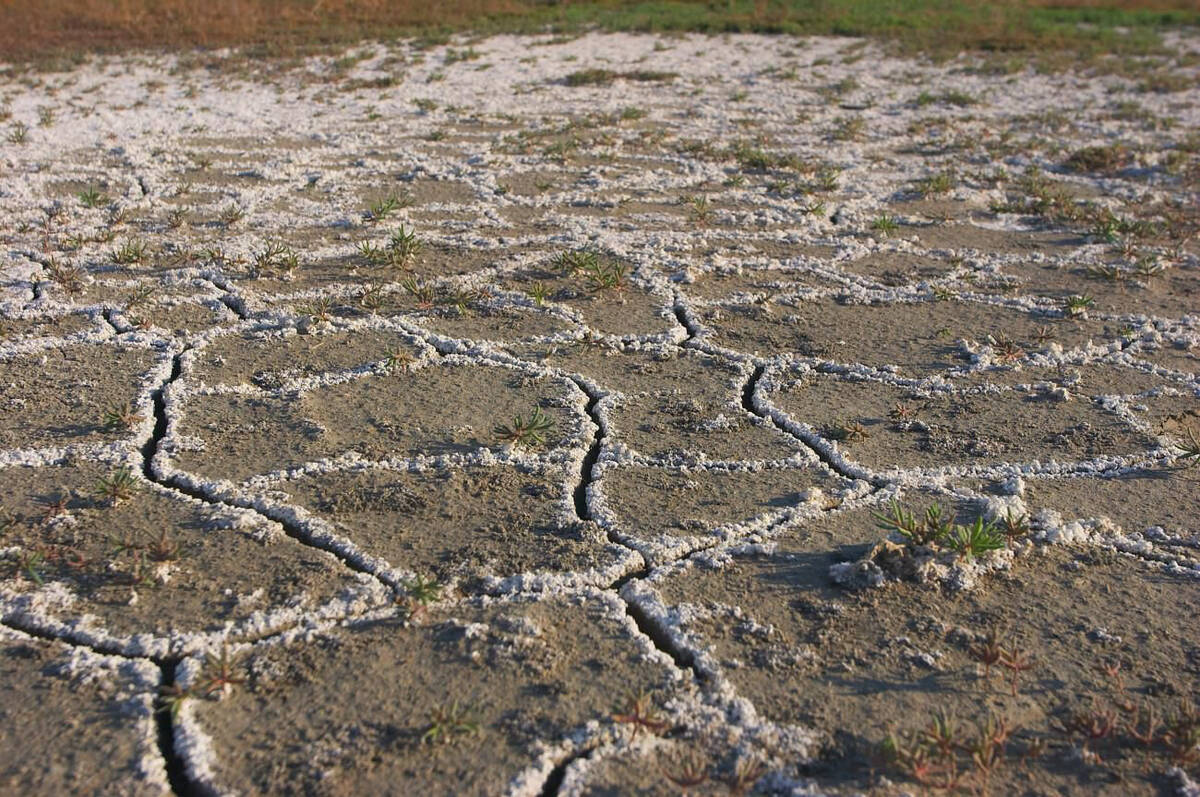
High amount of salt makes the soil unfit for the production of most crops, even if the soil is fertile. (Supplied)

“The dominant soil in the Kingdom are sandy desert soils, alongside calcareous soils in the central region. Rocky and stony soils are present along mountainous and hilly landscapes,” he said.

“Alluvial soils are common in wadies (valleys), while saline and sodic soils are located in depressions (Sabkhas) and along coastlines. Pockets of clayed soils can be also found around few sites along the Kingdom.”

The Kingdom’s vast territory gives rise to unique soil characteristics in each region, enabling different crops to grow depending on local conditions.

“Soil is the growing medium for plants. The role of soil includes structural stabilization, providing nutrients and a communication medium for plants,” Basil Nasir, soil lead at engineering consultancy William Sale Partnership, told Arab News.

Basil Nasir, soil lead at the engineering consultant company, William Sale Partnership (WSP). (Supplied)

According to Nasir, assessing soil use is essential before determining whether it is fertile or infertile, as different soils support different plant types.

“The soil used for trees differs from the soil used for ornamental plants and from the soil used for aquatic plants. It varies according to the specific needs of each plant, and based on this, we determine what the soil requires and assess its fertility,” he said.

Nasir explained that soil characteristics are shaped by both physical and chemical components. In addition to water and air, mineral particles such as sand, silt and clay are key indicators of soil health. Organic matter, derived from plant and animal remains, forms the fourth major component.

The balance between these elements determines soil behavior. One important physical trait is water-holding capacity, which influences what types of plants a soil can support.


Opinion

This section contains relevant reference points, placed in (Opinion field)

“If the soil is like dunes, adding water will cause it to run off, but if the soil is clay, its ability to retain water will be very high. If you add water and return the next day, you will find that the water is still there,” said Nasir.

Chemical properties, such as whether soil is alkaline or acidic, are equally important. Understanding both physical and chemical traits allows for proper assessment and treatment when needed.

“What determines whether a plant is suitable for a particular environment is primarily the plant's nature. For example, some plants have fibrous roots and therefore do not require well-draining soil,” Nasir added.

“A palm tree, for example, does not care whether it was planted in one soil or the other because its roots are fibrous. Therefore, palm trees are strong plants and are suitable to grow in both dry and wetlands, while preferring sandy areas.”

Soil Salinity can be treated through Soil leaching which means washing the soil with certain amount of water to reduce the salt in it. (Supplied)

Crops such as potatoes, onions, carrots and beetroots — where the edible part grows underground — typically thrive in sandy soils. As a result, plantations of these crops are commonly found in northern regions such as Hail and in Wadi Ad-Dawasir.

In the eastern region, including Al-Ahsa, wetlands are more common due to climatic conditions. Growing plants in such environments often requires human intervention.

“Plants that are coastal or could be found in lagoons or lakes must have some sort of soil around them, like lotus flowers and mangrove trees.”

“An important parameter to keep in mind is that there is no air in its soil, and they are adapted to this condition. However, the lack of air, along with the presence of organic matter, will create a situation where anaerobic bacteria react with the soil, potentially causing diseases we can easily avoid,” said Nasir.

He emphasized that removing organic matter from such soils is essential to ensure plant survival in aquatic environments.

Mountainous and rocky regions in Saudi Arabia are generally volcanic, resulting in low water-holding capacity and challenging growing conditions. However, volcanic ash contributes to high fertility, allowing certain crops to flourish.

As a result, western regions support tree crops such as coffee, mangoes, some banana varieties and pomegranates.

There are various types of soils such as clay, sandy, silty and loamy. Each type provides excellent conditions for specific plants. (Supplied)

As development accelerates across the Kingdom, soil improvement efforts are expanding under the National Greening Program.

“Soil is considered fundamental for the National Greening Program’s objectives. Understanding the soil variability along the Kingdom is a precondition for fostering sustainable soil management,” Almutairi told Arab News.

Adding, “In this line, the NGP is working towards the establishment of the Saudi Soil Information System (TURBA-KSA), which consists of mapping soils and its functional properties in the Kingdom using state-of-the-art technology.”

He also noted the creation of the “Land Rehabilitation Watch” to report, verify and monitor land rehabilitation nationwide.

“This milestone allows the Kingdom to understand how soil and land health are progressing against national and international targets of land degradation neutrality. Documenting good soil and land management practices is also important, so that those successful practices could be scaled up along the Kingdom, which is a priority task for NGP,” he said.

Raising public awareness is another key pillar of the program.

“Assessing different emerging technologies and soil amendments is a daily activity of NGP, as it then provides technical support to partners on the selection and application of these technologies.”

DID YOU KNOW?

• Saudi Arabia cultivates around 1 million hectares, mainly in Riyadh, Qassim, Hail, and Jouf.

• Farming follows the seasons: winter brings onions, garlic, and carrots, while summer yields watermelon, tomatoes, and cucumbers.

• The Kingdom is a top date producer, with over 31 million palm trees generating nearly 1.54 million tons, especially in Riyadh and Qassim.

Almutairi stressed that soil is often overlooked because it lies unseen beneath the surface, despite its critical role.

Yet soil produces 95 percent of food, stores water, holds more carbon than vegetation and the atmosphere, suppresses contaminants, regulates water, carbon and nutrient cycles, and hosts microorganisms linked to the human microbiome.

He emphasized the need to engage the general public, particularly urban communities disconnected from nature. Education helps people understand where food comes from and how contact with soil — such as walking barefoot — can support well-being. Healthy soils also contribute to cleaner water and air, he added.

Almutairi also called for stronger advocacy among decision-makers, noting that investment in healthy soils supports climate action, food security and sustainable development.

He concluded that key strategies include officially observing UN World Soil Day on Dec. 5, integrating soil education into curricula, launching annual social media campaigns, using art to raise awareness, and organizing public events that connect soils to everyday life.