WELLINGTON: On a visit to New Zealand, FBI Director Kash Patel gave the country’s police and spy bosses gifts of inoperable pistols that were illegal to possess under local gun laws and had to be destroyed, New Zealand law enforcement agencies told The Associated Press.
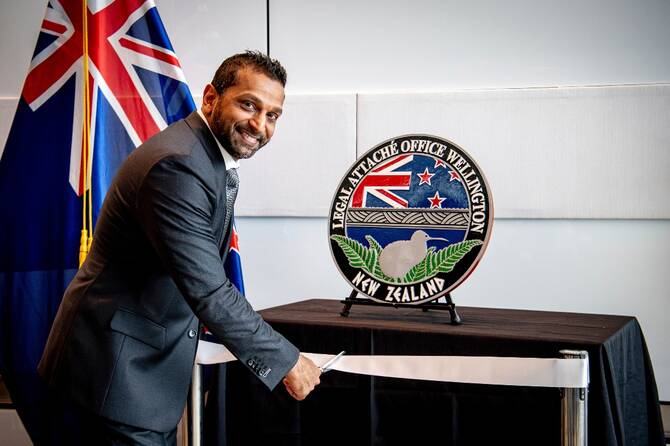
The plastic 3D-printed replica pistols formed part of display stands Patel presented to at least three senior New Zealand security officials in July. Patel, the most senior Trump administration official to visit the country so far, was in Wellington to open the FBI’s first standalone office in New Zealand.
Pistols are tightly restricted weapons under New Zealand law and possessing one requires an additional permit beyond a regular gun license. Law enforcement agencies didn’t specify whether the officials who met with Patel held such permits, but they couldn’t have legally kept the gifts if they didn’t.
It wasn’t clear what permissions Patel had sought to bring the weapons into the country. A spokesperson for Patel told the AP Tuesday that the FBI would not comment.
The pistols were surrendered and destroyed
Inoperable weapons are treated as though they’re operable in New Zealand if modifications could make them workable again. The pistols were judged by gun regulators to be potentially operable and were destroyed, New Zealand’s Police Commissioner Richard Chambers told AP in a statement Tuesday.
Chambers didn’t specify how the weapons had been rendered inoperable before Patel gifted them. Usually this means the temporary disabling of the gun’s firing mechanism.
Three of New Zealand’s most powerful law enforcement figures said they received the gifts at meetings July 31. Chambers was one recipient, and the other two were Andrew Hampton, Director-General of the country’s human intelligence agency NZSIS, and Andrew Clark, Director-General of the technical intelligence agency GCSB, according to a joint statement from their departments.
A spokesperson for the spy agencies described the gift as “a challenge coin display stand” that included the 3D-printed inoperable weapon “as part of the design.” The officials sought advice on the gifts the next day from the regulator that enforces New Zealand’s gun laws, Chambers said.
When the weapons were examined, it was discovered they were potentially operable.
“To ensure compliance with firearms laws, I instructed Police to retain and destroy them,” Chambers said.
James Davidson, a former FBI agent who is now president of the FBI Integrity Project, a nonprofit that seeks to safeguard the bureau from undue partisan influence, has criticized Patel’s appointment.
But Davidson said the gift of the replica pistols appeared “a genuine gesture” from Patel and their destruction was “quite frankly, an overreaction by the NZSIS, which could have simply rendered the replica inoperable,” he said.
New Zealand has strong gun controls
3D-printed weapons are treated the same as other guns in New Zealand. The country bolstered its gun restrictions following a 2019 white supremacist attack on two mosques in the city of Christchurch, when 51 Muslim worshipers were shot dead by an Australian man who had amassed a cache of semiautomatic weapons legally.
The guns Patel gifted to the law enforcement chiefs were not semiautomatic models now prohibited after the Christchurch massacre. But there are a suite of other reasons New Zealanders might not legally be able to possess certain weapons, including the specific permits required for pistols.
New Zealand doesn’t have a passionate culture of gun ownership and the weapons have been viewed more dimly since the mass shooting. Gun ownership is enshrined in New Zealand law as a privilege, not a right.
The country isn’t short on guns; they’re common in rural areas for pest control. But violent gun crime is rare and many urban residents might never have even seen a firearm in person.
It’s uncommon even to see police officers carrying weapons. Front-line officers aren’t usually armed on patrol and leave their weapons locked in their vehicles.
Patel caused discomfort with China remarks
News of Patel’s visit caused ripples in New Zealand at the time because the opening of the new FBI field office in Wellington wasn’t divulged to news outlets or the public until it had already happened. An FBI statement in July said the move aligned New Zealand with FBI missions in other Five Eyes intelligence-sharing nations, which also include the United States, Australia, Canada and the United Kingdom.
The office would provide a local mission for FBI staff who have operated with oversight from Canberra, Australia, since 2017, the statement said.
Public records disclosed to local news outlets this month revealed that Patel met with and dined with a more than a dozen senior public servants and elected officials, including Cabinet ministers, during his visit. It wasn’t immediately clear Tuesday how many officials received the pistols as gifts.
Patel had already provoked mild diplomatic discomfort in Wellington by suggesting in remarks supplied to reporters that the new FBI office aimed to counter China’s influence in the South Pacific Ocean, where New Zealand is located. The comments prompted polite dismissal from officials in Wellington, who said the bolstered FBI presence was primarily to collaborate on child exploitation and drug smuggling crimes. Beijing decried Patel’s remarks.


![]()

FBI boss Kash Patel gave New Zealand officials 3D-printed guns illegal to possess under local laws
Short Url
https://arab.news/g67pq
FBI boss Kash Patel gave New Zealand officials 3D-printed guns illegal to possess under local laws
- The plastic 3D-printed replica pistols formed part of display stands Patel presented to at least three senior New Zealand security officials in July
- Pistols are tightly restricted weapons under New Zealand law and possessing one requires an additional permit beyond a regular gun license


Latest updates


© 2026 SAUDI RESEARCH & PUBLISHING COMPANY, All Rights Reserved And subject to Terms of Use Agreement.