


ISLAMABAD: Pakistan has slashed its annual gross domestic product (GDP) growth forecast to 3.9 percent from an earlier target of 4.2 percent as devastating monsoon floods this year caused an estimated $1.3 billion (Rs371 billion) in damage, according to a preliminary government assessment seen by Arab News.
The revised outlook highlights how recurring climate disasters are undermining Pakistan’s fragile economic recovery, even as it implements structural reforms under a $7 billion International Monetary Fund (IMF) program. Monsoon rains and floods have killed over 1,000 people, affected more than 4.5 million since June 26, and submerged millions of acres of farmland and standing crops, according to disaster management authorities.
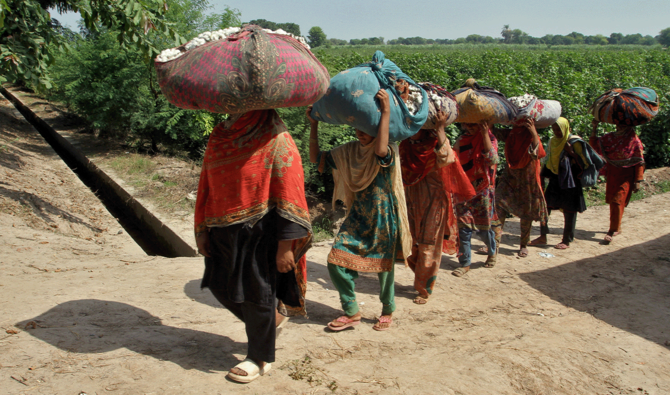
The damage estimates currently reflect losses only from Punjab province, and assessments in Sindh and other regions are still underway, suggesting the final toll could be significantly higher. The agriculture sector — which underpins food security and exports — is the hardest hit, suffering $546 million (Rs155 billion) in losses, with projected growth slowing from 4.5 percent to 4 percent, according to the government’s early report of damages.
Crop production has borne the brunt of the loss, with key staples such as wheat, rice and cotton expected to see growth decline from 6.7 percent to 4.5 percent. The industrial sector is projected to sustain more modest losses of $105 million (Rs29.9 billion), with growth revised slightly downward from 4.3 percent to 4.2 percent, while the services sector faces losses of $652 million (Rs186 billion). The transport and storage sector incurred $259 million (Rs74 billion) in damages, and the information and communication sector will contract from 5.0 percent to 4.3 percent, losing $51 million (Rs14.5 billion). Education and health sectors have incurred combined losses of about $19 million (Rs5.6 billion).
Economic experts have urged the government to avoid “unplanned expenditures” for relief after the latest disaster that follows the 2022 cataclysmic deluges, which killed more than 1,700 people, affected 33 million and caused an estimated $30 billion in losses.
“In response to Pakistan’s appeal [for international assistance] after devastating 2022 floods, funds to the tune of $10.98 billion were committed, but apart from the Saudi oil facility and deferred payment relief, only 25 percent of the remaining amount was actually received,” Dr. Abid Qaiyum Suleri from the Islamabad-based Sustainable Development Policy Institute (SDPI) think tank, told Arab News. “The country should locally arrange climate funds annually to deal with floods and other disasters.”
Arab News contacted Climate Change Minister Musadik Malik and Finance Adviser Khurram Schehzad for comment on the government’s assessment and any plans for an international appeal but received no response.
Earlier this year, Pakistan and the World Bank signed a Country Partnership Framework worth $20 billion over the next decade to support the country’s development priorities, including climate adaptation, social protection and private-sector growth. The financing, which complements the ongoing IMF program, is intended to strengthen the country’s economic resilience in the face of recurring climate shocks like the latest monsoon floods.
Despite contributing less than 1 percent of global greenhouse gas emissions, Pakistan ranks among the countries most vulnerable to climate change. Experts warn that without urgent adaptation and mitigation measures, the human and economic toll of climate change in Pakistan will only deepen in the years ahead.
But Muhammad Waqas Ghani, head of research at the JS Global brokerage firm, warned the government against fiscal and external risks if it resorted to unplanned relief spending.
“Despite the scale of devastation in 2022, international assistance for Pakistan remained limited,” Ghani said. “Should the government now resort to unplanned expenditures on relief, restoration, and subsidies, it will create additional fiscal stress at a time when the country is already operating under strict IMF program targets.”
Damages to crops, livestock and textiles, which account for nearly 30 percent of Pakistan’s consumer price index, pose a “key downside risk to inflation forecasts,” while food imports and reduced textile and rice exports could worsen the external account, Ghani added.


