

Hail’s iconic Quraishyyat coffee pot is symbol of hospitality

1 / 4
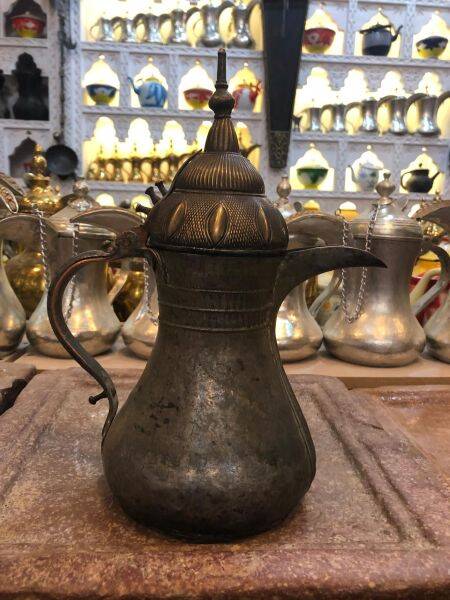
Hail has been crafting a specific type of Arabic coffee pot known as the Quraishyyat for hundreds of years. (Supplied)
2 / 4
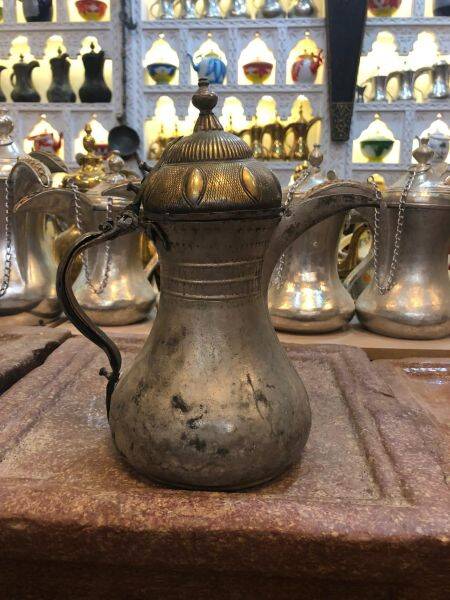
Hail has been crafting a specific type of Arabic coffee pot known as the Quraishyyat for hundreds of years. (Supplied)
3 / 4
Hail has been crafting a specific type of Arabic coffee pot known as the Quraishyyat for hundreds of years. (Supplied)
4 / 4
Hail has been crafting a specific type of Arabic coffee pot known as the Quraishyyat for hundreds of years. (Supplied)
Short Url
Updated 23 September 2025
Follow

Hail’s iconic Quraishyyat coffee pot is symbol of hospitality

  • Distinctive design crafted in the northern city for hundreds of years
  • Item traditionally used for special occasions remains popular today

RIYADH: The northern city of Hail in Saudi Arabia has been crafting a specific type of Arabic coffee pot known as the Quraishyyat for hundreds of years.

This distinctive vessel features a longer neck and a slimmer body than the typical receptacle, and was traditionally reserved only for special occasions.

“Al-Quraishyyat is a coffee pot made of green and yellow copper and has several names such as the palace coffee pot, the khateeb coffee pot, or Hail’s Quraishyyat,” Hamid Al-Dhuwaili, owner of Al-Dhuwaili Heritage Museum in Hail, told Arab News.

He explained that making such coffee pots had been part of the culture in Hail for hundreds of years, and added: “People have practiced this craft since ancient times, before the founding of the First Saudi State. There are well-known craftsmen in Hail who excel in this industry. Currently Hail is home to a coffee pot factory considered one of the best in the Middle East.”

While other handicrafts, including carving, tent making and weaving, are also native to Hail, it is its coffee pots that most visitors and tourists find attractive.

Thanks to its cool weather, rocky landscape and groundwater resources, Hail was one of the main stopping points for traveling merchants and migrants.

It was a resting point for travelers to feed their cattle, which fostered a culture of hospitality among the people of Hail. Coffee has been a significant part of that culture for centuries.

Along with the Quraishyyat, there are other kinds of coffee pots that are also prominent in the city, including the Baghdadiyyat, which is believed to have been introduced by travelers from the Iraqi capital.

Another variation is the Raslan, which consists of pots of different sizes. The Raslan is believed to have been brought to Hail through merchants from the Levant region.

The crafting of coffee pots in Hail has been significant throughout its history as a trading post, and remains so today as the tradition welcomes visitors from near and far.


Sale of Saudi artist Safeya Binzagr’s work sets record at Sotheby’s auction in Riyadh

Updated 01 February 2026
Follow

Sale of Saudi artist Safeya Binzagr’s work sets record at Sotheby’s auction in Riyadh

RIYADH: A painting by Saudi artist Safeya Binzagr sold for $2.1 million at Sotheby’s “Origins II” auction in Riyadh on Saturday, emerging as the top lot of the evening and setting a new auction record for a Saudi artist.

The work, “Coffee Shop in Madina Road” (1968), sold for $1.65 million before the buyer’s premium, the additional fee paid by the purchaser to the auction house on top of the hammer price.

The result nearly doubled the previous auction record for a Saudi artist and became the most valuable artwork ever sold at auction in the Kingdom. It also ranks as the third-highest price achieved for an Arab artist at auction.

It was presented as part of “Origins II,” Sotheby’s second auction staged in Saudi Arabia, comprising 62 modern and contemporary lots and bringing together Saudi artists alongside regional and international names.

Collectors from more than 40 countries participated in the auction, with around one-third of the lots sold to buyers within Saudi Arabia.

The sale totaled $19.6 million, exceeding its pre-sale estimate and bringing the combined value of works offered across “Origins” and “Origins II” to over $32 million.

Saudi artists were central to the evening’s results. All nine Saudi works offered found buyers, achieving a combined total of $4.3 million, well above pre‑sale expectations.

Ashkan Baghestani, Sotheby’s head of contemporary art for the Middle East, told Arab News at the auction that “Safeya made more than any other artist tonight, which is incredible.”

He said the results demonstrated Sotheby’s broader objective in the Kingdom.

“The results tonight show exactly what we’re trying to do here. Bring international collectors to Saudi Arabia and give them exposure to Saudi artists, especially the pioneers.”

All nine works by Saudi artists offered in the sale found buyers, generating a combined $4.3 million. Additional auction records were set for Egyptian artist Ahmed Morsi and Sudanese artist Abdel Badie Abdel Hay.

An untitled work from 1989 by Mohammed Al-Saleem sold for a triple estimate of $756,000, while a second work by the artist, “Flow” from 1987, achieved $630,000.

The sale opened with the auction debut of Mohamed Siam, whose “Untitled (Camel Race)” sold for $94,500. Also making his first auction appearance, Dia Aziz Dia’s prize-winning “La Palma (The Palma)” achieved $226,800.

The sale coincided with the opening week of the Contemporary Art Biennale in Riyadh, reinforcing the city’s growing role as a focal point for both cultural institutions and the art market.

Baghestani added that Saudi modern artists are now receiving long‑overdue recognition in the market.

“There’s so much interest and so much demand, and the price is where it should be,” he said.

International highlights included works by Pablo Picasso, Roy Lichtenstein, Andy Warhol and Anish Kapoor, underscoring Saudi Arabia’s growing role as a destination for major global art events and collectors.

Picasso’s “Paysage,” painted during the final decade of the artist’s life, sold for $1,600,000, becoming the second most valuable artwork sold at auction in Saudi Arabia.

Seven works by Lichtenstein from the personal collection of the artist and his wife, including collages, prints, works on paper and sculptures, all found buyers. Warhol was represented in the sale with two works: “Disquieting Muses (After de Chirico),” which sold for $1,033,200, and a complete set of four screenprints of “Muhammad Ali,” which achieved $352,000.

Baghestani said the strength of the results was closely tied to the material’s freshness. “These were not works from the trade. Some of them had not been seen since the 1970s,” he said.