SEOUL: The leader of the Unification Church, Han Hak-ja, appeared for questioning by prosecutors on Wednesday over alleged involvement in bribing the wife of ousted South Korean President Yoon Suk Yeol as part of a criminal probe into the former first couple.
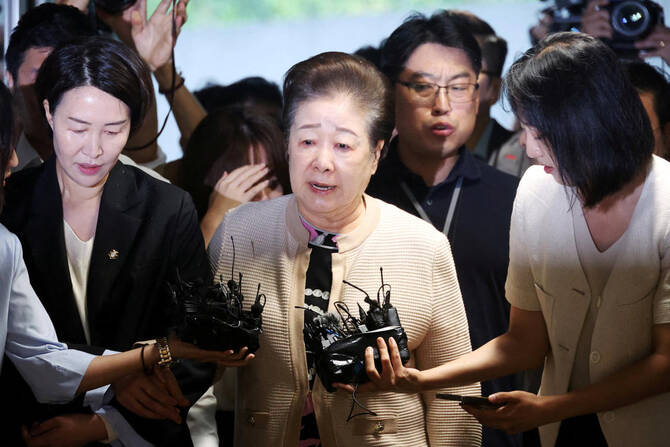
Han declined to answer questions from reporters about the allegations as she arrived at the office of the special prosecutor.
“I’ve been unwell,” she said, when asked why she had chosen to respond to questioning, after refusing earlier summons.
Han, who is called “True Mother” by followers, is the widow of Unification Church founder Moon Sun-myung, who died in 2012.
Han was assisted by aides as she stepped out of the car and walked slowly through a throng of reporters and security.
A church official shouted “Mother, hang in there,” as Han made her way inside the prosecutors’ office.
An ambulance arranged by Han was on standby while she was interrogated, according to the special prosecutor’s team.
The special prosecutor has indicted former First Lady Kim Keon Hee for bribery and other charges in a widening probe into several charges of wrongdoing by her before and during Yoon’s presidency. Kim has been imprisoned as part of the probe.
Han has been accused of instructing the religious group to bribe the former first lady and Kweon Seong-dong, a veteran lawmaker and close confidante of Yoon. Han has denied the allegations.
Kweon from the conservative People Power Party was detained on Wednesday over concerns he could destroy evidence, prosecutors said. Kweon has denied that he took bribes from the church.
Kim Hyong Kun, deputy special prosecutor, told reporters on Wednesday that Han did not exercise her right to remain silent and answered questions well related to allegations of violating political funding and anti-graft laws.
The prosecutors were not currently considering issuing an arrest warrant for Han, since she had come in for questioning, Kim said.
Yoon, who is also in detention, is on trial over insurrection charges levelled against him by a separate special prosecutor related to his botched bid to declare martial law.
Kim is accused of receiving bribes worth 80 million won ($57,958) that include two Chanel bags and a diamond necklace from an official at the Unification Church in return for using her influence to help the church’s business interests.
Kim’s lawyers have denied the allegations against her, including over her receiving gifts.
Han has called the allegations against her “false information.”
The official from the church that prosecutors say was behind the bribery has been arrested and indicted on charges including violating anti-graft laws.
The Unification Church, formally called the Family Federation for World Peace and Unification, said previously it was “deeply regrettable” that it failed to prevent the misconduct of a former senior official, but denied any involvement in the case.


![]()

Unification Church leader questioned in ex-South Korea first lady investigation
Short Url
https://arab.news/jznah
Unification Church leader questioned in ex-South Korea first lady investigation
- Han Hak-ja questioned over bribery allegations involving former First Lady Kim Keon Hee
- Lawmaker detained over evidence destruction concerns, denies bribery


Latest updates




© 2026 SAUDI RESEARCH & PUBLISHING COMPANY, All Rights Reserved And subject to Terms of Use Agreement.