

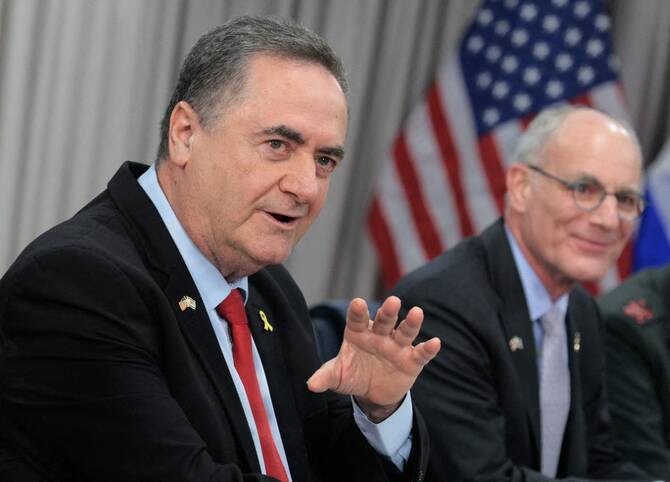

LONDON: A group of Turkish hackers reportedly managed to video call Israeli Defense Minister Israel Katz and subsequently leaked his phone number online.
According to local media reports, Katz accepted a video call from one of the hackers on Thursday evening, who then took a screenshot and published it online.
The hackers also released screenshots of multiple messages sent to Katz via WhatsApp, which appeared to contain insults and threats, including “We will kill you.”
“Hey Katz, never forget this, your death is near, we are the defenders of Qassam, we will bury you and your country in history,” read one of the messages, apparently referencing the armed wing of Hamas.
Israeli media reported that Katz had maintained the same phone number for several years and that it had previously been circulated in various groups. The number has since been blocked.
In a post on his X account, Katz claimed the hackers belonged to “organized Islamist-jihadist gangs from various countries around the world.”
He wrote: “Let them continue to call and threaten and I will continue to order the elimination of their fellow terrorist leaders.”
A Turkish hacker could call Israeli defense minister Israel Katz via Whatsapp. Katz then blocked him. pic.twitter.com/LnsaaaLuax
— İbrahim Karataş (@ibratas1) September 11, 2025
Other members of the ruling Likud party, including Ofir Katz, David Bitan, and Moshe Saada, have also been targeted by hackers, Israeli media reported Friday.
After reportedly receiving hundreds of WhatsApp video calls from unknown numbers, which they did not answer, the politicians also received text messages containing images of Palestinian flags.
It remains unclear whether the hackers accessed any sensitive information, or if the breach represents a broader security vulnerability.
In August 2024, while serving as foreign minister, Katz sparked controversy by attacking Turkish President Recep Tayyip Erdogan on X, accusing him of turning Turkiye into a dictatorship due to his “support for the murderers and rapists of Hamas.”
The post included an AI-generated image of Erdogan against Istanbul’s backdrop with a burning Turkish flag, provoking outrage in Turkey.
Since assuming his role as defense minister in November, Katz has generated further controversy by reportedly spearheading plans to confine Palestinians in what critics have labeled a “concentration camp” built on the ruins of Rafah in southern Gaza.


