

Asir magpie, only bird species endemic to Saudi Arabia, is on IUCN’s ‘endangered’ list

1 / 4
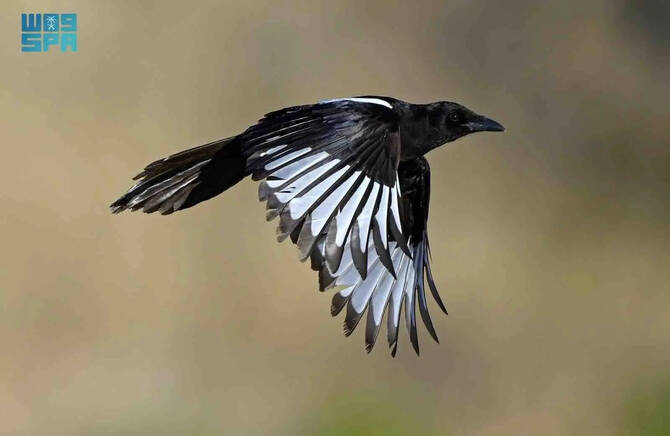
Known for its high intelligence and ability to recognize itself in a mirror, the bird is called a magpie because of its melodious sounds. (SPA)
2 / 4
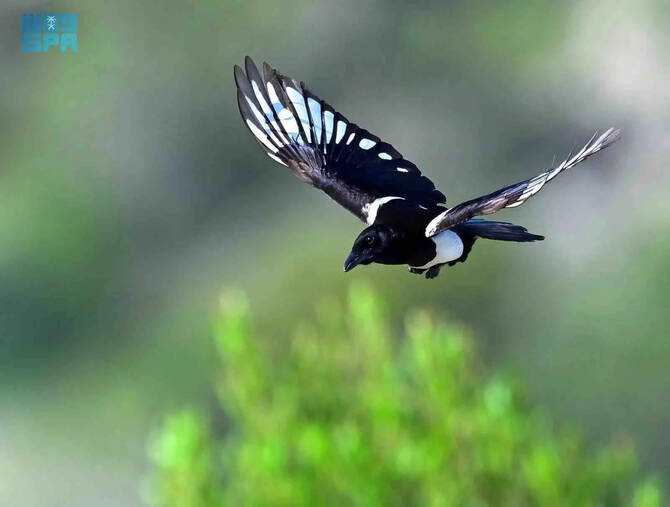
Known for its high intelligence and ability to recognize itself in a mirror, the bird is called a magpie because of its melodious sounds. (SPA)
3 / 4
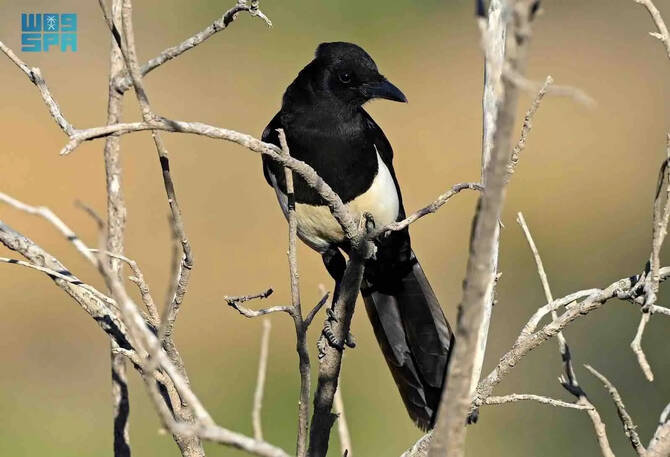
Known for its high intelligence and ability to recognize itself in a mirror, the bird is called a magpie because of its melodious sounds. (SPA)
4 / 4
Short Url
Updated 30 August 2025
Follow

Asir magpie, only bird species endemic to Saudi Arabia, is on IUCN’s ‘endangered’ list

  • Known as the Asir magpie, the bird can be found “only in a few small patches” in the mountains of Asir
  • About 100 breeding pairs of Asir magpies remain, making it one of the “rarest birds on the planet”

ABHA: Of 499 bird species recorded in Saudi Arabia, only one is considered endemic to the Kingdom, which means it is found nowhere else in the world.

This is according to Aramco’s 2021 book “The Birds of Saudi Arabia,” which noted that the bird known as the Asir magpie (scientific name Pica asirensis) can be found “only in a few small patches” in the mountains of Asir region in the Kingdom’s southwest.

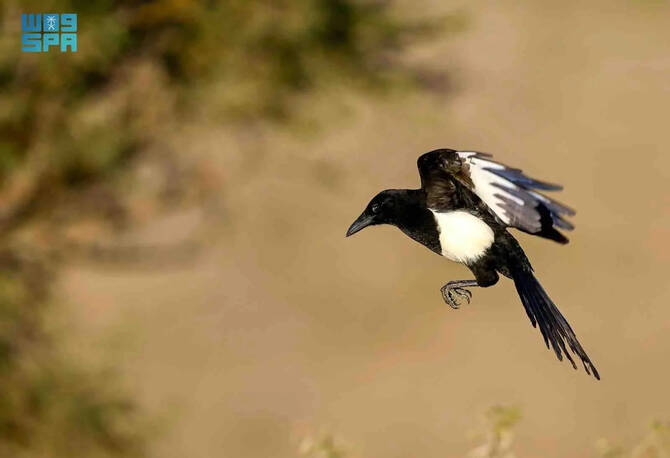
Known for its high intelligence and ability to recognize itself in a mirror, the bird is called a magpie because of its melodious sounds. It is easily recognizable by its black and white feathers and the large, dome-shaped nest it builds, typically in juniper or acacia trees.


With only about about 100 breeding pairs of Asir magpies remaining, the Asir magpie is one of the “rarest birds on the planet.” (SPA photos)

The Asir magpie is classified as “endangered” on the Red List of Threatened Species of the International Union for the Conservation of Nature, or IUCN.

A report by the Saudi Press Agency on Friday said that recent estimates suggest that only about 100 breeding pairs of Asir magpies remain, or around 200 adults, making it one of the “rarest birds on the planet.”

“The primary threat to the Asir magpie’s survival is climate change, which has limited its natural range because of rising temperatures and arid weather conditions over the past decades,” SPA said.

The Aramco book said there are 18 other species that are largely or entirely confined to the Arabian Peninsula, including the Arabian sunbird, the Arabian babbler, the Arabian scops owl, the rare Arabian grosbeak, and the Arabian woodpecker.


Jeddah masterclass explores power of sound in cinema with leading industry experts

Updated 7 sec ago
Follow

Jeddah masterclass explores power of sound in cinema with leading industry experts

  • The event offered an intimate look into cinematic sound design, attracting aspiring filmmakers and composers eager to learn from one of the industry’s leading voices

JEDDAH: The Alliance Francaise of Jeddah, in collaboration with the French Consulate, recently hosted an exclusive masterclass on Sound and Cinema led by Fanny Lamothe, CEO of Cercle Rouge Productions, along with composers Fabien and Mike Kourtzer.

The event offered an intimate look into cinematic sound design, attracting aspiring filmmakers and composers eager to learn from one of the industry’s leading voices.

Cercle Rouge Productions has contributed to internationally acclaimed films such as “John Wick 4” and “Emilia Perez,” as well as notable Saudi productions including “Mandoob” by Ali Kalthami, “Al Zarfa” by Abdullah Majed, and “Sayfi” by Wael Abumansur.

Lamothe, who also heads the music department at Why Not Productions, oversees all aspects of sound in film — from composition and recording to editing, foley, and legal clearances — bringing extensive experience to both international and regional projects.

During the masterclass, Lamothe and the Kourtzers highlighted two key areas for participants: understanding the precise process of creating original music for a film and establishing clear communication between composers and directors to ensure a shared understanding of the film’s deeper meaning. “This allows us to express our own point of view and add an extra dimension to the story,” they said.

Discussing her approach to composing for films with strong cultural identities, Lamothe added: “It’s a process of back-and-forth with the director, along with many researches that allow us to immerse ourselves in the context and universe of the film and to perceive different cultural threads that resonate with it.

“Each city, for instance, has its own rhythm, its own sound. Music in itself is a universal language, and emotions can be transmitted to audiences worldwide when expressed with a clear artistic direction and a confident musical discourse.”

Fabien Kourtzer said: “Working with international directors broadens our perspective. What has particularly enriched our film scores from the Arab world is the ancient aspect of these civilizations, which is a powerful influence even when we work on films from other parts of the world.

Mike Kourtzer said: “The growth of Saudi cinema is explosive. It stems from a very strong desire among industry players to share stories that showcase this cultural heritage to the rest of the world. This dynamic will give birth to major works that will stand out on the global audiovisual landscape.”

Lamothe offered advice to young Saudi composers and filmmakers aiming to enter film scoring: “Seek to deeply understand the film you are working on and take the necessary time to achieve the best result.

“Start by understanding the director — what they want to express through communication and building a human relationship. Then, understand yourself and your musical identity. Your own point of view and artistic vision are what set you apart.”

Larry Lamartiniere, managing director of Alliance Francaise in Jeddah, highlighted the significance of the event. “It was an honor to host this masterclass on music and cinema with Cercle Rouge Productions. We organized it in partnership with the French Consulate of Jeddah as a closing event of a very intense and productive sequence for France at the Red Sea International Film Festival.

“This evening highlighted the vital role of sound in storytelling and celebrated the creative exchange between France and Saudi Arabia. Supporting such conversations not only strengthens our cultural ties but also nurtures the next generation of filmmakers and sound artists in the region,” he said.

With Saudi cinema experiencing rapid growth and a surge in international collaborations, events like this masterclass provide a platform for emerging talent to learn from industry leaders and shape the Kingdom’s filmmaking future.

All three confirmed their ongoing commitment, saying: “We have already worked on eight Saudi films, and these experiences have been more than enriching. We have had fantastic encounters, and we have a very strong desire for this adventure to continue.”