

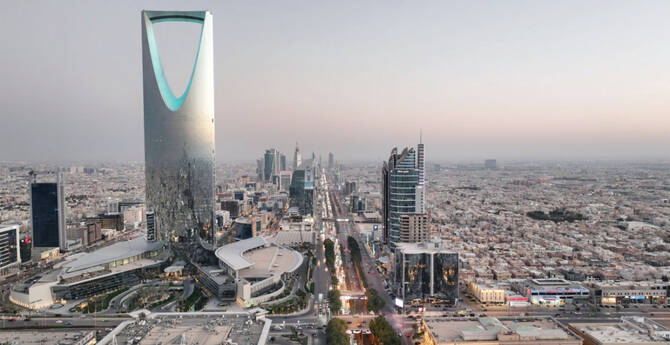

JEDDAH: Headquartered in Riyadh, Alat helps international companies adopt sustainable, low-carbon production methods, supporting Vision 2030 goals for industrial growth, economic diversification, and job creation.
Launched in 2024, the company aims to localize production in strategic sectors, including semiconductors, smart devices, advanced industrials, and next-generation infrastructure, targeting an addition of roughly $9.3 billion to Saudi Arabia’s non-oil gross domestic product by 2030.
Khaled Ramadan, an economist and head of the International Center for Strategic Studies in Cairo, told Arab News that Alat will have “a highly positive impact on industrial diversification in Saudi Arabia and the realization of Vision 2030.”
It could boost local content, create 39,000 direct jobs by 2030, reduce reliance on oil, and cut imports of electronics and smart devices. He added that achieving these goals will require sustained investment in infrastructure, R&D, and workforce development.

Khaled Ramadan, economist and head of the International Center for Strategic Studies in Cairo. (Supplied)
Partnership moves
Alat has quickly moved from strategy to execution. Within weeks of its launch, it signed a joint venture with Japan’s SoftBank Group to produce industrial robots locally, with production slated for 2025.
CEO Amit Midha described the deal as “a gamechanger for manufacturing around the world,” forecasting that the initial setup could add $1 billion to Saudi GDP by next year.
Alat is also partnering with Lenovo to build an advanced electronics plant producing laptops, desktops, servers, and smart devices with 70–80 percent automation.
A €160 million ($187 million) joint venture with global elevator leader TK Elevator will establish Saudi Arabia’s first foreign-owned elevator and escalator manufacturing operation, backed by a product-development center and training facility.
These partnerships reflect a wider national push to diversify the economy, strengthen industrial capacity, and attract foreign investment.
Neha Singh, co-founder of India-based market intelligence platform Tracxn, said Alat’s international partnerships would position Saudi Arabia as a regional manufacturing hub and attract foreign investment. “Alat is set to play a key role in advancing Vision 2030’s industrial ambitions by supporting the shift from an oil-reliant economy to one fueled by innovation,” she said.
Furthering its manufacturing ambitions, Alat, through its strategic investment Sapphire, partnered with the Special Integrated Logistics Zone Co. to establish a state-of-the-art light manufacturing facility at Riyadh Integrated, the Kingdom’s inaugural Special Integrated Logistics Free Zone.
The 40,000-sq.-meter facility, scheduled for completion in 2025, will focus on producing enabling technologies for automation in advanced industrial applications.
FASTFACTS
• Alat has quickly moved from strategy to execution. Within weeks of its launch, it signed a joint venture with Japan’s SoftBank Group to produce industrial robots locally, with production slated for 2025.
• The company is partnering with Lenovo to build an advanced electronics plant producing laptops, desktops, servers, and smart devices with 70–80 percent automation.
• Beyond robotics, electronics, and semiconductors, the company has identified nine priority sectors, including smart health, AI infrastructure, and electrification.
Abhishek Goyal, co-founder of Tracxn, noted that partnerships with global companies attract foreign investment, bring new technologies into strategic sectors, and benefit from PIF’s network and credibility.
“PIF’s association with the company not only provides financial backing but also lends Alat institutional credibility and international visibility, positioning it as an attractive partner for global collaborations,” he said.
Alat recently became the first company in Saudi Arabia— and among the first globally— to implement specific International Organization for Standardization indicators relating to organizational governance, and ensure measurable, sustainable outcomes. The certifications, awarded following audits by BSI Group and TUV Rheinland, validate Alat’s governance framework and its commitment to continuous improvement.
Sustainable manufacturing
Beyond robotics, electronics, and semiconductors, Alat has identified nine priority sectors, including smart health, AI infrastructure, and electrification. The company has pledged $100 billion in investments by 2030 to support the global energy transition and create tens of thousands of skilled jobs.
“Alat’s strong focus on sustainable technologies to steer the economy toward renewable energy through grid connection of clean energy sources like solar and wind power, building smart and energy-efficient infrastructure in both residential and commercial domains, and decarbonization of key industrial sectors strongly aligns with Saudi Arabia’s sustainable development goals,” Singh said.

Neha Singh, co-founder of Tracxn. (Supplied)
Semiconductors, a cornerstone of modern technology, are a key focus for Alat. The global semiconductor market has become a strategic asset for countries aiming to secure technological sovereignty, and Saudi Arabia is looking to capitalize on this trend by localizing production and developing a domestic supply chain.
Analysts say the move could reduce dependence on imports from the US, China, and other leading producers while positioning the Kingdom as a player in high-value, technology-driven industries. Experts caution that entering technology-intensive sectors requires long R&D cycles, advanced infrastructure, and skilled labor.
“Global collaborations and technology transfers will enable Alat to significantly reduce time to market for their products and build offerings that align with international standards, giving them a significant advantage in promoting exports in key industrial sectors,” she said.
“Additionally, international partnerships will provide Saudi engineers and professionals with exposure to global experts, which will benefit local talent development and boost domestic production capabilities.”
Ramadan emphasized that Alat’s success will depend on sustainable partnerships and robust technical infrastructure, representing a qualitative shift away from the Kingdom’s traditional oil- and petrochemical-based industries.
Alat is expected to play a key role in Saudi Arabia’s push toward high-tech, clean-energy manufacturing. Its focus on robotics, semiconductors, advanced electronics, and light manufacturing is supported by international partnerships, governance frameworks, and sustainability initiatives aligned with Vision 2030. Backed by PIF and strategic collaborations, the company is expected to contribute to industrial diversification, job creation, and technological development, while gradually positioning the Kingdom as a competitive player in regional manufacturing.


