

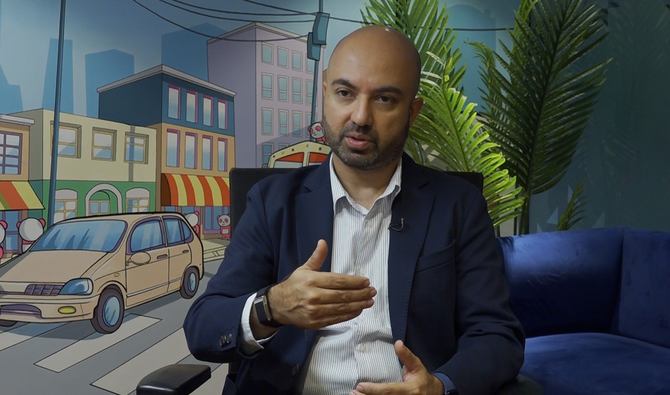

KARACHI: Food and grocery delivery service foodpanda Pakistan plans to double its operations in the country within the next three years, aiming to expand from six million to as many as 12 million households and generate $2 billion in economic activity this fiscal year, CEO Muntaqa Peracha has said.
Foodpanda is a subsidiary of Berlin-based Delivery Hero, which operates in more than 70 countries. The company generated $1.2 billion in economic activity in FY24 and now connects millions of users in 35 Pakistani cities with restaurants, home chefs, and its own pandamart grocery stores. It engages thousands of freelance riders and handles up to 20% of the total food business for its restaurant partners.
“Now that we’re at that point and the economy looks relatively stable we’re hoping to further accelerate that to get to a point of doubling our business over the next, you know, 24 to 36 months,” Peracha told Arab News in a recent interview.
Pakistan, with a population of over 240 million and mobile penetration exceeding 80 percent, has seen rapid expansion in digital commerce. The country’s e-commerce market — projected by Statista to grow at over 8 percent annually for the next five years — is driven by a tech-savvy youth demographic and increasing female participation. The online food delivery segment alone is expected to generate $2.35 billion in revenue by December 2025, while grocery delivery is projected to expand by 19 percent in 2026, according to Statista.
Pakistan’s food and grocery delivery space remains underpenetrated relative to regional peers, presenting opportunities for scale.
Peracha said foodpanda would grow its pandamart grocery network from seven to 12 cities over the next year, expand its “shops” vertical to onboard more local retailers, and open six to eight new kitchens. The platform also plans to deepen coverage in existing cities before scaling to Pakistan’s top 50 urban centers.
“We’re looking to expand our categories within the cities that we operate in right now,” he said. “That means more pandamarts opening up, more shops coming online, more restaurants being contracted, more home chefs working with us.”
While the outlook is optimistic, foodpanda faces operational hurdles, including political rallies, road blockades, heavy rains, and prolonged Internet shutdowns. Pakistan was the most affected nation by Internet outages in 2024, with $1.62 billion in economic losses, according to Top10VPN.com.
“If it’s an elongated nationwide blackout… the whole day’s business can be impacted by 30, 40, 50 percent,” Peracha said, noting the impact on rider earnings.
The company counters such disruptions by opening Wi-Fi access at pandamarts, kitchens, and hubs to keep orders moving.
Peracha said foodpanda has also automated demand planning and order allocation using AI and engineering teams in Singapore and Berlin to optimize rider logistics and delivery routes.
When asked about plans to go public, Peracha said any such decision would depend on its parent company Delivery Hero and market conditions.
“If… it makes a business sense, we will see at that point in time,” he said.
Ahsan Mehanti, CEO at Arif Habib Commodities, said favorable government policies about Small and Medium Enterprises (SMEs) were attracting foreign investors toward Pakistan.
“This is the time, like foreign institutions are focusing toward Pakistan market, and the reason behind that is the profitability that they see in Pakistan, especially for SMEs,” the analyst told Arab News.
He said foodpanda did not have many competitors, but would need to invest more money to take its services to Pakistan’s young, growing population.
“It’s a very positive development that foodpanda is expanding and the development especially at this time when the rupee stability is apparently there and we are not expecting rupee to fall.”
Consumers have welcomed foodpanda’s expansion plans but also want improvement in its services.
“We should welcome them because their service is good while the charges they take are also affordable,” said Karachi-based policewoman Sadia Muhammad Bilal.
foodpanda regular Muhammad Safeer Malik also said the platform should improve services to stay competitive.
“If foodpanda wants to promote its business in Pakistan, it will need to add new services that could benefit the customers… they could get discounts and the services… improved further,” he said.
Other customers complained of delays, hidden charges, and inconsistent rider performance.
“Foodpanda is good but when we have events like August 14 and Eid their service slows down and they make deliveries very late, by as much 30 to 45 minutes,” said Zara Yousuf, an accountant at a private firm.
She urged the company to improve its home service model to better support women entrepreneurs who want to start food businesses from home.
Munesh Kumar, an IT expert at a major commercial bank, said he often observed hidden charges in bills.
“They show certain amount of charges initially but sometime hidden charges show up later,” he said.
Kumar said foodpanda should also improve service during emergencies like rains and Internet blackouts: “The food you order will reach you but late.”
Muhammad Zain, 16, said rider training was also needed.
“Sometime their riders make mistakes,” he said, “like they won’t come on time or mistakenly deliver a wrong order.”


