

Palm waste in AlUla transformed into fertilizer in landmark sustainability project

1 / 2
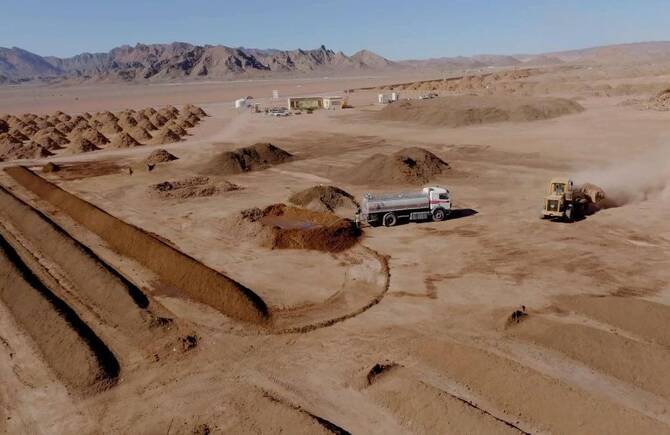
The RCU is implementing a project to produce agricultural fertilizer from organic materials, primarily palm waste. (SPA)
2 / 2
The RCU is implementing a project to produce agricultural fertilizer from organic materials, primarily palm waste. (SPA)
Short Url
Updated 07 August 2025
Follow

Palm waste in AlUla transformed into fertilizer in landmark sustainability project

  • Royal Commission for AlUla project helps farmers, reduces waste burning, cuts water usage
  • Project has also played a key role in rehabilitating more than 3,000 hectares of degraded farmland

RIYADH: The Royal Commission for AlUla is implementing a project to produce agricultural fertilizer from organic materials, primarily palm waste.

The RCU environmental initiative aims to enhance soil fertility, improve agricultural productivity, and reduce the environmental harm caused by waste burning.

To date, over 50,000 cubic meters of organic waste have been recycled into high-quality fertilizer. This has been distributed to more than 1,300 farmers, and expanded to reach over 3,000 beneficiaries, the Saudi Press Agency reported recently.

The project has also played a key role in rehabilitating more than 3,000 hectares of degraded farmland as part of a broader strategy to upgrade agricultural infrastructure across AlUla.

The organic fertilizer produced contains 52 percent organic matter, which significantly enhances soil fertility and improves water retention capacity.

The project has led to substantial environmental and economic benefits, including a reduction in chemical fertilizer use by up to 30 percent, decreased water consumption, and the sequestration of approximately 0.57 tonnes of carbon dioxide for every tonne of fertilizer produced.

This is equivalent to cutting emissions from more than 6,300 vehicles each year.

As a part of its community outreach and capacity-building efforts, the RCU has implemented training programs that have benefited more than 240 farmers and students.

These programs include workshops to share best practices for using organic fertilizers.

By turning agricultural waste into a valuable economic resource, the project strengthens food security, enhances soil health, and promotes long-term sustainability in the agricultural sector, the SPA reported.


14 sculptures go on display at public spaces in Riyadh

Updated 11 December 2025
Follow

14 sculptures go on display at public spaces in Riyadh

  • The works were chosen by Riyadh Art from its international Tuwaiq Sculpture symposium to reflect its ‘vision of weaving beauty and intellect into the city’s fabric’
  • Initiative aligns with efforts to make art a key part of city’s identity that improves quality of life and promotes the cultural economy, says Royal Commission for Riyadh City’s Khalid Al-Hazani

RIYADH: Fourteen sculptures selected from the annual international Tuwaiq Sculpture symposium, a Riyadh Art program, went on display on Wednesday at three prominent public spaces across the Saudi capital: ROSHN Front, the SEDRA residential community, and Sports Boulevard.

The project is part of Riyad Art’s efforts to showcase artworks in public spaces, and the addition of more works in other places is expected later.

Khalid Al-Hazani, the executive vice president of the lifestyle sector at the Royal Commission for Riyadh City, said: “This step reflects (Riyadh Art’s) vision of weaving beauty and intellect into the city’s fabric, and creating vibrant and culturally rich public spaces, allowing art to become an integral part of people’s daily lives.”

It is also in line with Riyadh Art’s broader strategy for transforming the city into an open-air art gallery, he added, thereby “turning art into a central element of the city’s identity and a key contributor to improving quality of life and promoting the cultural economy.” 

The Riyadh Art Program installed on Wednesday 14 sculptures selected from the Tuwaiq International Sculpture Symposium at prominent locations in Riyadh, including the ROSHN Front, SEDRA Residential Community, and Sports Boulevard. (Supplied)

The three chosen locations were considered perfect places to host the artworks because of their vibrancy, strong community connections and accessibility, Al-Hazani noted.

“This provides residents and visitors with the opportunity to engage with the sculptures in their everyday lives,” he said.

Seven of the sculptures have been installed at ROSHN Front, considered a key urban hub. The artworks on display there form a thought-provoking artistic landscape that encourages interaction, organizers said, and explores a number of themes including the values of urban transformation, community spirit, and creative curiosity.

Three sculptures are on display at the SEDRA residential community. Chosen to complement its serene character and nature-integrated urban planning, they blend in with their surroundings to reflect the values of environmental harmony, contemplation and renewal, organizers explained.

The remaining four sculptures are at Sports Boulevard, known for its open, green spaces. These works reflect several concepts, in particular ideas of nature, balance and public health.

All of the sculptures are part of Riyadh Art’s permanent collection, which includes works created by local and international artists during the Tuwaiq Sculpture symposium.