

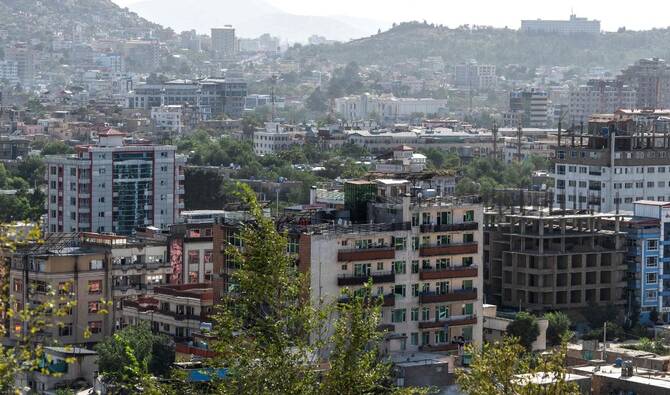

KABUL: Weeks after he was forced to return from Iran, Mohammad Mohsen Zaryab was still searching for somewhere to live in Kabul, where rental prices have soared along with an influx of Afghans expelled from neighboring countries.
More than 2.1 million Afghans have returned from Pakistan and Iran so far this year, according to the United Nations refugee agency. They join earlier rounds of mass expulsions from the neighboring countries, deported or driven out by fear of arrest.
Many of the returnees, like Zaryab, fled with their meagre belongings to Kabul, expecting the swelling city of eight million to offer the best prospects of finding work in a country where half the population lives below the poverty line.
Zaryab begged landlords to bring down prices for his family of eight, only to be told, “If you can’t pay, someone else will.”
The 47-year-old factory worker said he had expected when he returned in July to find more solidarity for Afghans coming “from far away with no home.”
Multiple Kabul property dealers told AFP that rental prices had skyrocketed with the influx of returnees.
“Since landlords noticed that refugees (from Iran and Pakistan) were returning, they doubled their rents,” said real estate agent Hamed Hassani, calling for the government to “intervene.”
“We have many refugees who come to ask us for an apartment to rent, and most of them cannot afford what’s available,” he said.
A year ago, a three-room house would on average cost 10,000 Afghanis ($145) per month, but renters now pay 20,000, said Nabiullah Quraishi, the head of a property dealership.
The cost amounts to a fortune for the majority of Afghanistan’s 48 million people, 85 percent of whom live on less than one dollar a day, according to the UN.
Two years ago, multiple landlords would come to Quraishi’s business every month seeking help renting their property. Now, demand outstrips supply, he said.
The municipality denies any housing crisis in the city.
Major urban development plans, which include building new roads even if it means bulldozing numerous residences, are further straining housing access.
“Seventy-five percent of the city was developed unplanned,” municipality spokesman Nematullah Barakzai told AFP. “We don’t want this to happen again.”
Zahra Hashimi fears being evicted from the single basement room that has served as her home since she and her family returned from Iran.
Her husband, who works odd jobs, earns about 80 Afghanis per day (a little over a dollar), not enough to pay the rent for the property, which has no electricity or running water.
“We lost everything when we returned to Afghanistan,” said Hashimi, whose eldest daughter can no longer attend school under Taliban rules that deny women and girls schooling and employment.
Her two primary-school-aged daughters could still attend, but the family cannot afford the tuition.
The housing pressures have also affected long-time Kabul residents.
Tamana Hussaini, who teaches sewing in the west of Kabul, where rents are lower, said her landlord wants to raise the 3,000 Afghani rent for their three-bedroom apartment.
The family of eight tried to move out, but “rents are too high,” she told AFP.
“It’s a frustrating situation where you can’t stay, but you can’t leave either.”


