


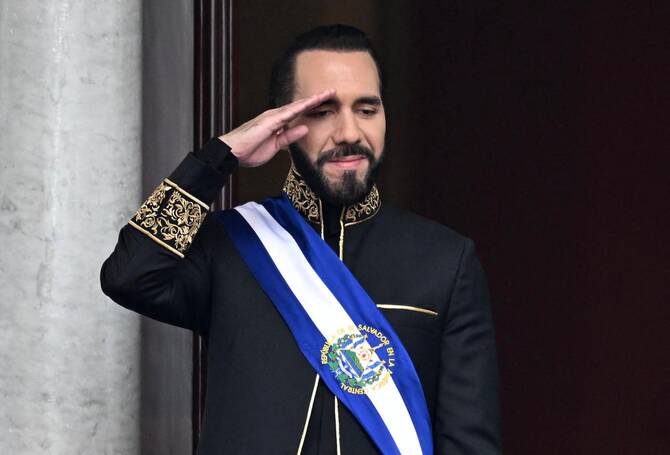
SAN SALVADOR: El Salvador’s lawmakers on Thursday adopted a constitutional reform to abolish presidential term limits and allow current leader Nayib Bukele – who enjoys overwhelming majority support in parliament – to run indefinitely.
The reform, reviewed under an expedited procedure, was adopted by Bukele’s 57 supporters in the Legislative Assembly, and voted against by only three opposition members.
The move will allow re-election “without reservations,” extend the term in office from five to six years, and do away with a second round of voting in elections as Bukele tightens his grip on the Central American nation.
The 44-year-old self-described “cool dictator” has been president since 2019. He was re-elected in 2024 with a whopping majority after a Supreme Court ruling allowed him to bypass a constitutional ban on successive terms.
That election handed Bukele control over state institutions and the parliament, which adopted the changes slammed as anti-democratic by the opposition – the same day as it began debating them.
“Thank you for making history, fellow deputies,” said the president of the Legislative Assembly Ernesto Castro, from the ruling Nuevas Ideas party, after counting the votes.
“This day, democracy has died in El Salvador … The masks were removed,” said opposition lawmaker Marcela Villatoro during the parliamentary session, criticizing the proposal being brought to parliament as the country begins a week of summer holidays.
Lawmakers voted to synchronize legislative, presidential and municipal elections, and the shorten the current presidential term by two years from 2029, with general elections due in March 2027.
With the constitutional reforms, Bukele will be able to run again.
Bukele enjoys enormous support at home for his heavy-handed campaign against criminal gangs, which has reduced violence in the country to historic lows.
But it has also drawn sharp criticism from international rights groups.
His government is also facing accusations of repression against rights activists and critics of Bukele’s government, which has forced dozens of journalists and campaigners into exile.
“The reforms lead to a total imbalance in the democracy that no longer exists,” Miguel Montenegro, director of NGO the Human Rights Commission of El Salvador, told AFP.
In April 2024, the parliament approved a reform so that constitutional changes no longer require ratification in another legislative session.
Opposition politician Claudia Ortiz slammed the reform as “an abuse of power and a caricature of democracy.”


