

Pakistan withdraws digital tax on foreign online purchases

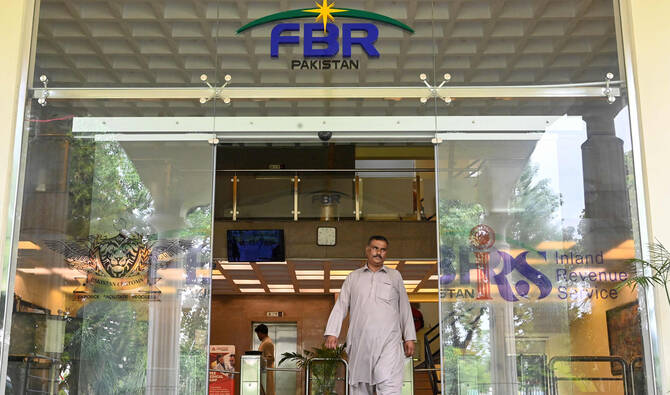
A man walks out of the Federal Board of Revenue (FBR) office in Islamabad on July 4, 2024. (AFP/File)
Short Url
Updated 31 July 2025
Follow

Pakistan withdraws digital tax on foreign online purchases

  • FBR says levy on overseas online orders rolled back retroactively from July 1
  • Local retailers had welcomed the tax as a way to counter cheaper imports

ISLAMABAD: Pakistan’s national tax authority has withdrawn a levy on goods and services ordered online and supplied from abroad, a notification announced on Wednesday, rolling back a key provision giving relief to international retailers operating in the national cyberspace.

The government introduced new measures including the Digital Presence Proceeds Tax Act 2025 in the federal budget passed on June 26 to tax income earned by foreign vendors.

The measures included a five percent fixed income tax on digital retailers on goods delivered by foreign firms such as Temu, Shein and AliExpress, and a reduction in the duty-free threshold for imported parcels from Rs5,000 ($18) to Rs500 ($1.80).

“The federal government is pleased to direct that the Digital Presence Proceeds Tax shall not apply to digitally ordered goods and services supplied from outside Pakistan, by any person, which are chargeable to tax under the said Act,” the Federal Board of Revenue (FBR) said in the notification, adding the decision would “come into force on and from the 1st day of July, 2025,” highlighting its retrospective implementation.

The government plans to collect over Rs14 trillion ($49.3 billion) in taxes in the ongoing fiscal year to meet targets set under the $7 billion International Monetary Fund loan program.

The government’s decision to impose the digital presence tax was welcomed by local retailers, who said foreign firms had been operating without paying taxes, allowing them to undercut domestic businesses.

Until the implementation of the new budget, foreign e-commerce platforms had been selling to Pakistani consumers through social media without being subjected to local tax laws.

Local retailers already paying up to 25 percent in taxes say they have struggled to compete with tax-exempt imports offering cheaper prices.


Pakistan, UK discuss tax reform and digital governance under stabilization agenda

Updated 6 sec ago
Follow

Pakistan, UK discuss tax reform and digital governance under stabilization agenda

  • Pakistan outlines tax expansion, energy reform and SOE restructuring under IMF-linked program
  • UK signals readiness to support governance, digitalization, investment climate improvements

ISLAMABAD: Pakistan and the United Kingdom reaffirmed cooperation on economic reform and digital governance on Tuesday, with Finance Minister Muhammad Aurangzeb telling UK Minister for Development Baroness Chapman that stabilization efforts were now centered on tax expansion, debt control and restructuring state-owned enterprises.

Pakistan is working to widen its tax base, reduce leakages through digital systems and overhaul energy-sector losses as part of ongoing fiscal reform. The government is also pursuing privatization and pension restructuring to create fiscal space for social spending in a period of high external financing needs.

Aurangzeb “highlighted ongoing work on energy sector efficiencies, debt management, public-sector right-sizing, pension reform, and measures aimed at restoring fiscal sustainability and creating space for social sector priorities,” according to an official readout of the meeting released by the finance ministry. 

Chapman said the UK stood ready to support reform delivery through technical assistance, regulatory cooperation and digital transition tools aimed at simplifying compliance and improving transparency, the statement added. 

Chapman “reaffirmed the United Kingdom’s readiness to provide technical assistance, regulatory support, and capacity-building … particularly in digitalization, governance reforms, investment climate improvement, and ease of doing business.”

Talks also covered demographic pressures, provincial governance, climate resilience and women’s economic participation, areas both sides said needed coordinated financing and policy planning. The ministers further discussed aligning development spending with World Bank-supported programs and encouraging private-sector participation in reforms.