- Caravanserai built by Mughal princess Jahan Ara sits atop archaeological layers dating to the Indo-Greek era
- Excavation site, museum, mosque and temple reveal history of religious, cultural coexistence in Pakistan’s oldest city
PESHAWAR, Pakistan: In the heart of the ancient walled city of Peshawar, perched on one of its highest elevations, stands a site layered with millennia of history.
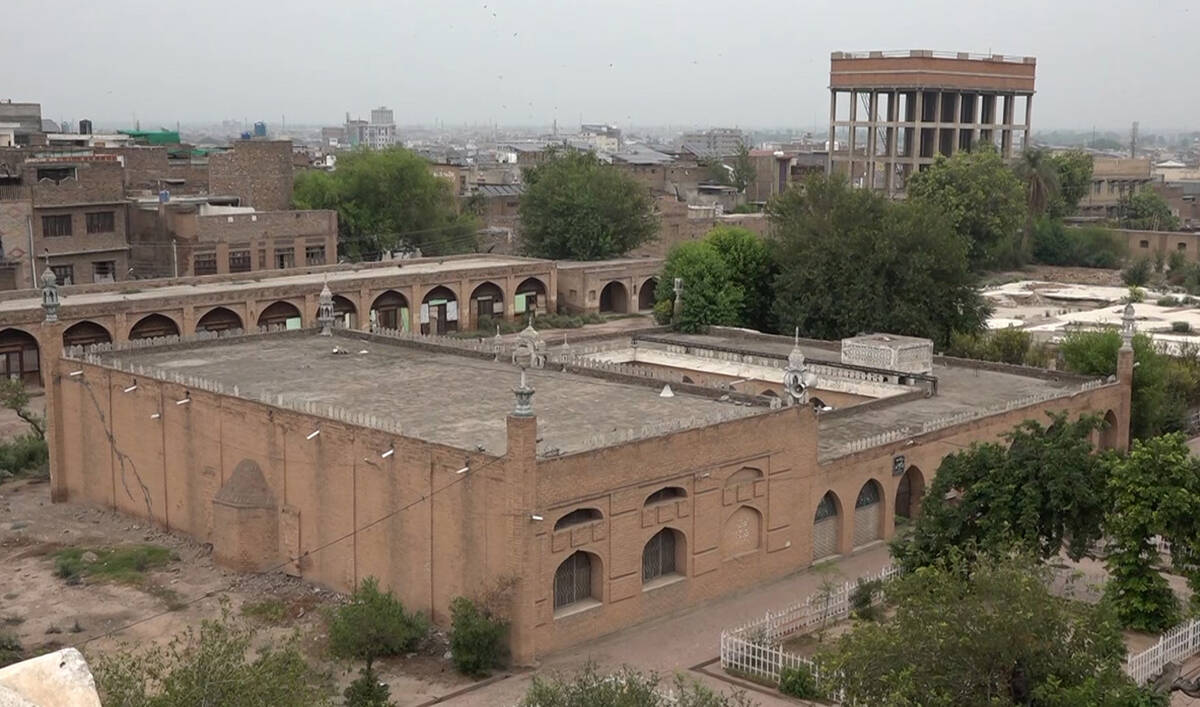
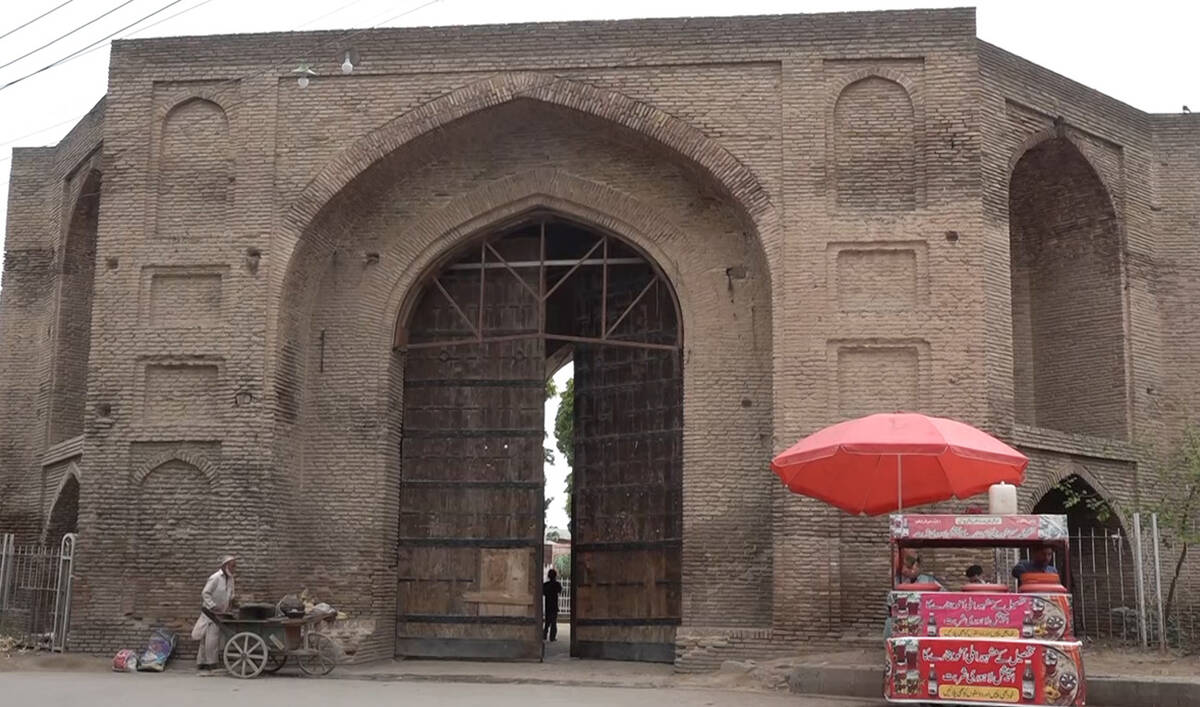
Gor Khatri, literally, “Warrior’s Grave,” is a sprawling archaeological complex where 13 successive civilizations have left their mark, from the Indo-Greeks of the second century BC to the British Raj.
Located at a strategic point in what is now northwestern Pakistan, the complex was once a major caravanserai on the trade routes linking Central Asia to the Indian subcontinent. Today, it remains one of the oldest continuously inhabited urban settlements in South Asia — a rare living museum.
Peshawar’s strategic geography has long made it a magnet for conquest, trade and religion.
Nestled at the mouth of the Khyber Pass — the historic invasion route into the subcontinent — the city has served as a crossroads between Central and South Asia for over two millennia. Greek settlers, Buddhist monks, Persian merchants, Mughal princesses and British generals have all passed through this terrain, leaving behind a mosaic of cultural and architectural legacies.
“Peshawar is one of the oldest living cities of South Asia,” said Dr. Numan Anwar, field supervisor at Gor Khatri for the Khyber Pakhtunkhwa Directorate of Archaeology and Museums.
“The site has the footprints of 13 civilizations.”
The current 160-by-160-foot square structure dates to 1641, when it was commissioned by Mughal princess Jahan Ara, daughter of Emperor Shah Jahan, and named Sarai Jahanabad. Built as a caravan rest stop, the complex included cells, chambers and grand gateways, many of which still survive.
“When Jahan Ara Begum came to that [caravan resting] spot and saw people from many regions gathering here, she had the present building constructed,” said Dr. Zakirullah Jan, associate professor at the University of Peshawar’s Department of Archaeology.
“The cells, rooms, gateways, all were constructed during the Mughal period.”
“BUDDHA’S BOWL”
The site’s significance reaches far deeper than the Mughal era.
Gor Khatri has yielded the earliest archaeological material ever found in Peshawar, dating back to the Indo-Greek period, roughly the second or third century BC.
“The earliest level that has been discovered related to the history and archaeology of Peshawar came from the site of Gor Khatri,” Dr. Jan said.
“When Alexander came, and when the Indo-Greeks came, the Mauryans came, it touches that time.”
Excavations began in earnest in 1992 through a joint initiative by the Directorate of Archaeology and Museums and the University of Peshawar.
Archaeologists have since unearthed layers revealing Roman coins, Kushan pottery, Scythian jewelry and even traces from the White Huns and the Ghaznavid Empire.
Chinese pilgrim Xuanzang, the 7th-century Buddhist monk who translated sacred texts from Sanskrit to Chinese, is believed to have visited the site. In his writings, he is known to have described a location where “Buddha’s giant bowl was kept,” which many historians believe refers to Gor Khatri. The bowl, some researchers say, was historically kept in Peshawar and Kandahar before being moved to the Kabul Museum.
Today, a small museum inside Gor Khatri showcases pottery shards, coins, beads, seals and kitchen tools from the many civilizations that passed through.
The complex also houses a mosque and the Goraknath Temple, a Hindu shrine built between 1834 and 1849, which now coexists in the same space — a testament to religious diversity.
“There is not a single break in the cultural history of this region,” said Dr. Jan. “Since the second century BC till now, there is a continuity of culture. That’s why the site is important.”
The British-era governor’s residence still stands at one corner of the site. Paolo Crescenzo Martino Avitabile, an Italian general in the army of Maharaja Ranjit Singh, once ruled Peshawar from this post between 1838 and 1842. Locally remembered as Abu Tabela, his tenure is part of the site’s colonial legacy.
On a typical day, students and families explore the site’s pathways and peek into excavated trenches, standing on layers of millennia-old soil.
“Whenever my friends come from cities like Mardan, Swat, or Lahore, I take them here to show them the positive side of Peshawar,” said Hamza Khan, 21, a student of Peace and Conflict Studies.
“This place represents religious and cultural diversity.”
The excavation work at Gor Khatri concluded in most parts in 2012, but archaeologists say there is still much to study.
What remains today is not just an ancient structure, but a microcosm of Peshawar’s civilizational depth — where Buddhist monks, Mughal princesses, British soldiers and local pilgrims have all, at some point, passed through.